What Pasadena's Housing Stock Means for Your Garage Door
Pasadena homes built 1956-2010 face mild-freeze swings and original hardware.
Read morePasadena homes built between 1956 and 2010 carry different hardware. Know which garage door noise is wear and which means a spring is about to fail soon.
Local detail
Pasadena's housing stock spans 1956 through 2010, with the median house going up around 1984. That's not a trivia point - it means the garage door hardware under your roof depends entirely on when your block was built. A house from the late 1950s might still have its original torsion setup, side-mounted and heavy, with parts nobody stocks anymore. A house from the 1980s or 90s, which is what most of the 23 named sections of Pasadena are built on, usually runs a lighter extension-spring system behind the horizontal tracks. A house finished closer to 2010 is probably on a steel door with a modern opener, but the springs are still wearing on the same schedule everyone's do.
The noise your door makes tells you which era of hardware you're dealing with, and whether it's dying or just aging normally. A rhythmic thump every few feet usually means a roller that's worn flat, common on doors from any decade. A sharp metallic pop, followed by the door refusing to lift, means a spring let go - and on the older torsion setups common in Pasadena's earliest tracts, that's a job you do not want to finish yourself. We won't pretend every noise is an emergency. Most aren't. But a few are, and the only way to know which is yours is to actually listen for what's coming next.
The area
Pasadena sits in a mild climate band with only occasional freeze, which changes the maintenance rhythm compared to a place with real winters. You're not fighting ice buildup on the tracks most years. What you are fighting is steady use without the seasonal pause that forces other homeowners to notice problems early - no month where the door sits closed for weeks and a stiff spring goes unnoticed.
In the warmer stretches, metal expands slightly and grease thins out, so a door that was quiet in cooler months can start to squeal at the rollers or hinges. That's normal and cheap to fix with the right lubricant. When the occasional freeze does hit, usually a short cold snap rather than a sustained one, grease that's gone thick and old stiffens further, and that's when a marginal spring that was already weak finally gives out. If your door starts groaning specifically on the one or two cold mornings a year Pasadena gets, don't write it off as the weather being unusual. It's not the cold causing the problem - it's the cold exposing a spring that was already near the end of its life.
What we find
Because Pasadena doesn't see hard, sustained freezes, the metal fatigue on torsion and extension springs here comes mostly from cycle count and age, not from weather extremes cracking components the way a harsher climate band would. That's actually good news for anyone with a door built since the 1980s - the springs usually fail from use, predictably, rather than snapping without warning from cold shock.
What the mild-with-occasional-freeze pattern does create is inconsistency in how often people lubricate. Homeowners in places with a real winter get into a twice-a-year habit without thinking about it. Here, with long stretches of mild weather, it's easy to go two or three years without touching the hinges or rollers at all, and that's when a grinding noise shows up that sounds worse than it is - usually just dried-out grease rather than a failing part. The one honest limitation here: we can't diagnose a noise over the phone with any confidence. Rollers, springs, and a loose opener chain can all sound similar from another room, and guessing wrong before a visit wastes your time and ours.
How we work
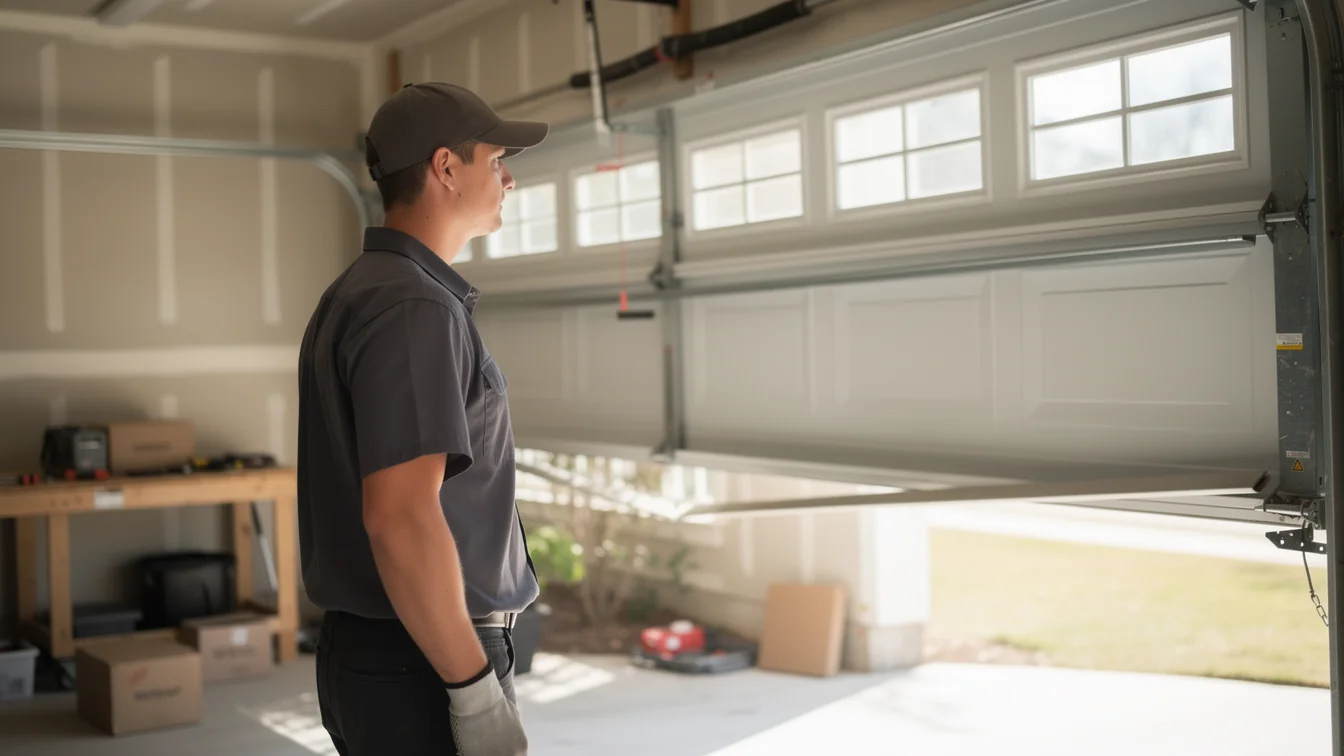
Start by listening for where the noise happens in the cycle, not just that it happens. A squeak at the very top or bottom of travel usually points to the rollers or hinges. A grinding sound through the whole cycle, especially on a house from Pasadena's earlier building years, points toward the torsion spring or the bearing plates it rides on. A loud bang followed by the door going dead is almost always a spring that's already broken - stop using the opener at that point, since running it on a broken spring strains the opener motor far past what it's built for.
If you're in Deer Park Gardens, four miles northeast, or Houston Suburban Homes, two miles northwest, the same 1980s-era extension spring setups are common, and the checks are the same. Open the door halfway by hand with the opener disconnected - it should hold its position. If it drops, the springs are losing tension and it's a matter of when, not if. A door that's merely noisy but still balances is worth a repair call. A door that's noisy and unbalanced on a torsion system from the 1950s or 60s is often better replaced outright, since sourcing matching parts for that era isn't always practical.
Questions
Usually not. A squeal at the hinges or rollers is almost always dried-out lubricant, especially common here since Pasadena's mild stretches make it easy to go a couple of years without re-greasing. Check that the door still opens smoothly and holds position when lifted halfway by hand. If it does, lubrication fixes it. If it drops or struggles, that's a different problem.
The cold doesn't usually cause the problem on its own here, since Pasadena only sees occasional freeze rather than a hard winter. What happens is a spring that was already near the end of its life gets stiffer grease and finally shows the strain. If the noise started right after a cold snap, treat it as a warning, not a coincidence.
We can narrow it down, but not confirm it, over the phone. Rollers, a loose chain, and a weakening spring can sound similar from another room. Given how much Pasadena's hardware varies by when the house was built - anywhere from 1956 to 2010 - we need to actually see the door to know which part of that range we're dealing with.
Recommendation
More garage door guides for Pasadena homeowners.
Pasadena homes built 1956-2010 face mild-freeze swings and original hardware.
Read more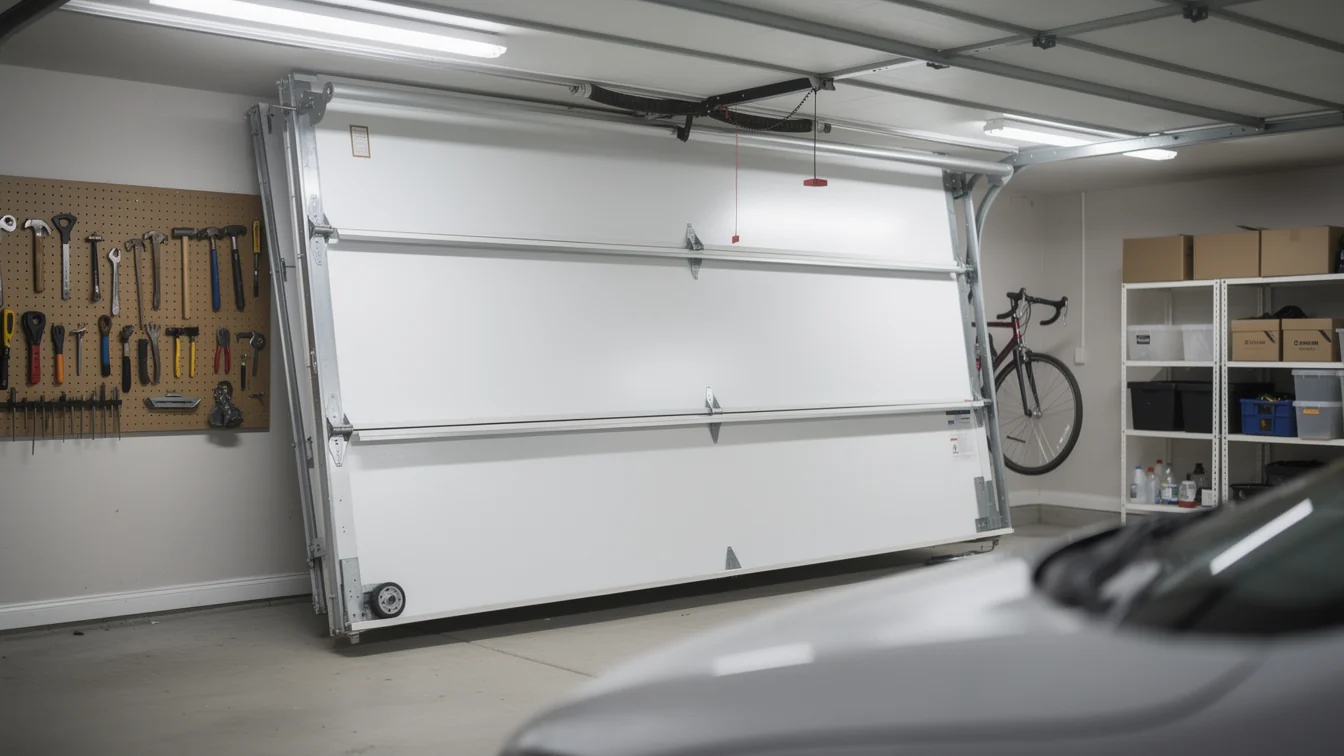
Pasadena homes built from 1956 to 2010 carry original track hardware that loosens with age.
Read more
Pasadena homes built mostly between 1956 and 2010 lose their garage seal the same way, season after season.
Read moreReady when you are
Pasadena Garage Door Pros repairs and installs garage doors, springs and openers in Pasadena, TX and the surrounding area.