Doing It Yourself
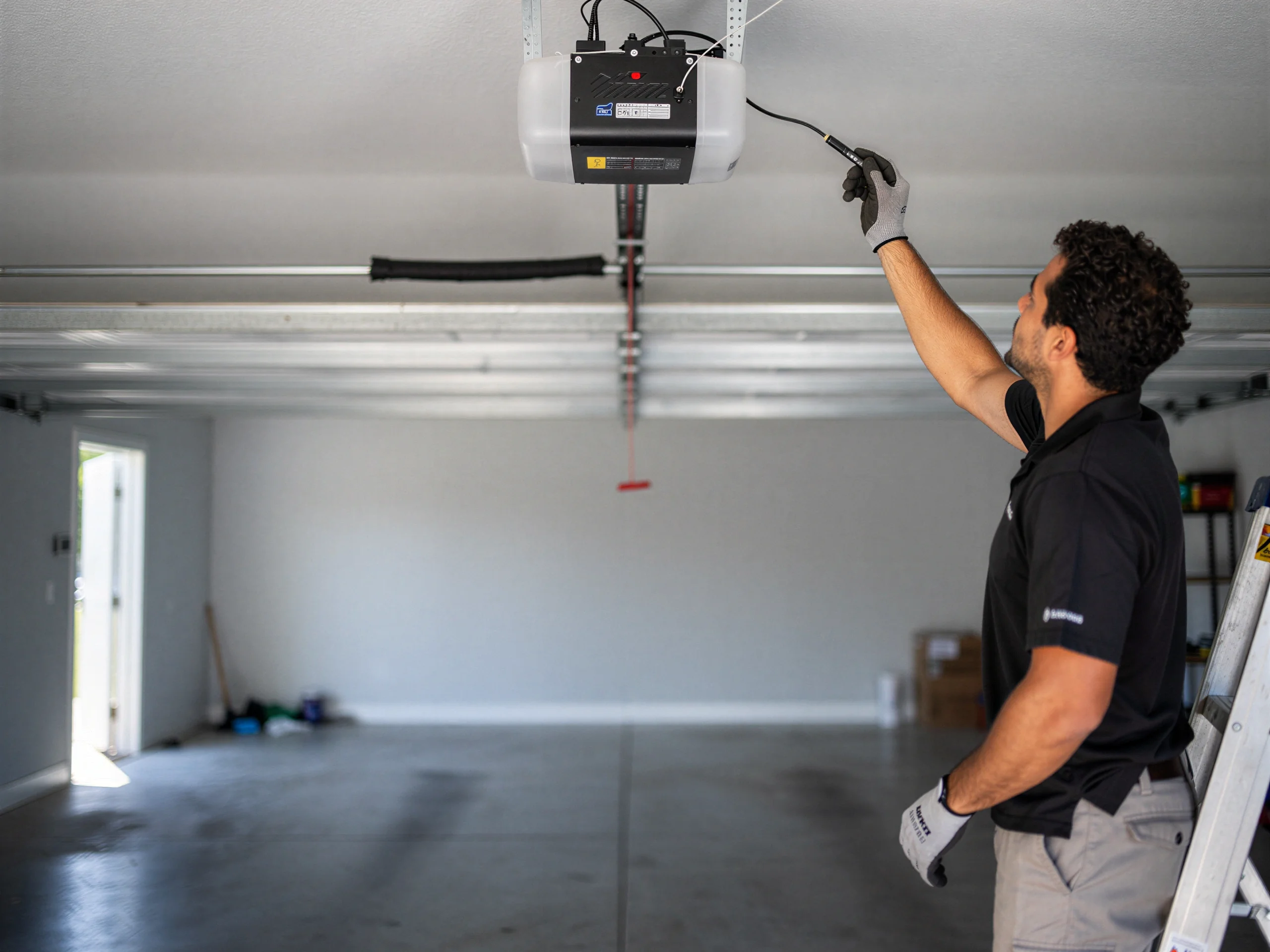
Before you call anyone, there are a few things worth checking. If the opener hums but the door doesn't move, look at the drive gear - on units installed in the 80s and 90s this is the first part to strip, and a new gear kit is a cheap fix if you're comfortable opening the housing.
Pinched low-voltage wiring
If the remote works but the wall button doesn't, check the wire for pinches near the header; houses in this area built in the 1960s through the 1980s often have the low-voltage wire run along the same framing as attic insulation, and it gets nicked during other work.
Travel limit adjustment
Reset the travel limits if the door reverses before it touches the floor - that's a five-minute adjustment, not a repair. What you shouldn't do yourself: anything involving the high-voltage side of the opener, or anything that requires you to stand under a door held up only by a spring and a chain.
Aged board and capacitor
If the opener is original to a house built in the median year for this area, 1984, the circuit board and capacitor are past their expected life and a board swap is a job for someone who does it daily, not a Saturday project. We're honest that some of these units are past the point where a repair makes financial sense next to a new opener.
What Can Go Wrong
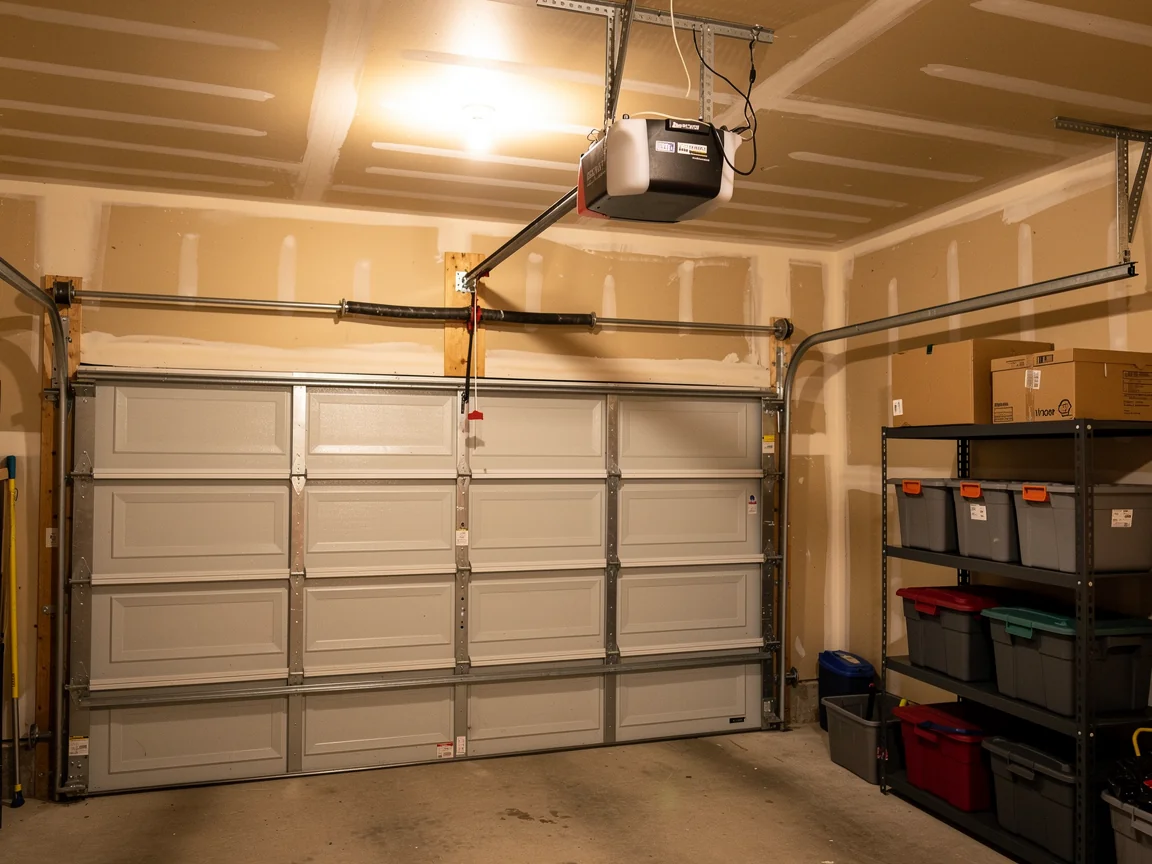
The most common call we get across the service area is a dead opener that worked fine the day before - usually a failed capacitor or logic board, not the motor itself.
Worn limit switches
Second most common: a door that opens but won't close, which on belt and chain drives from the 80s and 90s almost always traces back to worn limit switches or a safety sensor pair that's drifted out of alignment.
Builder-grade parts wear
Gear and sprocket stripping shows up constantly on original builder-grade openers, the kind installed when a house was framed somewhere between 1956 and 2010 and never upgraded. Remote and keypad failures are usually simpler - battery, or a receiver board that's taken damage from switching between mild winter days and sudden freeze events.
Reversal from sensor drift
We also see a fair number of openers that still run but trip their own safety reversal constantly, which is a sensor alignment problem more often than a motor problem.
What Causes It Around Here
The housing stock across this service area runs 1956 to 2010 with a median build year of 1984, and across the 23 named areas we cover, most of what's out there is 1980s and 90s construction. That matters for openers because a huge share of the garages around here still have the original chain or belt drive unit from whenever the house was built or last remodeled, and those units are now 25 to 45 years old - well past the service life of the capacitor, the logic board, and the drive gear. The climate band here is mild with occasional freeze events, which isn't harsh compared to a northern winter, but the swing between humid Gulf air most of the year and the occasional freeze is still enough to stress older circuit boards and cause condensation inside housings that were never sealed tight to begin with. We don't see much call for openers failing from heat alone - it's the combination of age and the freeze-thaw swing that pushes a marginal board over the edge.
What You Are Seeing
If your opener runs but the door doesn't budge, that's almost always a stripped gear or a disengaged carriage, not a motor failure - the motor outlasts the gear nearly every time.
Cobweb on photo-eye
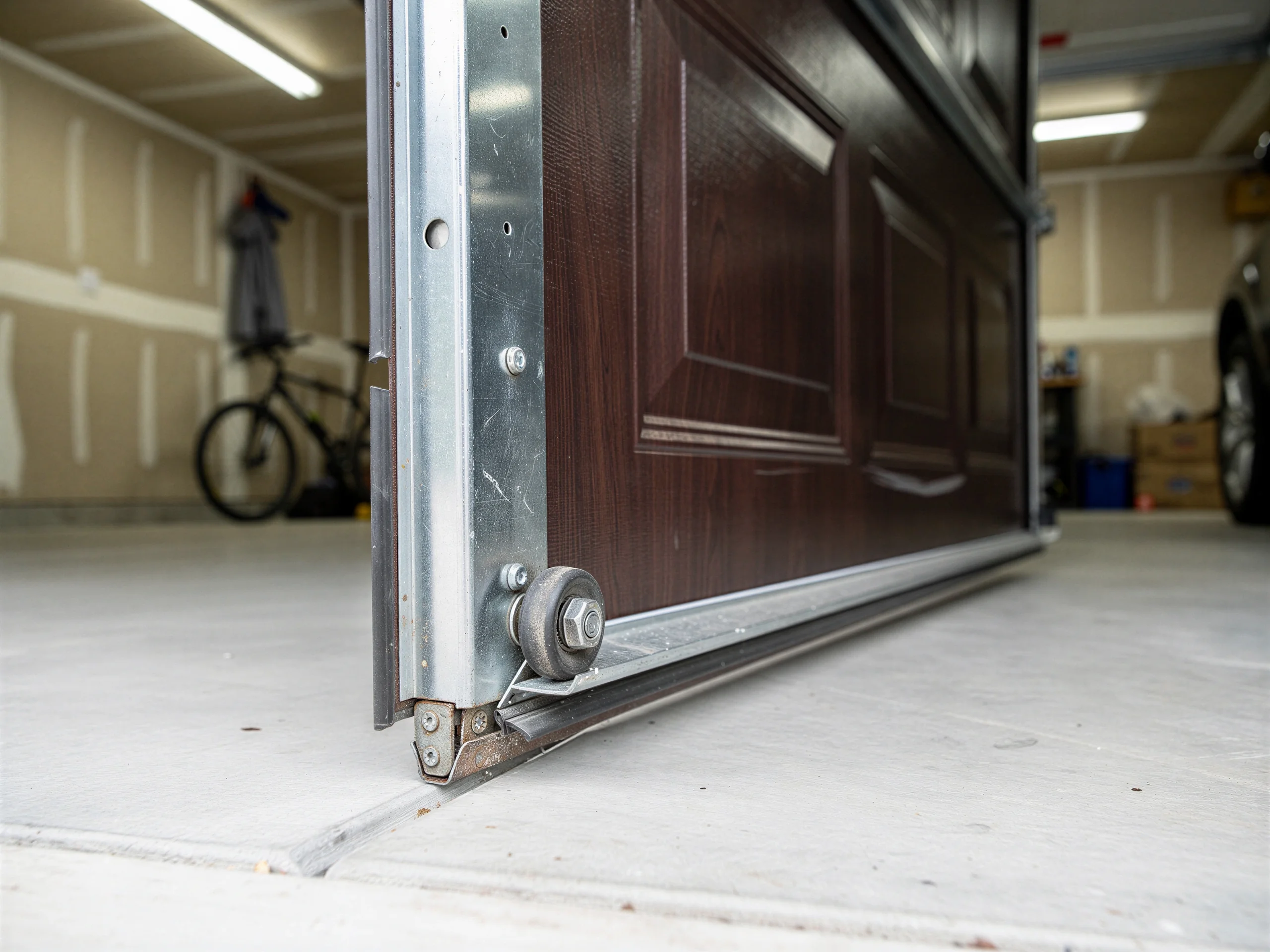
If the light blinks and the door reverses immediately, check the photo-eye sensors near the floor track first; a cobweb or a knock out of alignment causes this more than a bad sensor. A grinding or clicking sound from the housing with no door movement points to the gear again.
Silent unit checks breaker
If the whole unit is silent - no light, no hum, nothing - check the breaker and the wall switch before assuming the board is dead, though on a unit original to a house built around the area's 1984 median, a dead board is the likely answer.
Wiring fault, not electronics
Openers that work on the remote but not the wall button usually have a wiring fault, not an electronics fault, and that's a cheaper fix than people expect.
Talk to a local pro
Garage door service in Pasadena?
Same-day service with honest, upfront quotes.