Doing It Yourself
A garage door has maybe a dozen moving parts, and most of them are things an owner can check without tools beyond a ladder and a rag.
Garage-specific lubricant choice
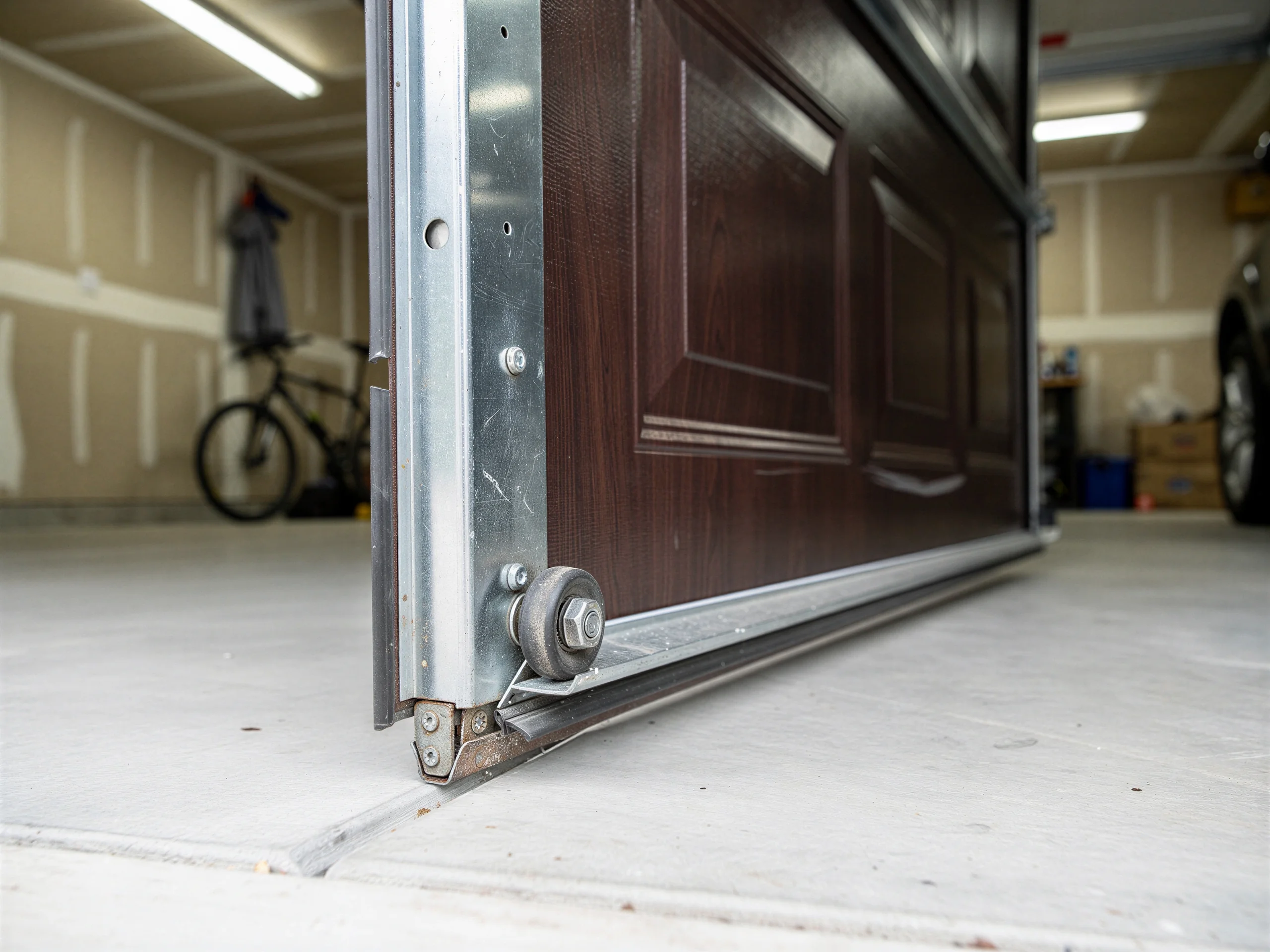
Wipe down the tracks and look for debris or dents. Lubricate the rollers and hinges with a garage-door-specific spray, not WD-40, which washes grease out instead of adding it. Check that the weatherstripping along the bottom panel still seals flush - with housing stock in this service area running from 1956 up through 2010, the age of that seal varies a lot house to house.
Reverse test with wood
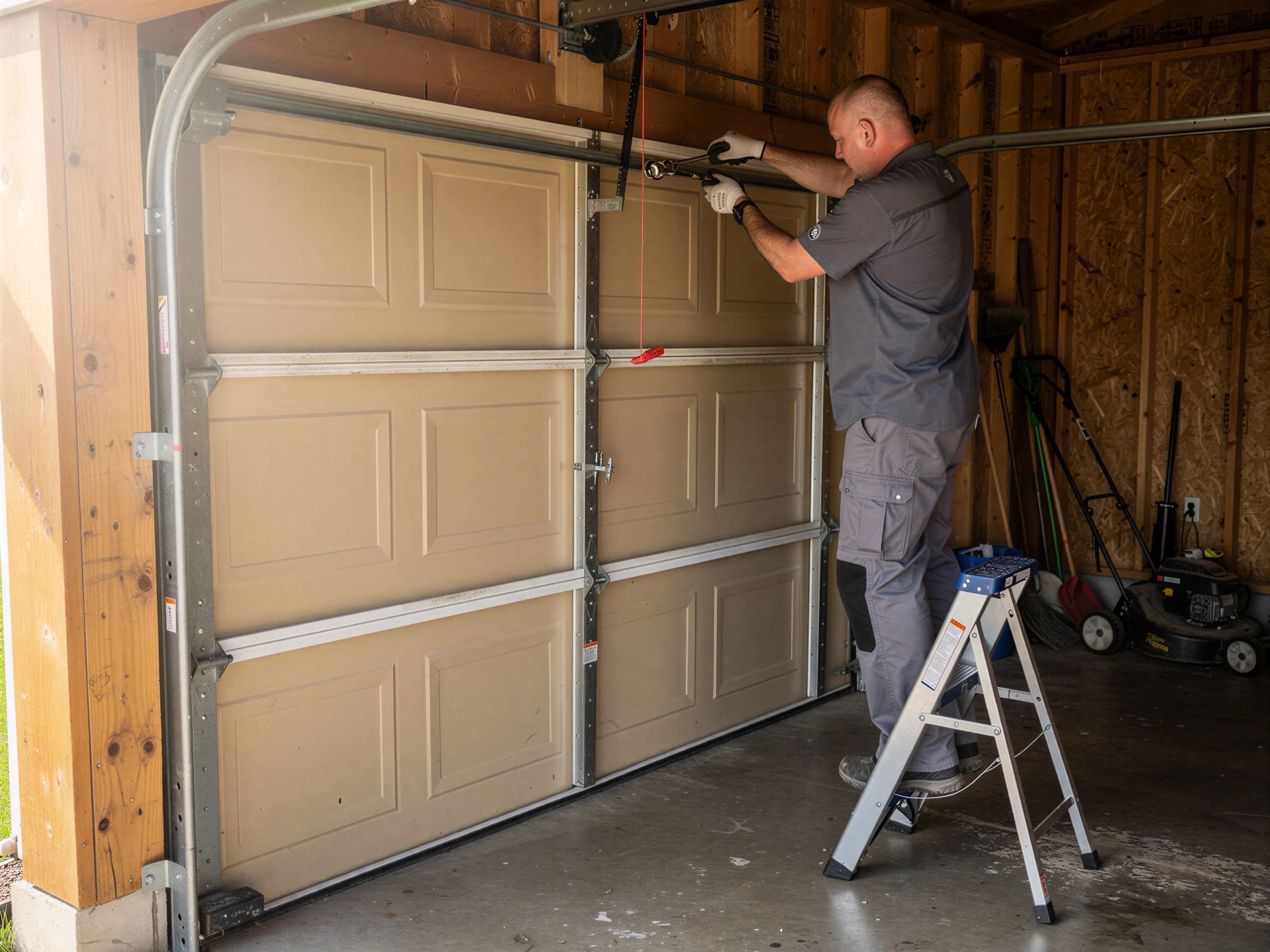
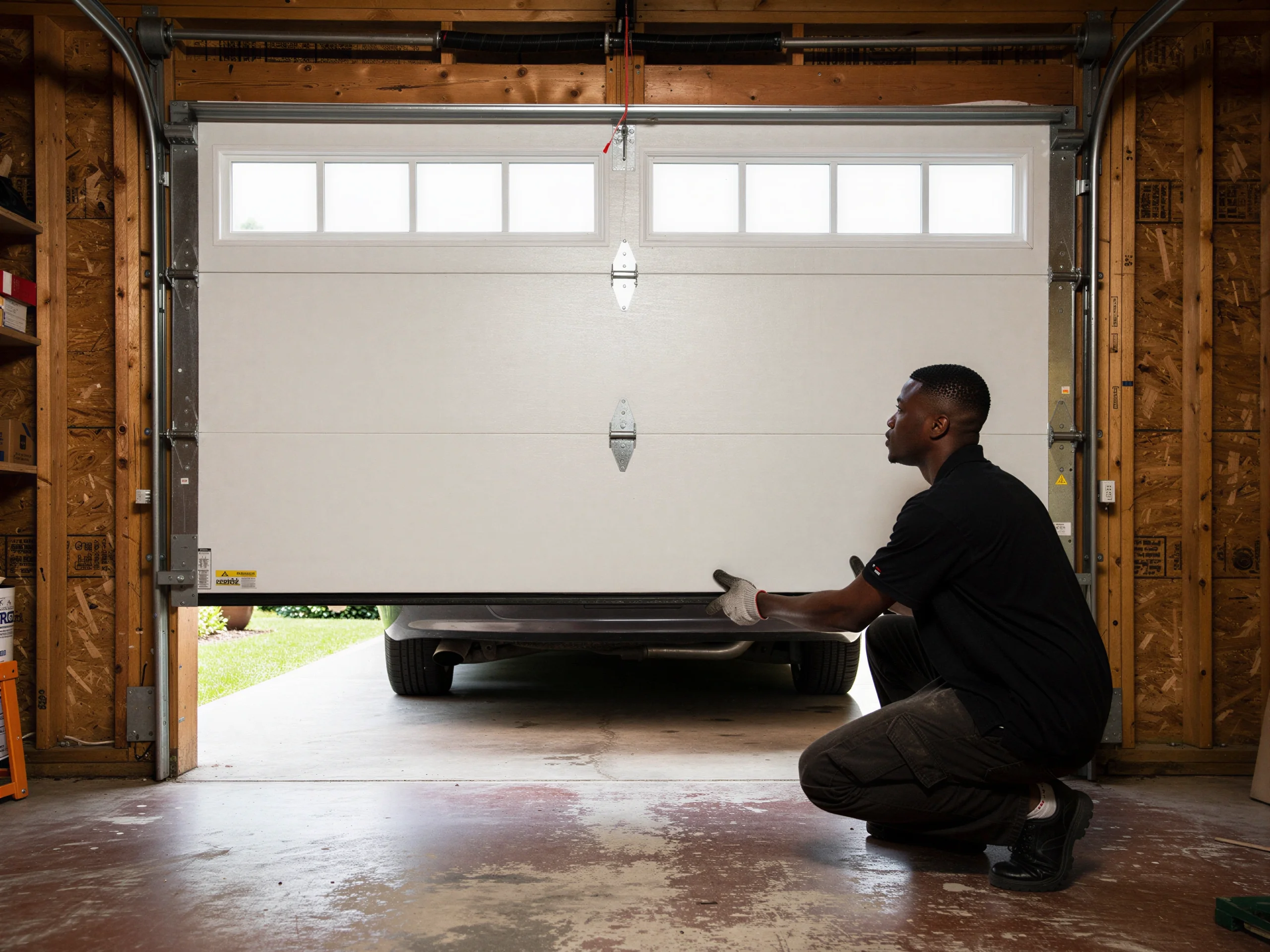
Test the auto-reverse safety feature by setting a piece of wood on the floor and running the door down onto it; it should reverse on contact. Snug up any hardware bolts that have worked loose from years of vibration. Here's the limitation: do not touch the torsion spring. It's wound under enough tension to break a wrist or worse, and that's true whether the house is from 1958 or 2005.
Spring damage means calling
If a spring looks stretched, rusted, or has a visible gap in the coil, that's a call, not a project. Everything else on this list - lube, bolts, weatherstrip, balance test - is safe owner work and worth doing twice a year given how much temperature swing the hardware here goes through.
What Can Go Wrong
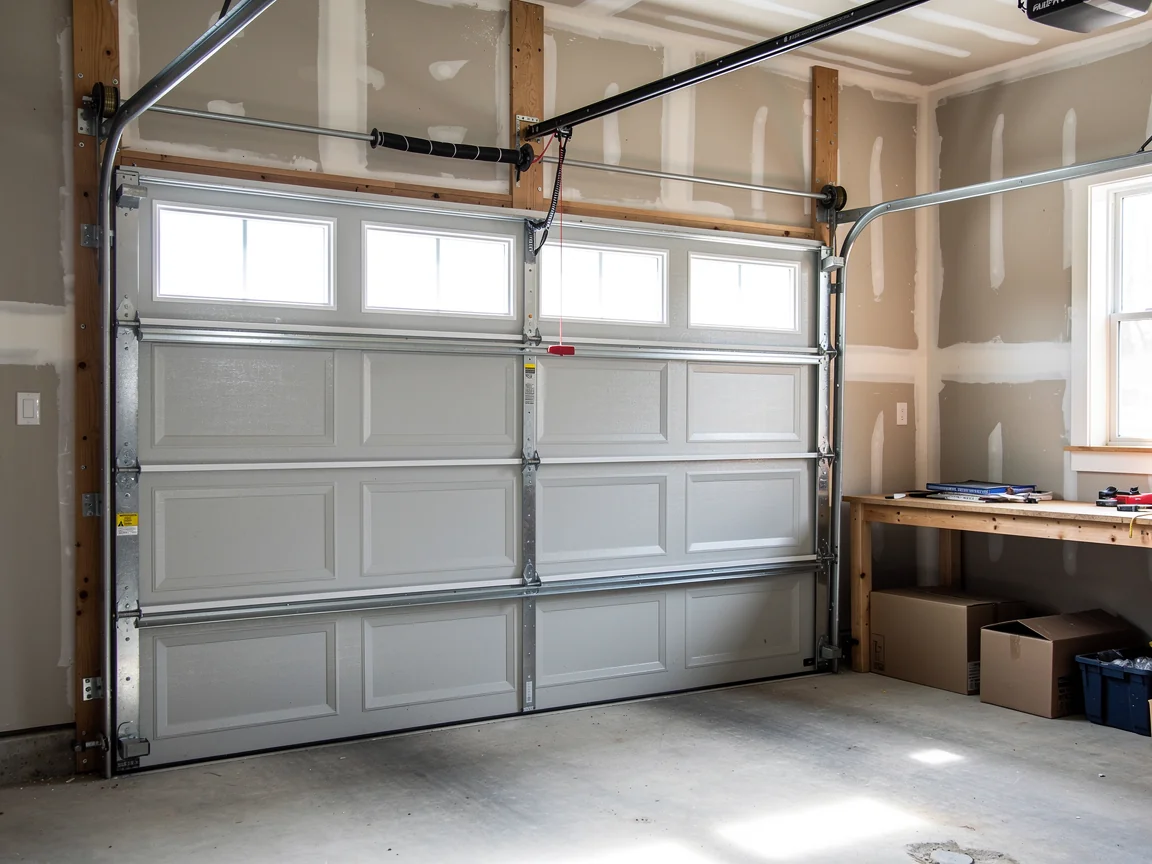
The failure modes on a neglected door are predictable. Torsion springs lose tension gradually through thousands of open-close cycles, and a spring rated for roughly 10,000 cycles starts showing it as a door that feels heavier on manual lift or an opener that strains and runs hot.
Flat rollers grind track
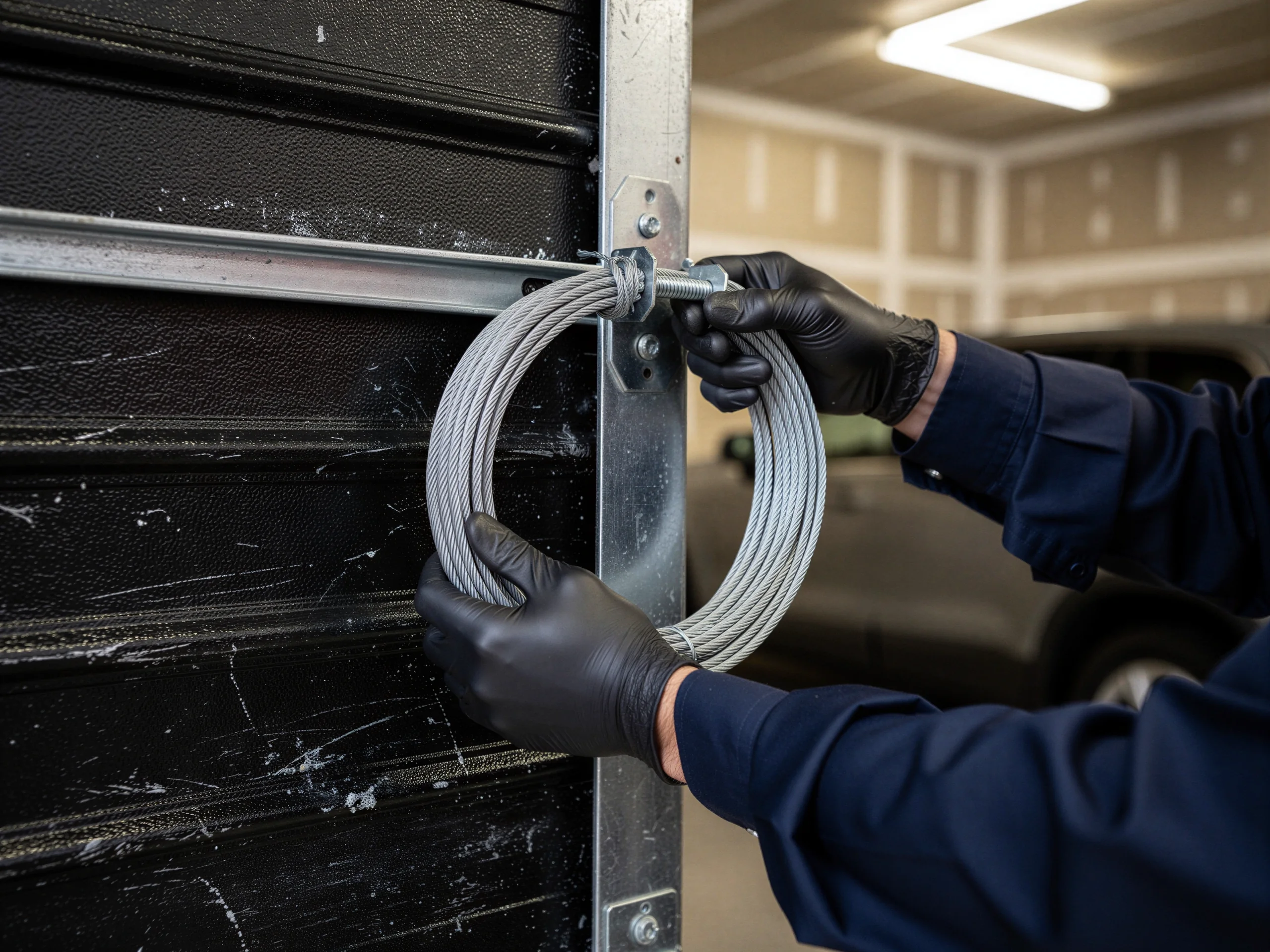
Rollers wear flat on one side and start grinding in the track instead of rolling smooth. Cables fray where they wrap the drum, usually invisible until one snaps. Track brackets loosen and let the door walk slightly off-center, which shows up as a scrape along one side panel.
Opener gear wear
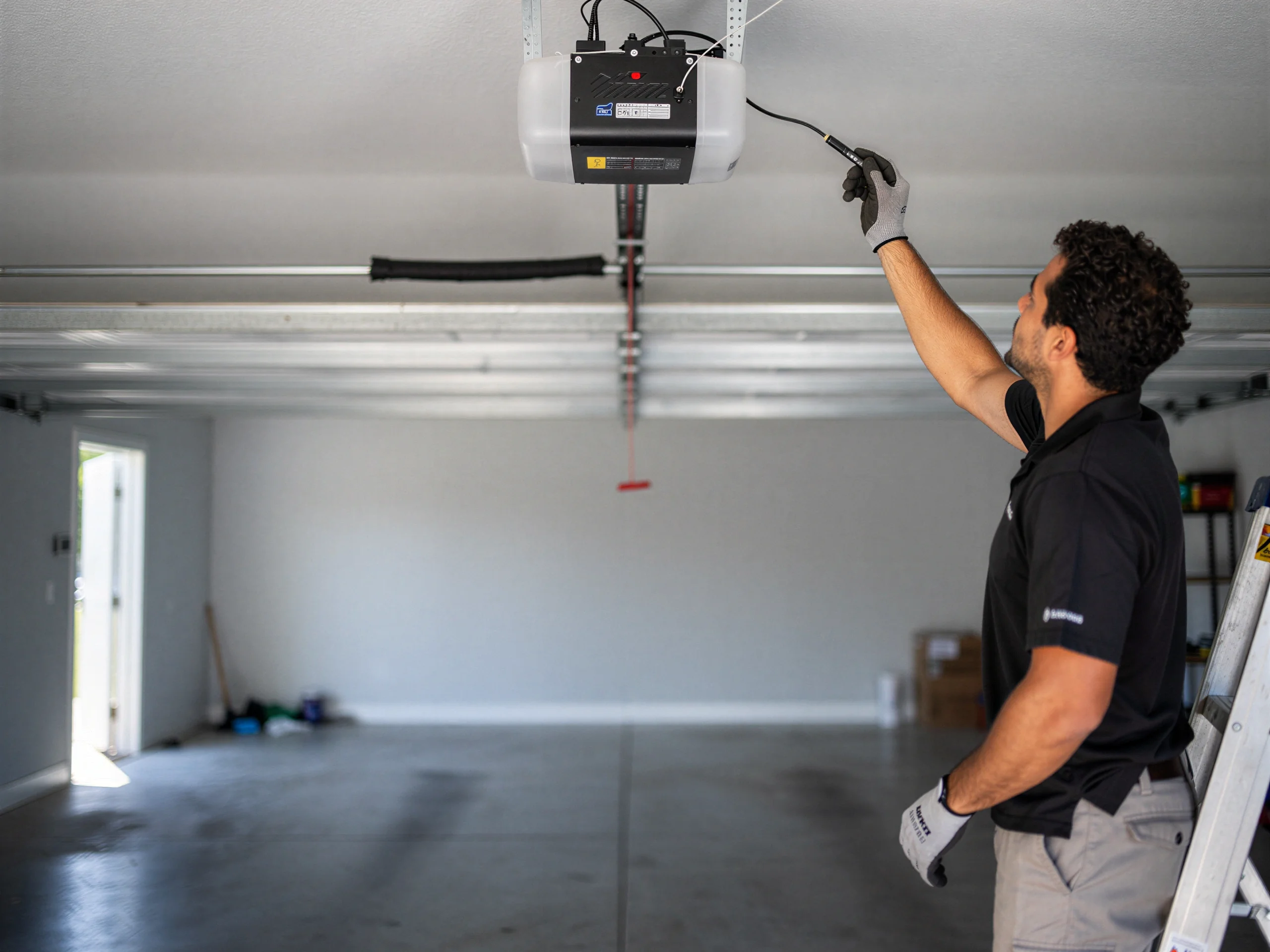
Openers fail differently - the gears inside a chain or belt drive wear down, or the logic board that runs the safety sensors starts misreading and the door won't close all the way.
Sudden overnight failure
None of these are dramatic until they are: a door that's been slow to close for months can go from annoying to stuck shut overnight. Across the 55,650 owner-occupied houses in this service area, the pattern is the same regardless of neighborhood - deferred lube and a skipped balance check turn a five-minute adjustment into a parts replacement.
What Causes It Around Here
Housing in this service area runs from 1956 through 2010, with the typical home built around 1984, and across the 23 named communities that make up the market, most of that stock clusters in the 1980s and 90s. That matters for maintenance because a huge share of torsion springs, openers, and track hardware were installed within a fairly narrow window and are aging out at roughly the same pace across the whole area, not randomly house by house.
The climate band here is mild with only occasional freezes, which sounds easy on hardware compared to a true winter market, but it cuts a different way. Steel expands in summer humidity and contracts on the rare cold morning, and that repeated swelling and shrinking works bolts loose and lets rust creep into spring coils faster than owners expect from a place that rarely sees hard frost. A door that would need a spring replacement in year fifteen in a dry climate can need it in year ten here, simply from the humidity cycling on 1980s-era galvanized coil.
What You Are Seeing
If the door groans or grinds on the way up, that's usually rollers past their life, not a spring problem - check the rollers first since it's the cheaper fix.
Lost spring tension signs
A door that lifts fine by hand but the opener strains or reverses partway up points to a spring that's lost tension and is dumping the full weight onto the motor. Visible sag in one top corner of the door usually means a cable has started to fray on that side.
Overdue lube noise
A door that's suddenly louder than it used to be, even without a specific grind, is often just overdue for lube - on houses from the 1980s and 90s stock common across this area, that's frequently the first sign anything's off.
Bumped sensor eye fix
If the door reverses for no reason partway down, check the sensor alignment before assuming it's electrical; a bumped sensor eye is a five-minute fix, a bad logic board is not. None of these symptoms mean the door is done - most of them are maintenance items caught late, not replacement situations.
Talk to a local pro
Garage door service in Pasadena?
Same-day service with honest, upfront quotes.