Doing It Yourself
A lot of homeowners around here start with a tube of white lithium grease and a YouTube video, and for loose hinges or a squeaky roller, that's honestly fine.
Afternoon owner tasks
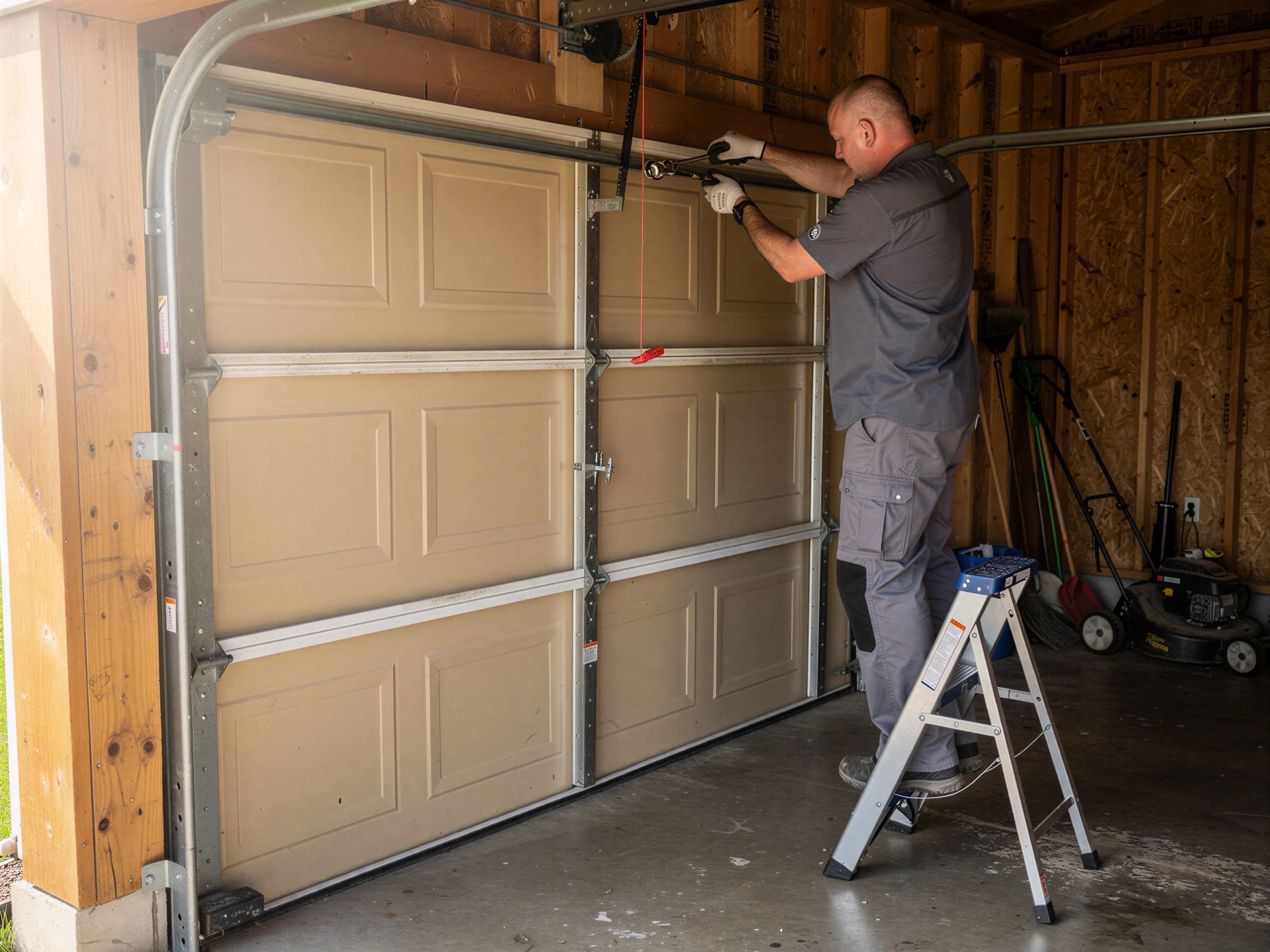
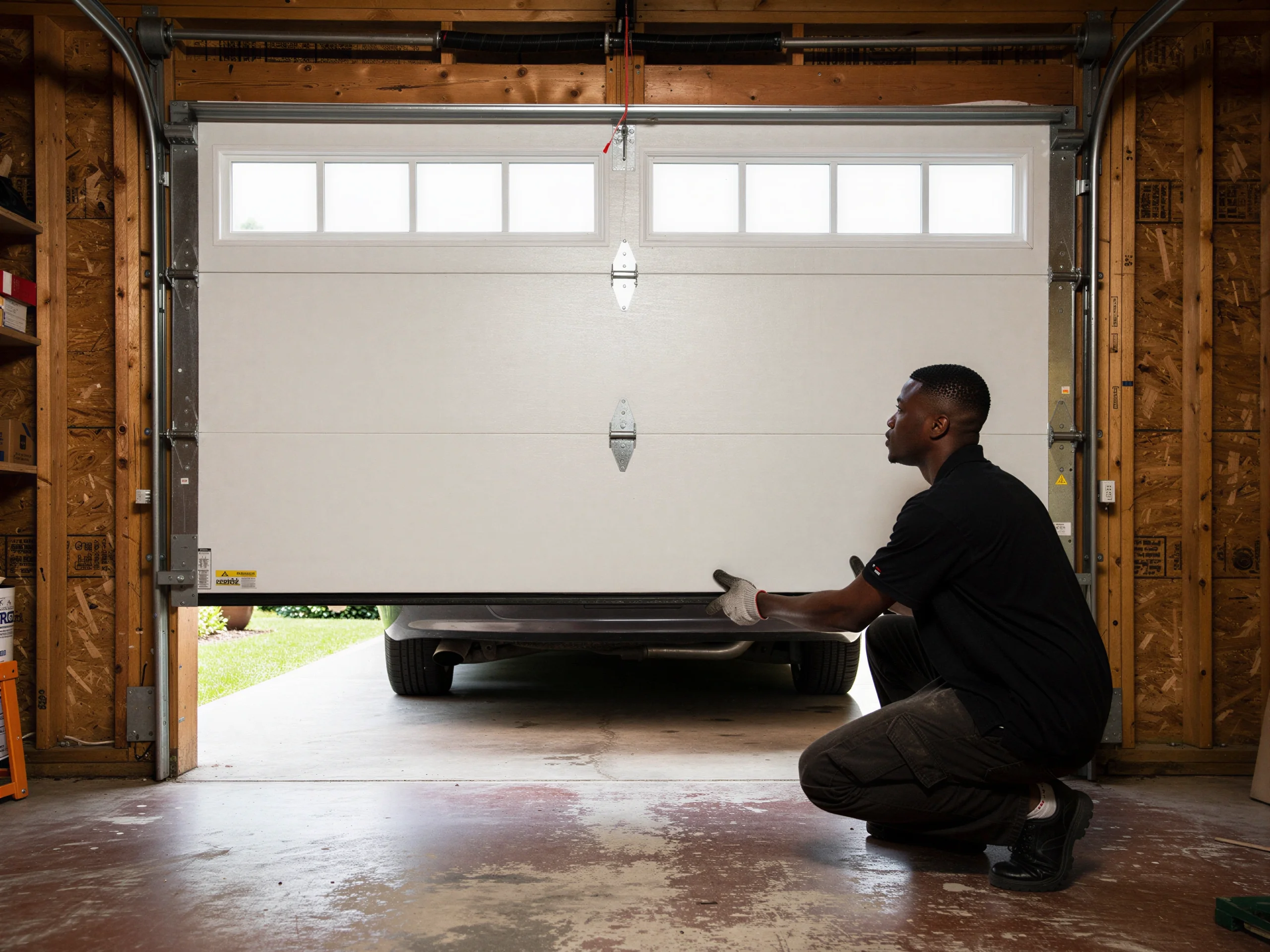
Lubing hardware, tightening the bolts on the track brackets, and testing the auto-reverse by setting a 2x4 under the door are all jobs you can do safely in an afternoon. Where it stops being a weekend project is the torsion spring.
Torsion tension injuries
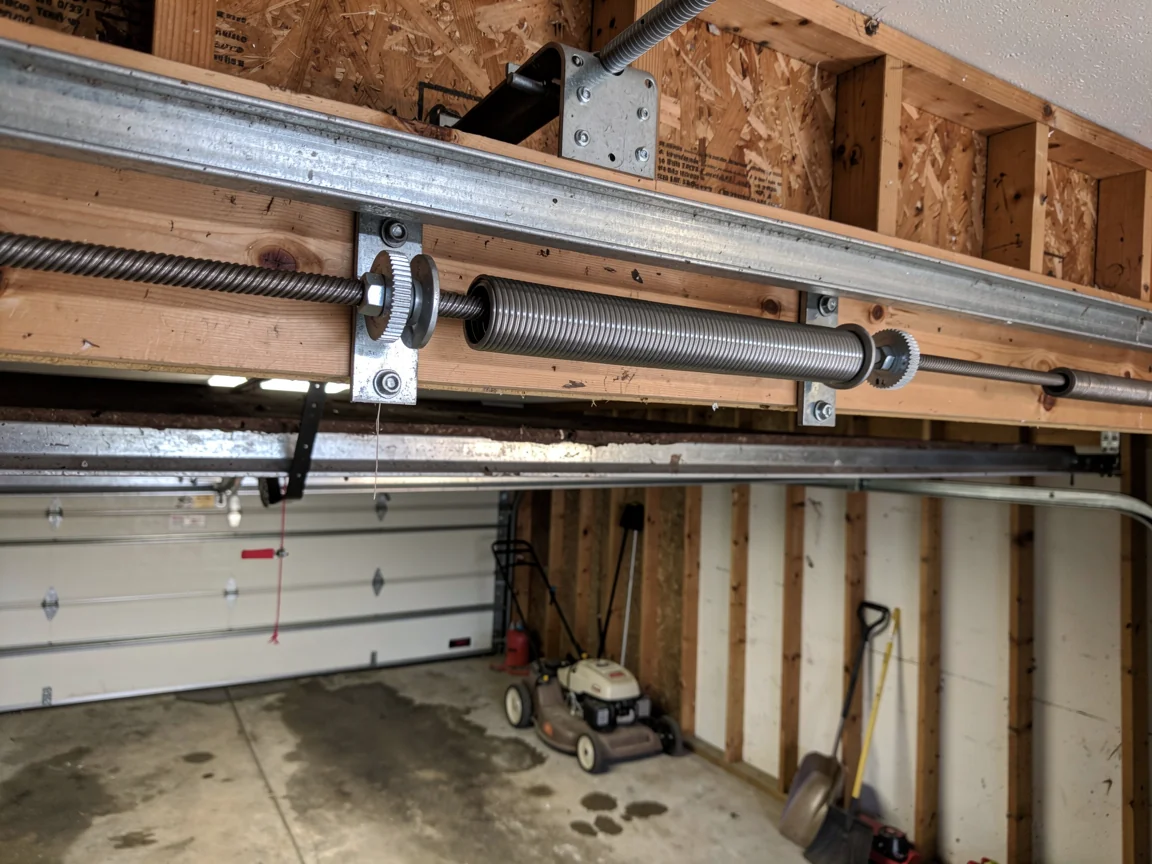
Houses in this part of Pasadena were mostly built between 1956 and 2010, with the median landing around 1984, and that generation of door came with torsion systems under real tension - enough to break a wrist or worse if the winding bars slip. We're not going to tell you it's impossible, but we will tell you it's the one repair where the savings aren't worth the hospital bill.
Cable work stays professional
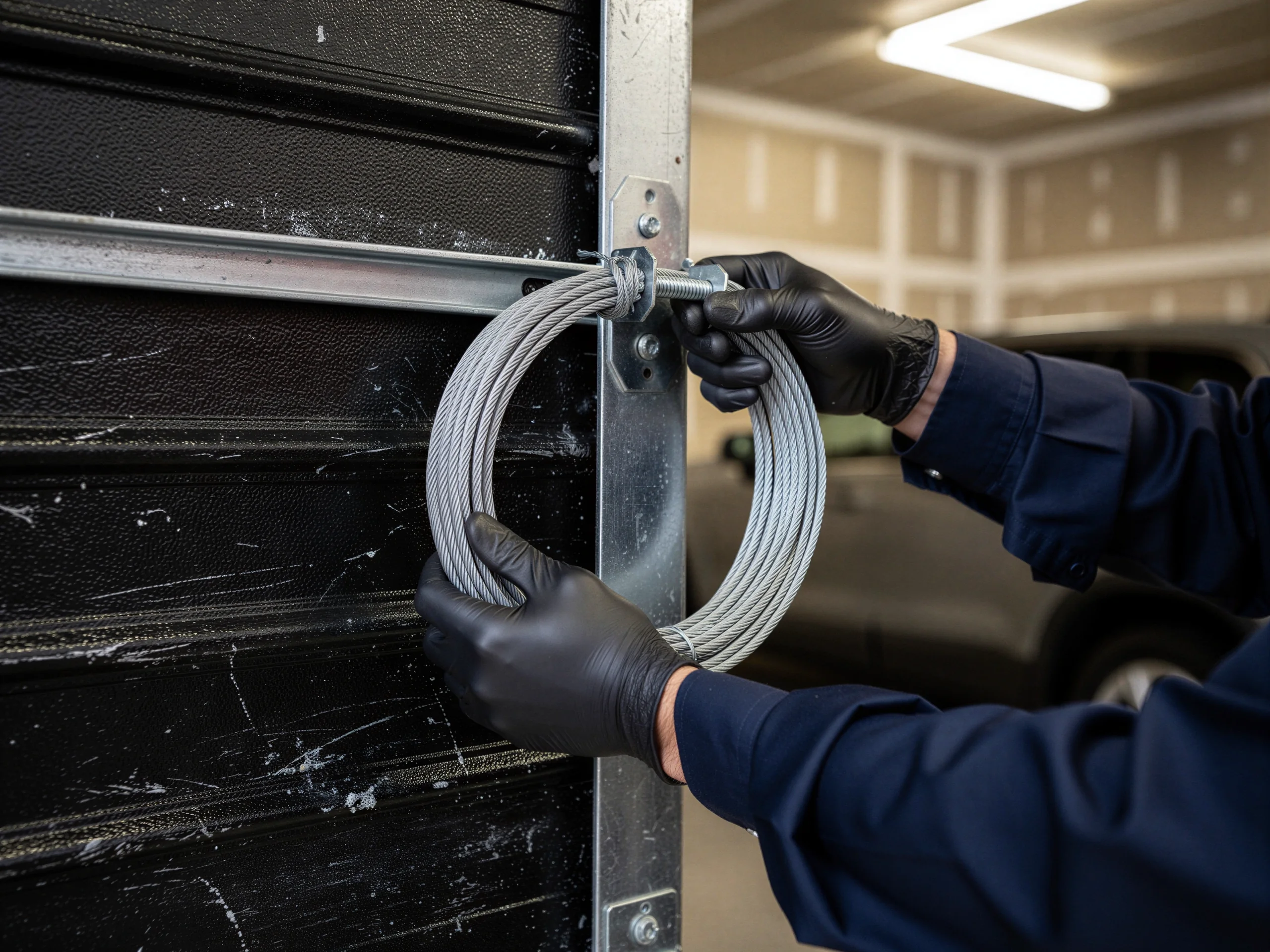
Cable work is the other line. If a cable has jumped the drum or frayed, the door is one tug away from dropping. Leave that one to someone with the clamps and the experience to hold the load. Everything else - weatherstripping, sensor alignment, tightening a loose chain - is fair game for a Saturday.
What Can Go Wrong
Across the 89,401 households this area covers, the failure we see most is a torsion spring that's simply worn out its cycle count, followed closely by openers that still run on the original circuit board decades after the door itself got replaced.
Thirty-year cycle wear
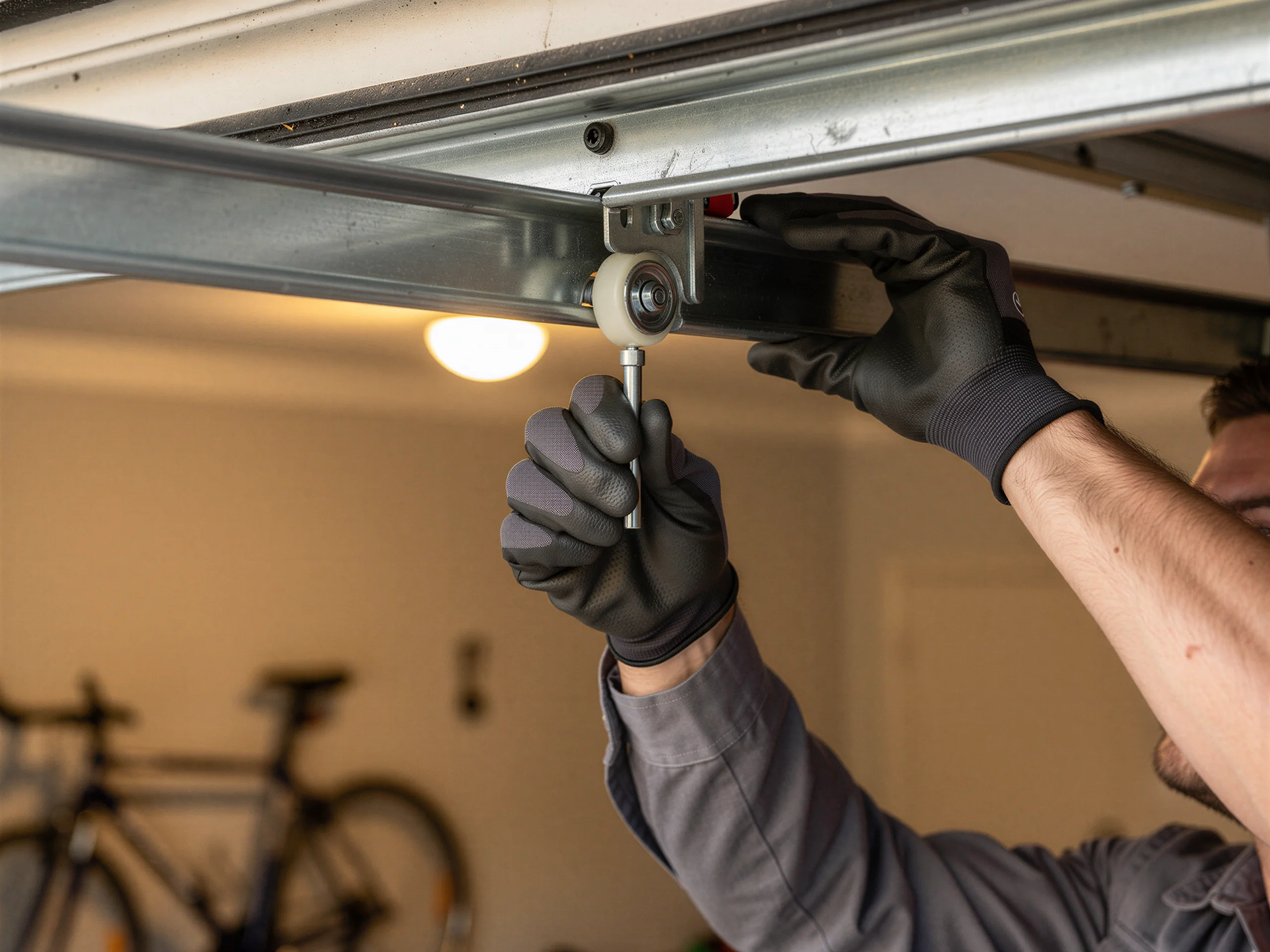
Rollers crack and bind in their tracks. Cables fray at the drum end. Bottom brackets loosen on doors that have been opened and closed two or three times a day for thirty-plus years. On the newer end of the stock - homes built closer to 2010 - the problems skew electronic: dead logic boards, sensors knocked out of alignment, remotes that stop syncing.
Fatigued steel hardware
On the older end, it's mechanical: steel that's fatigued, hardware that was never upgraded past what the builder put in. With median household income here at $80,037, we see owners make both calls - repair and replace - and both are reasonable depending on the door's age and what's actually failed.
Cheap part versus replacement
A $40 part on a door that's otherwise sound is an easy yes. A door with three separate failing systems is a harder conversation, and we'll tell you straight when replacement is the better number.
What Causes It Around Here
Pasadena sits in a mild climate with occasional freezes, and that swing matters more than people expect. Steel contracts in a cold snap and expands back once temperatures climb, and a spring or track that's been cycling through that for twenty or thirty years loses tension and alignment faster than the same hardware would in a climate that stays steady year-round.
Most of the 23 named areas in this service territory - including pockets like Houston Suburban Homes and Deer Park Gardens just a few miles out - carry housing stock concentrated in the 1980s and 90s. That generation of door came standard with lighter-gauge tracks and extension springs that were never built for 40-plus years of service. If you're near Deer Park itself, three miles southeast, or out toward Galena Park or Jacinto City at eight to nine miles, you're likely looking at original or first-generation replacement hardware.
Humidity plays a role too, even without hard freezes - it works on fasteners and springs the same way it works on everything else metal left outdoors.
What You Are Seeing
If the door shudders partway up and then stalls, that's usually a spring that's lost tension - it's doing less of the lifting than it used to, so the opener is straining to pick up the slack.
Fast drop, slam warning
A door that drops faster than it used to, or slams the last six inches, points the same direction. A loud bang from the garage, often mistaken for something falling, is almost always a torsion spring letting go. If that happens, the door will feel immovable by hand - that's the spring doing its job in reverse, now offering zero assistance.
Grinding and scraping sounds
Grinding or scraping as the door travels usually means a roller has cracked or a track has pulled away from the frame, common on the older stock in this area where brackets were fastened to studs that have since shifted slightly over the decades.
Blinking sensor misalignment
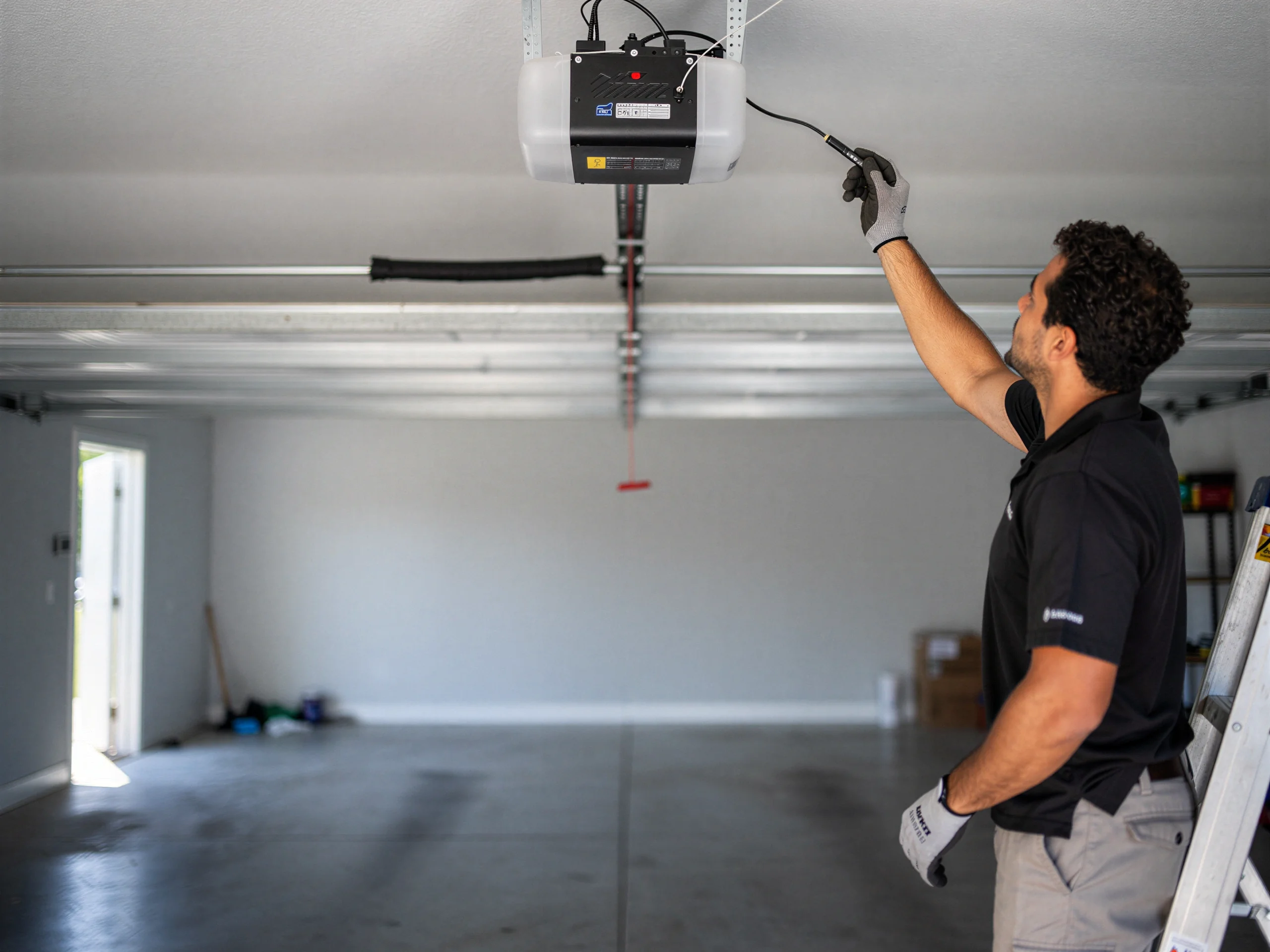
Sensors that blink but won't let the door close are almost never the sensor itself - it's usually alignment, or sunlight hitting the eye at the wrong angle in the afternoon. We don't guess at this over the phone. A five-minute look tells us which of these it actually is.
Talk to a local pro
Garage door service in Pasadena?
Same-day service with honest, upfront quotes.