Doing It Yourself
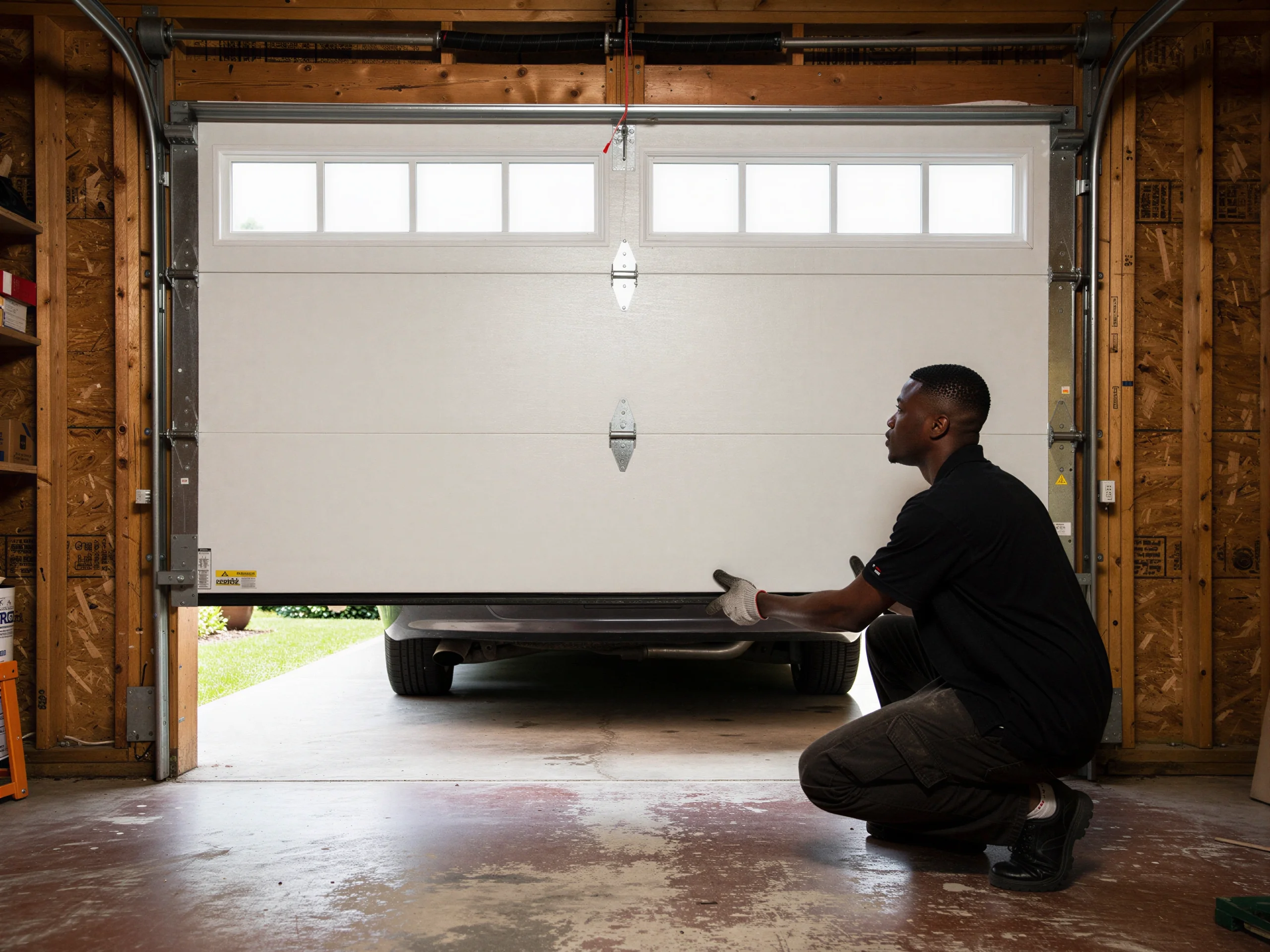
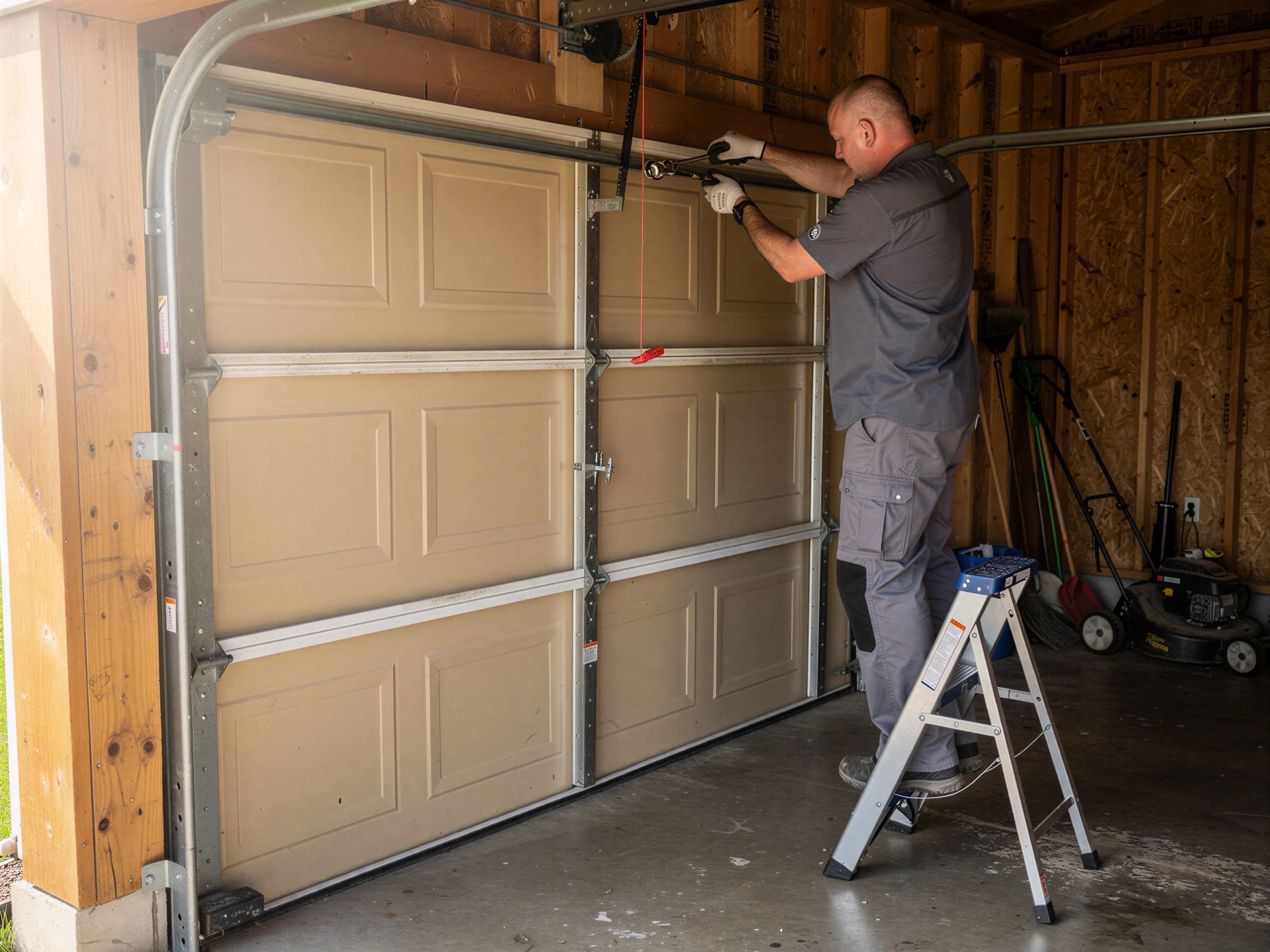
Swapping a single roller on a lightweight residential door is within reach for someone comfortable with a socket wrench and a clamp to hold the door shut, but it's not a job to rush.
Secure the door first
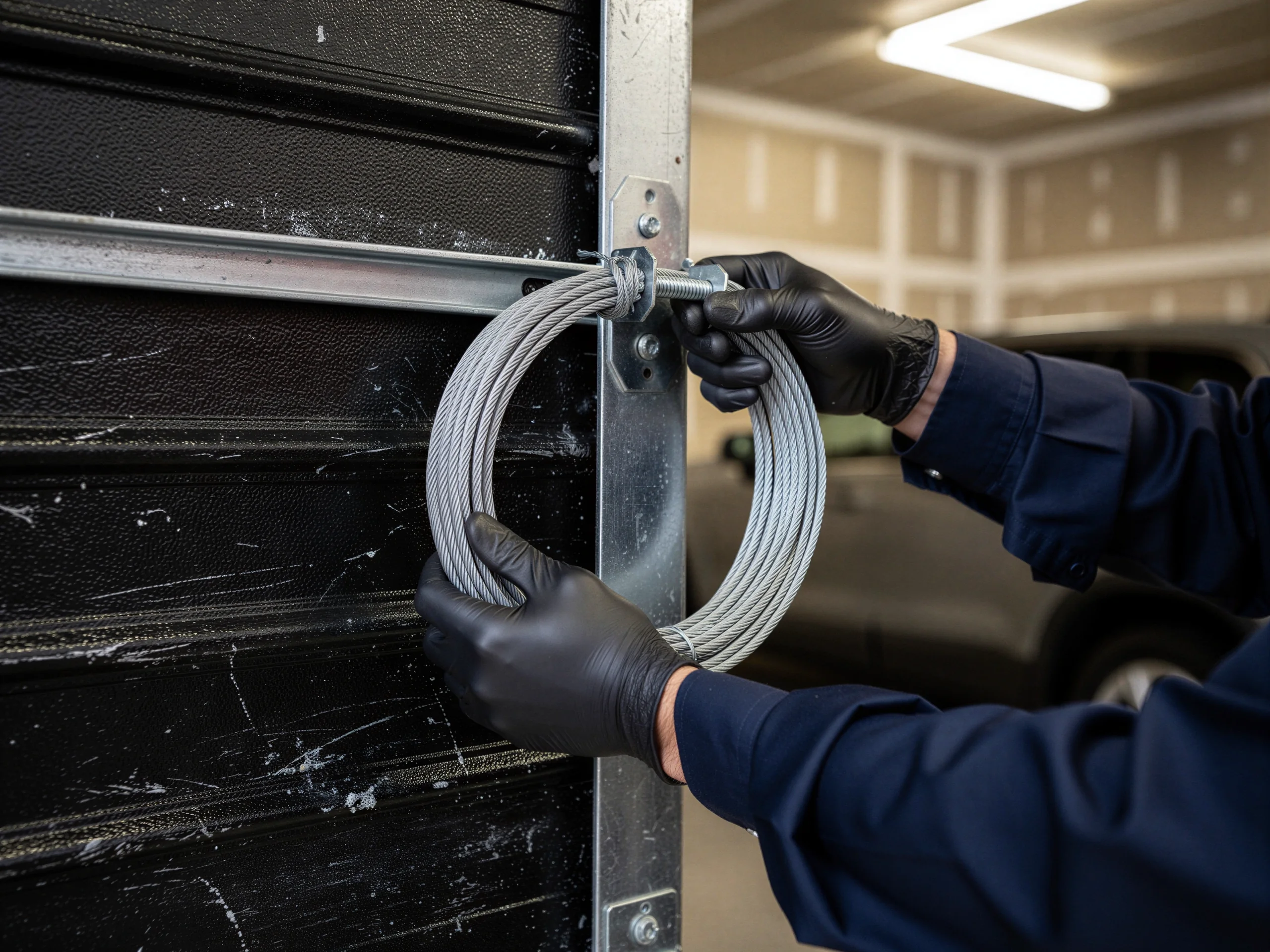
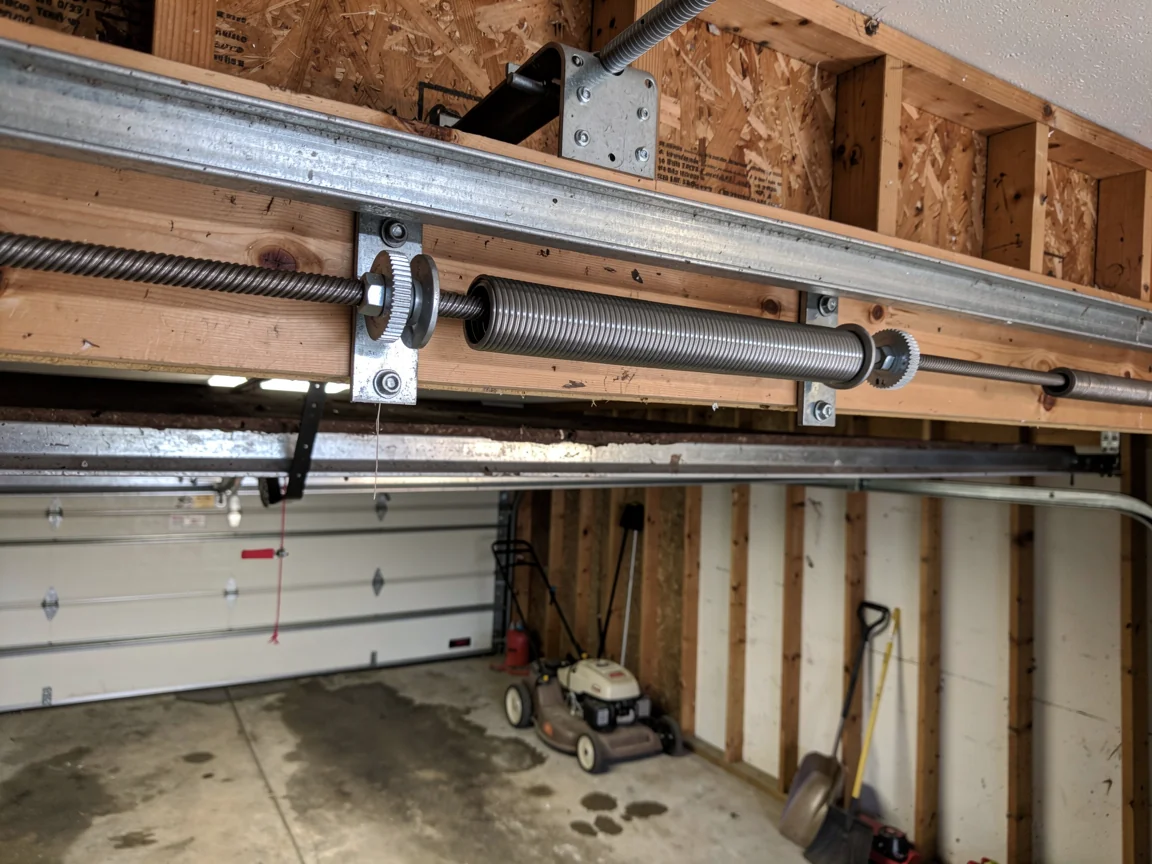
The door has to be secured so it can't fall on you once a roller bracket is loose, and the bottom bracket on a torsion-spring door carries high cable tension even with the door down.
Full roller set wear
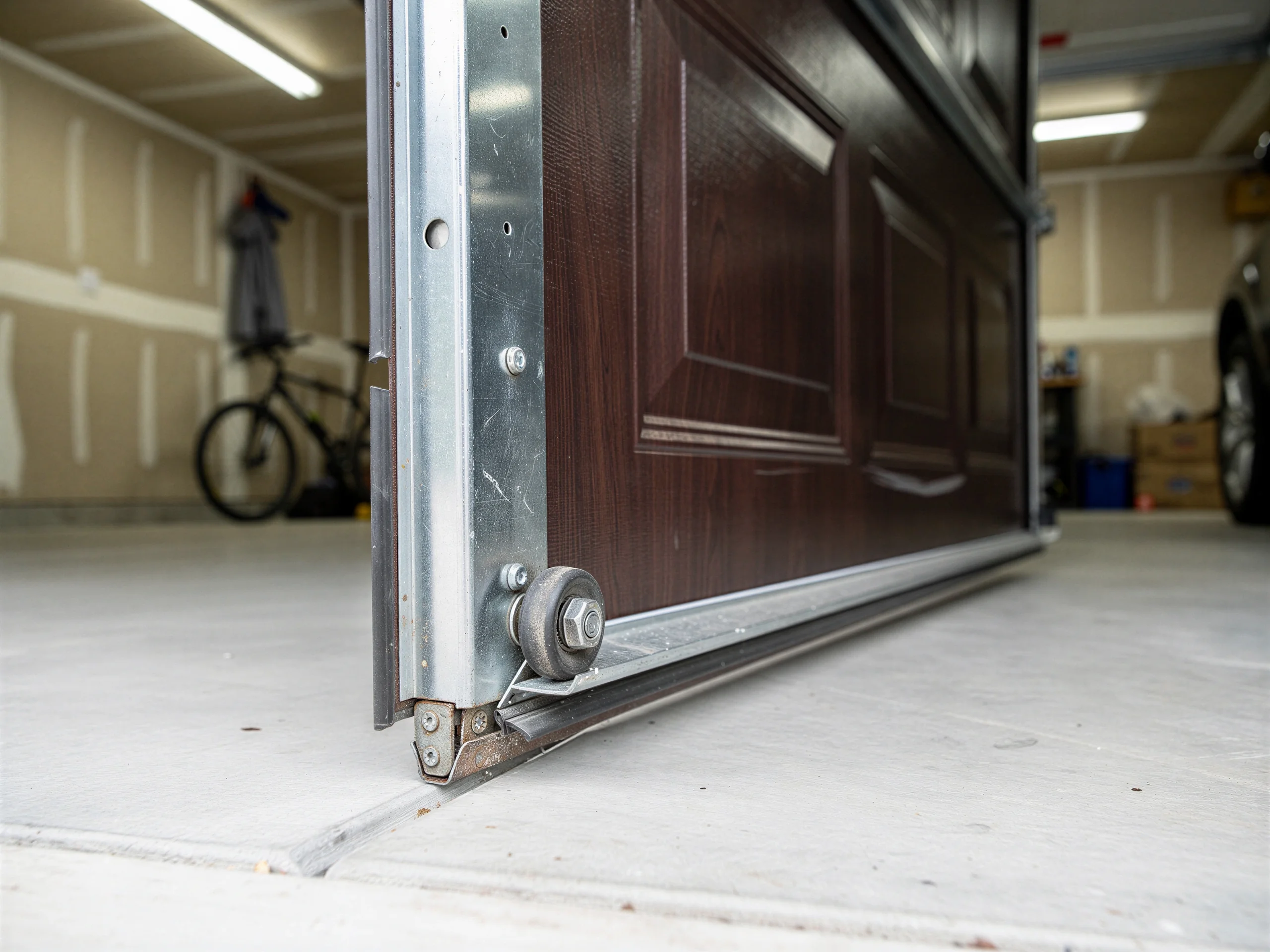
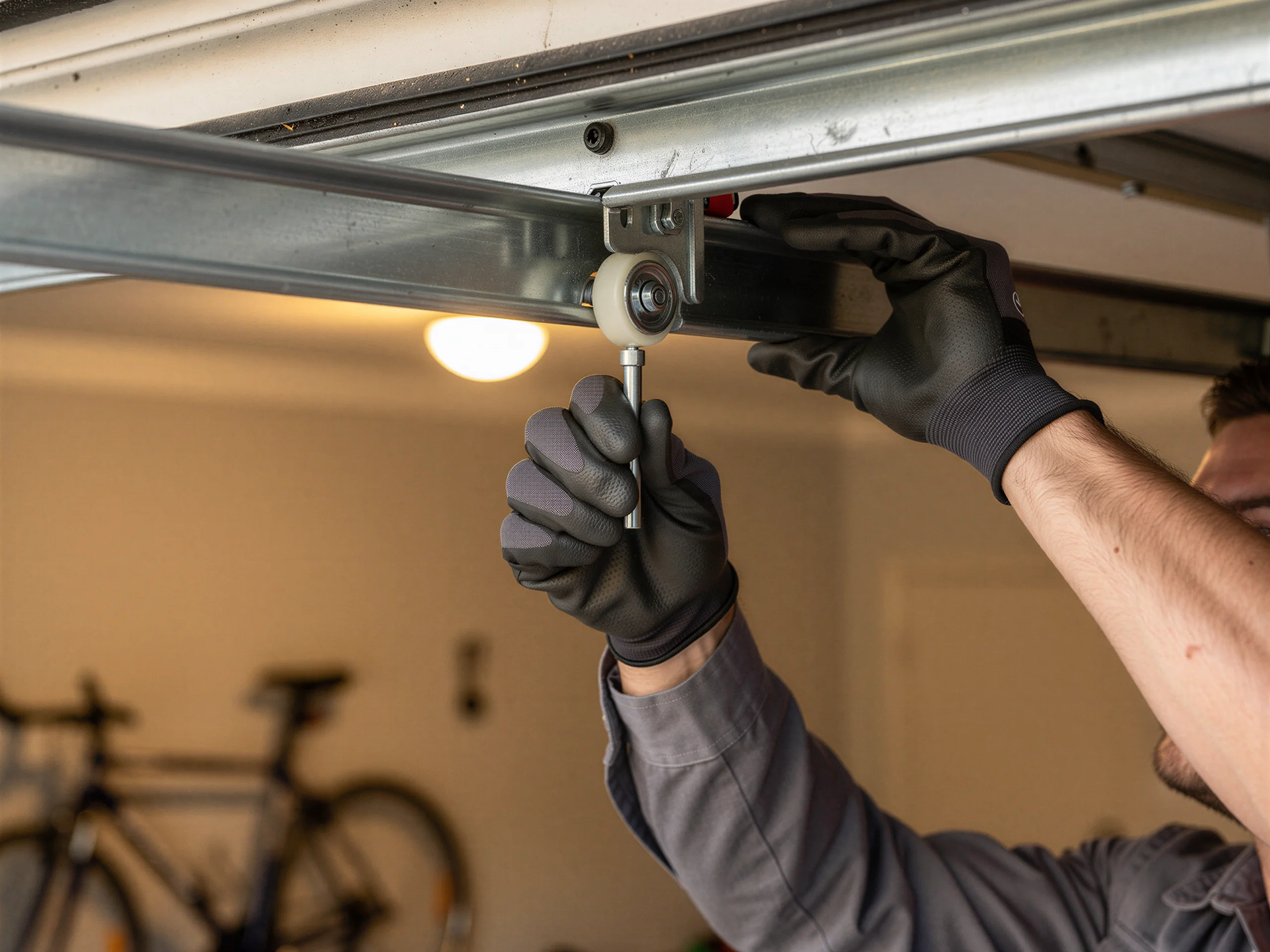
If more than two or three rollers are worn, or if you see a bent track alongside them, that's usually a sign the whole roller set is at the end of its life together, not one bad part. Nylon rollers with sealed bearings are a straightforward bolt-in swap on most doors built since the 1980s.
Spreading track to seat
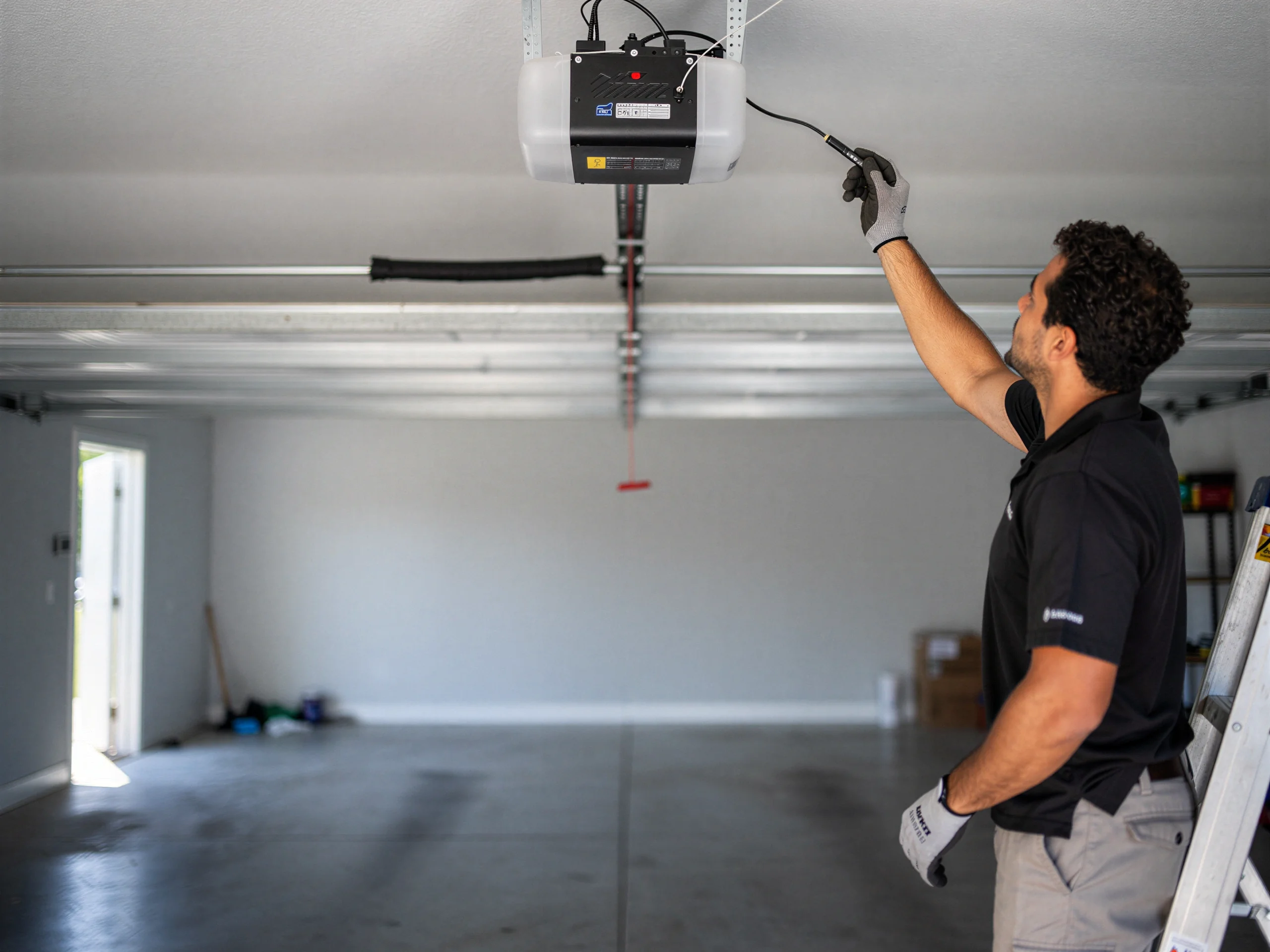
Steel rollers on older hardware sometimes need the track spread slightly to seat the new roller stem, which is where DIY attempts most often go wrong and bend the track instead. If your opener is still pulling the door against a dragging or catching roller, don't keep running it. A motor forcing past a bad roller wears the opener gears faster than it wears anything else.
What Can Go Wrong
A roller that's worn down or cracked doesn't fail quietly. The first sign is usually noise - a rhythmic thump or grind every time that section of track passes the bad roller - followed by the door sticking at the same spot on every cycle.
Curve-point derailment
Left alone, a failing roller can jump the track entirely, especially at the curve where the horizontal track meets the vertical section, and a jumped track under load can bend the track or pop a hinge.
Uneven load on opener
On double doors, a bad roller near the end stile puts uneven load on the opener's drive mechanism, which shortens the life of the chain or belt and can strip the plastic gear inside the unit.
Slow grind tolerated
None of this requires a dramatic failure - it's usually a slow grind that owners get used to tolerating for months before the door finally won't open at all.
What Causes It Around Here
Housing across the service area mostly went up between 1956 and 2010, with the bulk of stock from the 1980s and 90s spread across the 23 named communities we work in. Doors and track hardware installed during that build-out are now 30 to 45 years old in a lot of cases, and original steel rollers with unsealed bearings simply wear out on that timeline regardless of how well the door was maintained. The climate band here is mild with occasional freeze risk, so it isn't deep cold cracking rollers the way it might further north - it's humidity and heat cycling that dries out old lubrication and lets grit work into bearing races faster than in a drier climate. Combine 1980s-era steel rollers with decades of that heat-humidity cycle and track misalignment follows almost on schedule, which is why roller wear shows up as a cluster of service calls across the same housing-age neighborhoods rather than as random, one-off failures.
What You Are Seeing
If your door makes a flat, repetitive thump as it travels, stop and look at the rollers before you touch anything else. A cracked nylon roller or a steel roller with a flat spot worn into it will show visible damage once you pull the door down and look along the track.
Seized bearing rust streaks
Rust streaking on the track itself, right where a roller sits when the door is closed, usually means that roller's bearing seized up a while back and it's been dragging metal-on-metal since.
Same-spot shudder points roller
If the door shudders or hesitates at the same point in the track every time, that's the bad roller's exact location - not a spring issue and not an opener issue, even though both get blamed first.
Bent track needs fixing
One limitation worth saying plainly: if the track is bent from a jumped roller, replacing the roller alone won't fix the noise or the binding. The track needs straightening or replacing too, and trying to force a new roller through a bent section just wears it out again within weeks.
Talk to a local pro
Garage door service in Pasadena?
Same-day service with honest, upfront quotes.