Doing It Yourself
A door that's slipped off its track isn't always a lost cause, but you need to know what you're looking at before you touch anything.
Walking back a roller
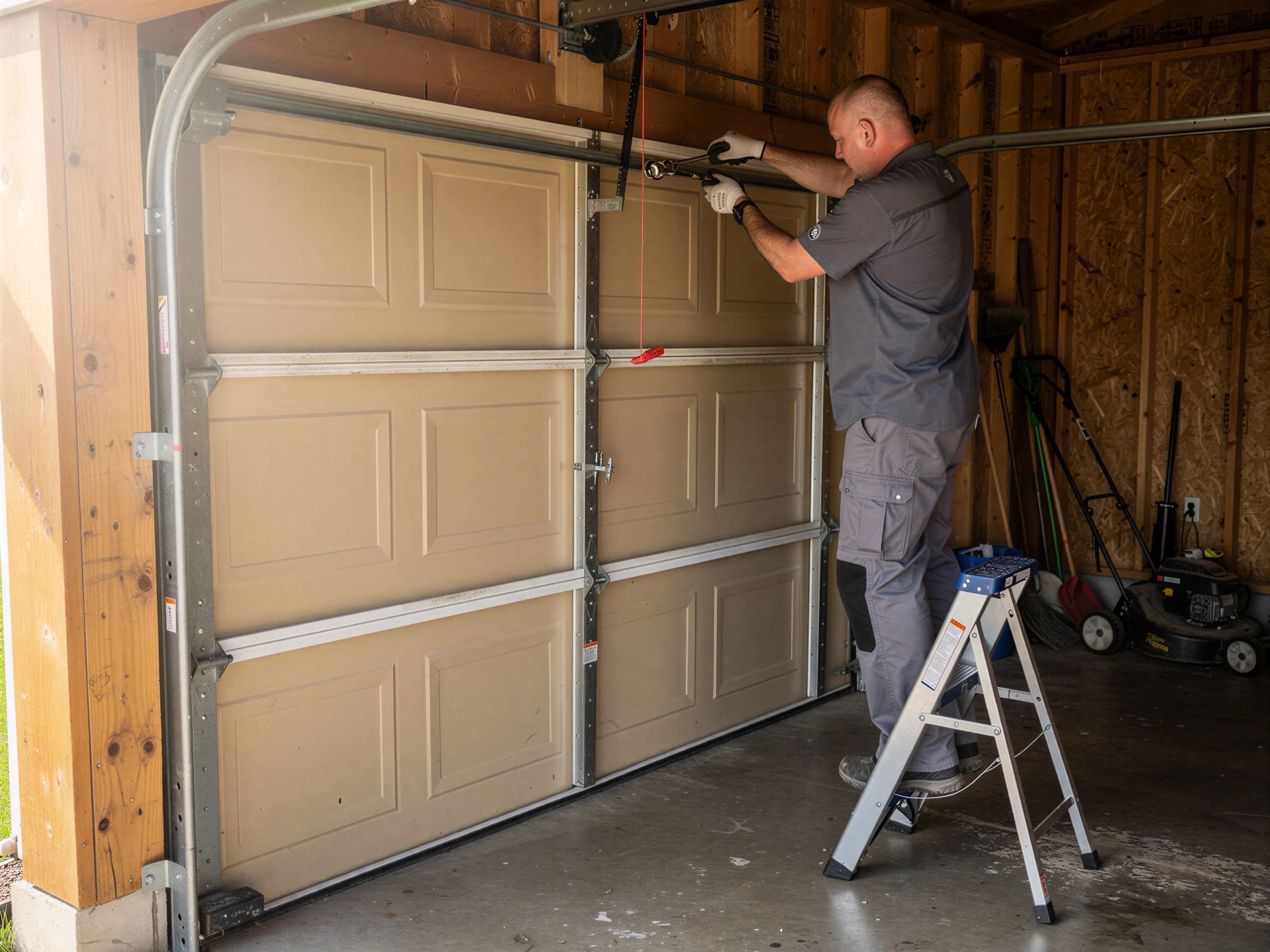
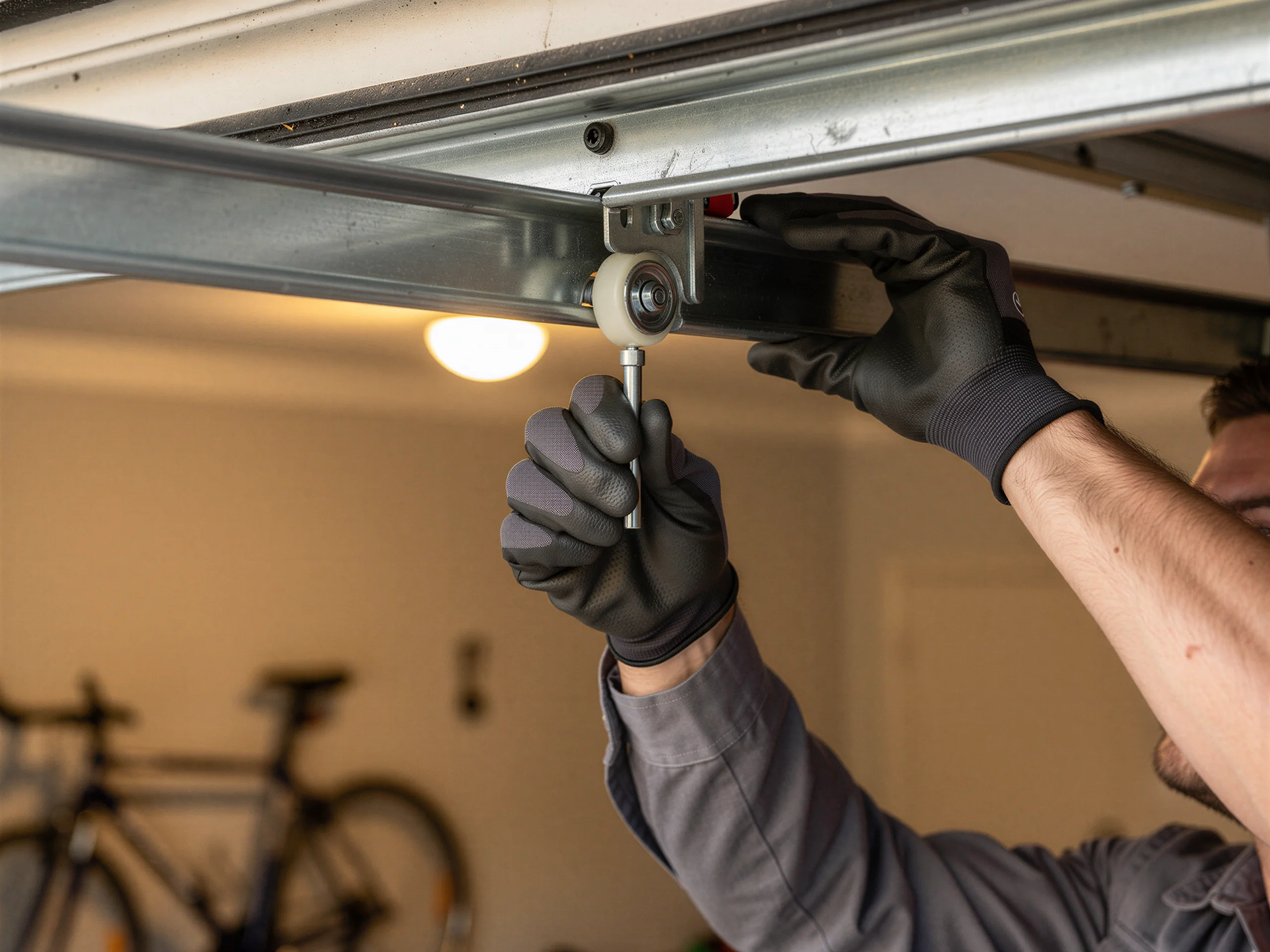
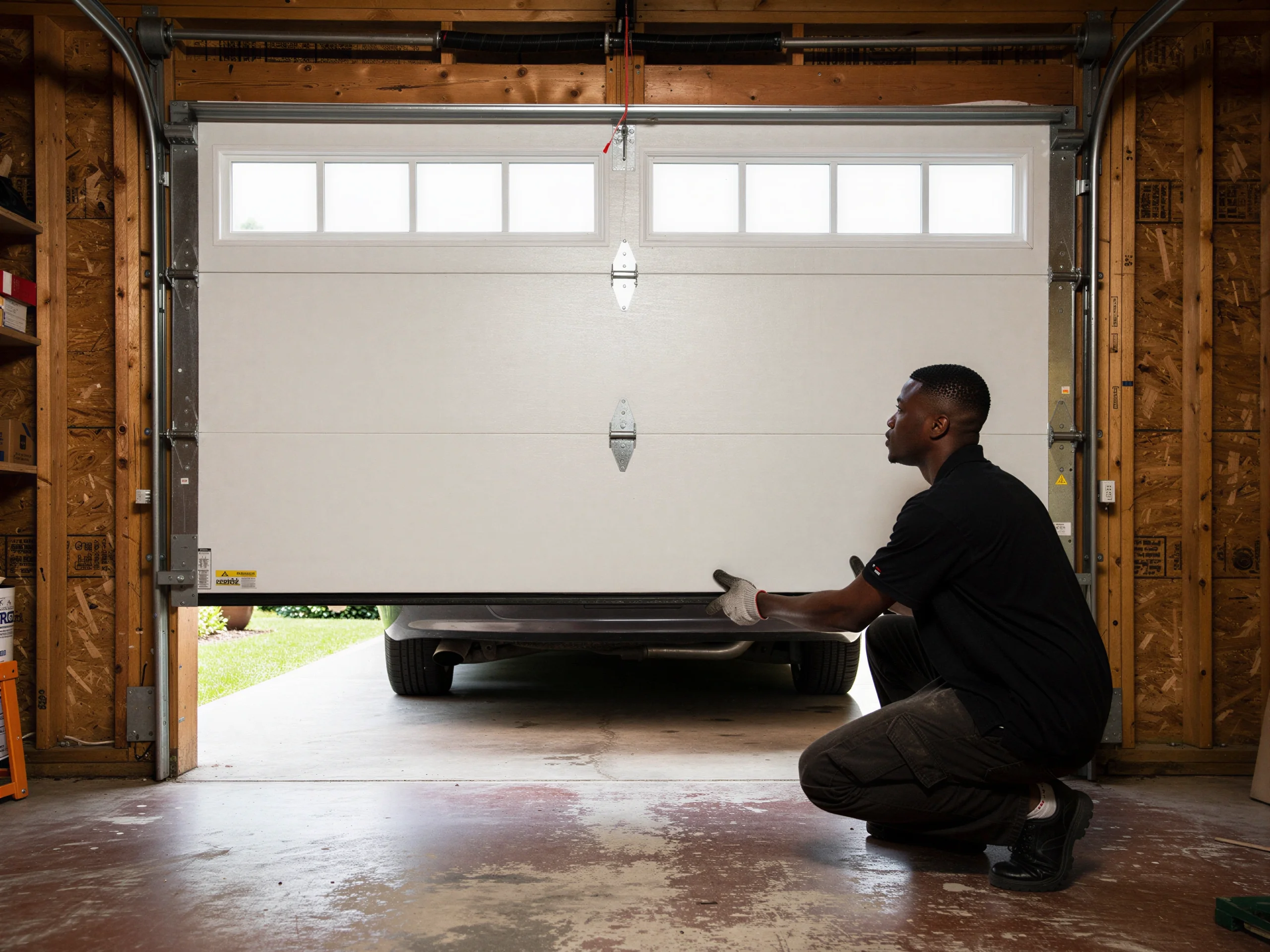
If one roller has popped out of the track near the bottom and the door still sits roughly square, you can sometimes walk it back by hand after you've unplugged the opener and closed the door the rest of the way by pulling the release cord.
Pulled bracket, not roller
Check the track for a gap where it meets the wall bracket - if the bracket itself has pulled loose from the framing, that's a mounting problem, not a roller problem, and pushing the door back won't fix it. Here's the limit: if the track is visibly bent, if a cable has come off the drum, or if the door is hanging at an angle instead of sitting flat, stop.
Hidden cable snap danger
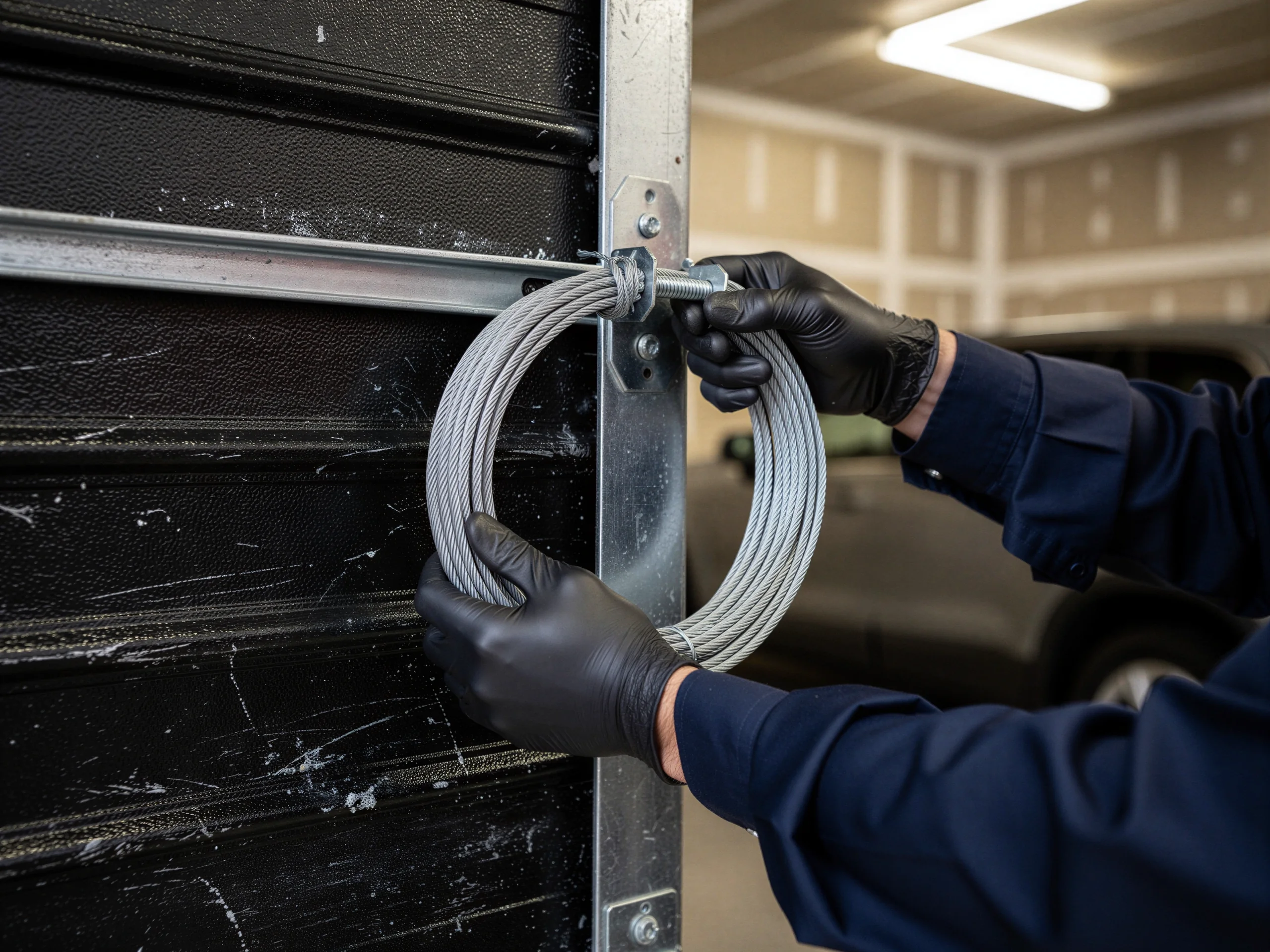
A door under spring tension that's already off one track can come down fast and there's no way to tell from looking whether a cable is about to let go. We'd rather talk you out of a job on the phone than have you find out the hard way that a 150-pound door doesn't care how careful you are.
What Can Go Wrong
The thing that turns a simple off-track fix into an expensive one is usually what happens in the few seconds after the roller leaves the track.
Tilting load on holds
The door doesn't stop moving - it tilts, and whatever is still holding it (a cable, a hinge, the opposite roller) takes weight it was never built to carry. We see cables snap at that point more often than tracks bend. Once a cable's gone, the door is held by one side only, and that side can fail next.
Creased panels from forcing
Panels take damage too. A door that's off track and still gets forced up and down on the opener a few times before anyone notices will often crease or buckle a panel against the track edge, which turns a roller-and-track job into a panel replacement.
Safety over cosmetic damage
And if anyone is standing underneath when the last support point gives out, that's the actual safety issue, not the cosmetic damage to the door. Worth saying plainly: we don't recommend running the opener at all once you know the door is off track, not even to test it. Hand-operate it only as far as needed to get it fully closed, then call.
What Causes It Around Here
Most of the houses in this service area went up between 1956 and 2010, with the median build year sitting around 1984, and that 1980s-to-90s stock repeats across all 23 named areas this shop covers, not just one neighborhood. Doors and track hardware from that era were builder-grade to begin with, and three or four decades in, the galvanized track brackets and roller stems are past the point where misalignment corrects itself. A track that's a quarter-inch out of plumb on a newer door is a non-issue; on a track that's been flexing slightly for 35 years, it's enough to walk a roller right out of the channel.
The climate here is mild with only occasional freeze, not the deep freeze-thaw swings that crack steel brackets and warp wood jambs in colder states - so when we do find a door off track, it's almost never an ice problem. It's wear: loose carriage bolts at the bracket, a roller stem worn thin, or a track that's been nudged slightly by a car bumper over the years and never fully reset.
The service area stretches from Deer Park three miles away out past Crosby and Santa Fe at nineteen, and the pattern holds across that whole stretch - older track hardware doing the job for longer than it was designed to.
What You Are Seeing
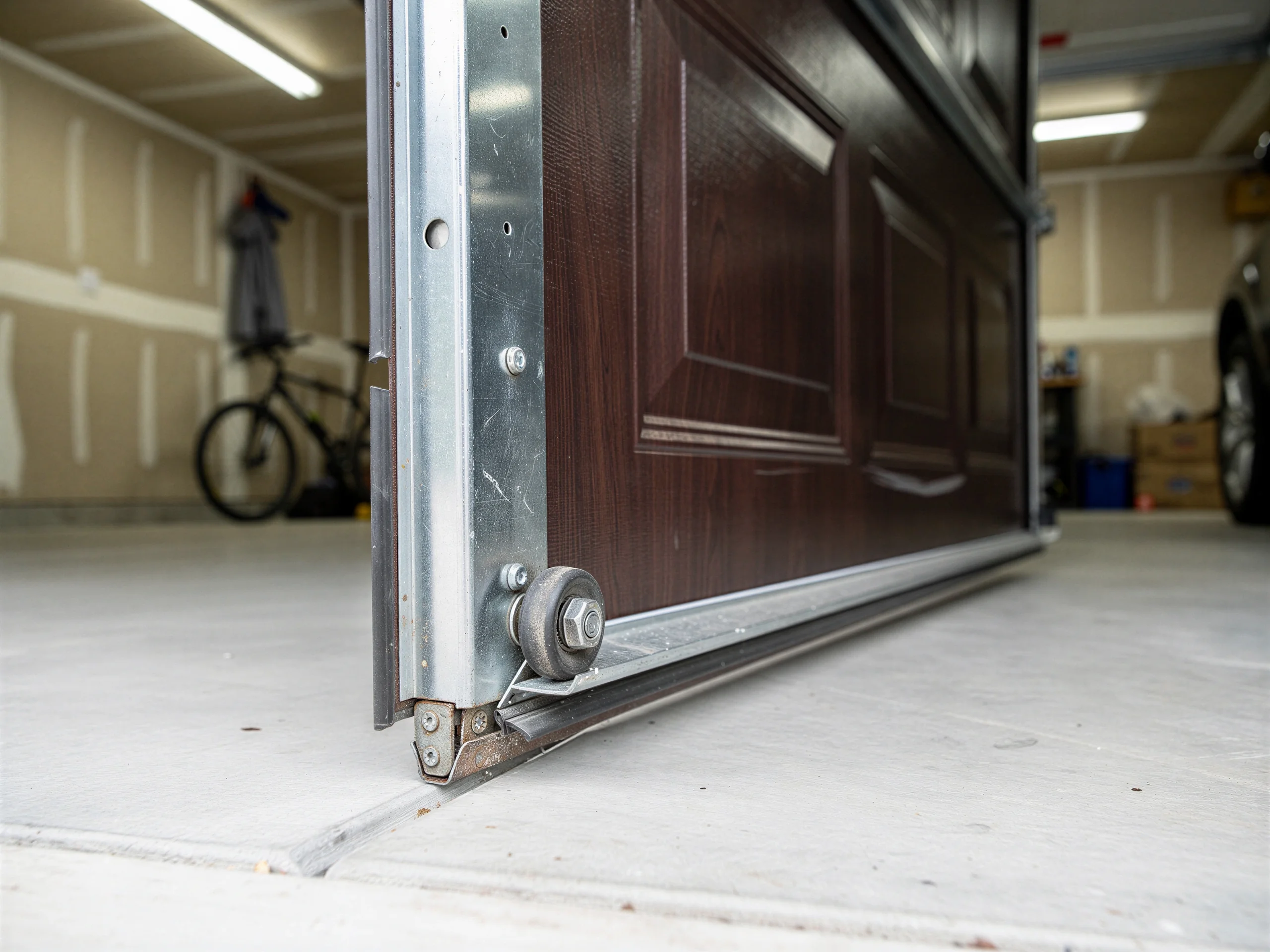
The clearest sign is a visible gap between the roller and the track, usually near the bottom corner, with the door sitting crooked instead of flush in the opening.
Subtle scrape mid-cycle
Sometimes it's subtler: the door still closes but you hear a scrape or a knock partway through the cycle, which usually means a roller is riding on the edge of the track instead of inside it, and it's a matter of time before it comes all the way out.
Untouched bracket hardware
Of the roughly 89,401 households in this territory, about 55,650 are owner-occupied houses, and most of those have never had the track hardware touched since the house was built. That matters here because a bracket that's never been re-torqued will eventually shift under the door's own weight, especially on the side that takes the most daily use - usually the side nearest the walk-through door.
Light gap signals off-track
If you're seeing light coming through a gap at the side of the door when it's closed, or the door looks like it's leaning rather than sitting square, that's an off-track door, not a balance problem or a worn weatherstrip. Those get fixed differently, so it's worth knowing which one you've actually got before anyone shows up with the wrong parts on the truck.
Talk to a local pro
Garage door service in Pasadena?
Same-day service with honest, upfront quotes.