Doing It Yourself
A snapped lift cable looks like a two-minute fix until you're standing under a door with 150+ pounds of spring tension still loaded in the torsion bar.
Not a weekend fix
We'll say it plainly: this is not a YouTube Saturday job. The cable itself is cheap. What kills people is the stored energy in the spring system next to it, and on a double door that tension is enough to break fingers or worse.
Aircraft cable specifics
In a place like Channelview, with roughly 12,543 households and a lot of them sitting on original 1980s-era torsion hardware, the cables you'll find are usually standard 1/8-inch aircraft cable on steel drums - not exotic, but worn drums or a misaligned pulley can shred a new cable in weeks if the root cause isn't fixed at the same time.
Bad hardware ends job
Our honest limit here: if you call us for "just the cable" and we get on site and find the drum grooved or the shaft bent, we're not going to wind a new cable onto bad hardware and call it done. That's a callback waiting to happen, and we'd rather tell you upfront than let it fail again in a month.
What Is on the Truck
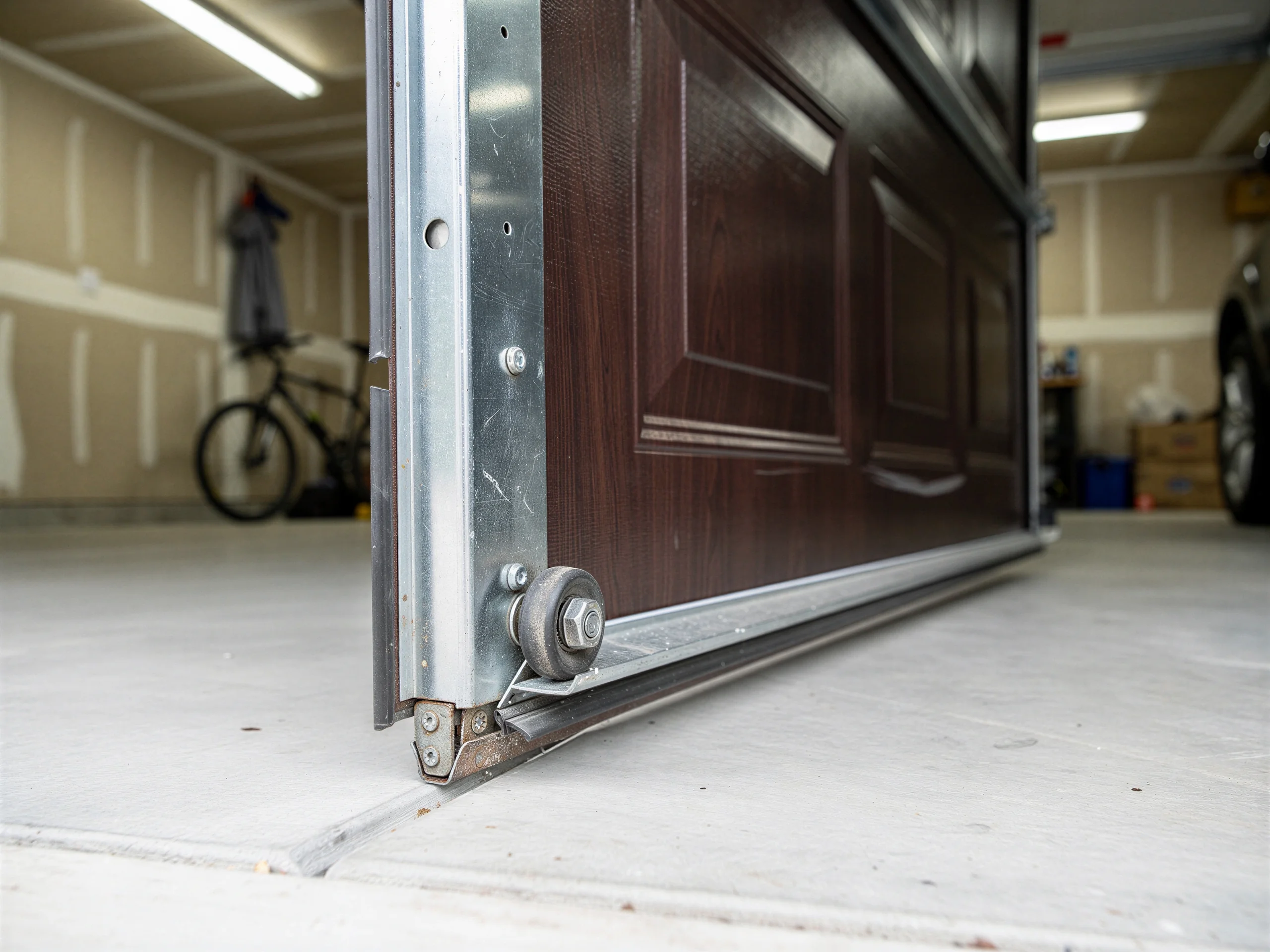
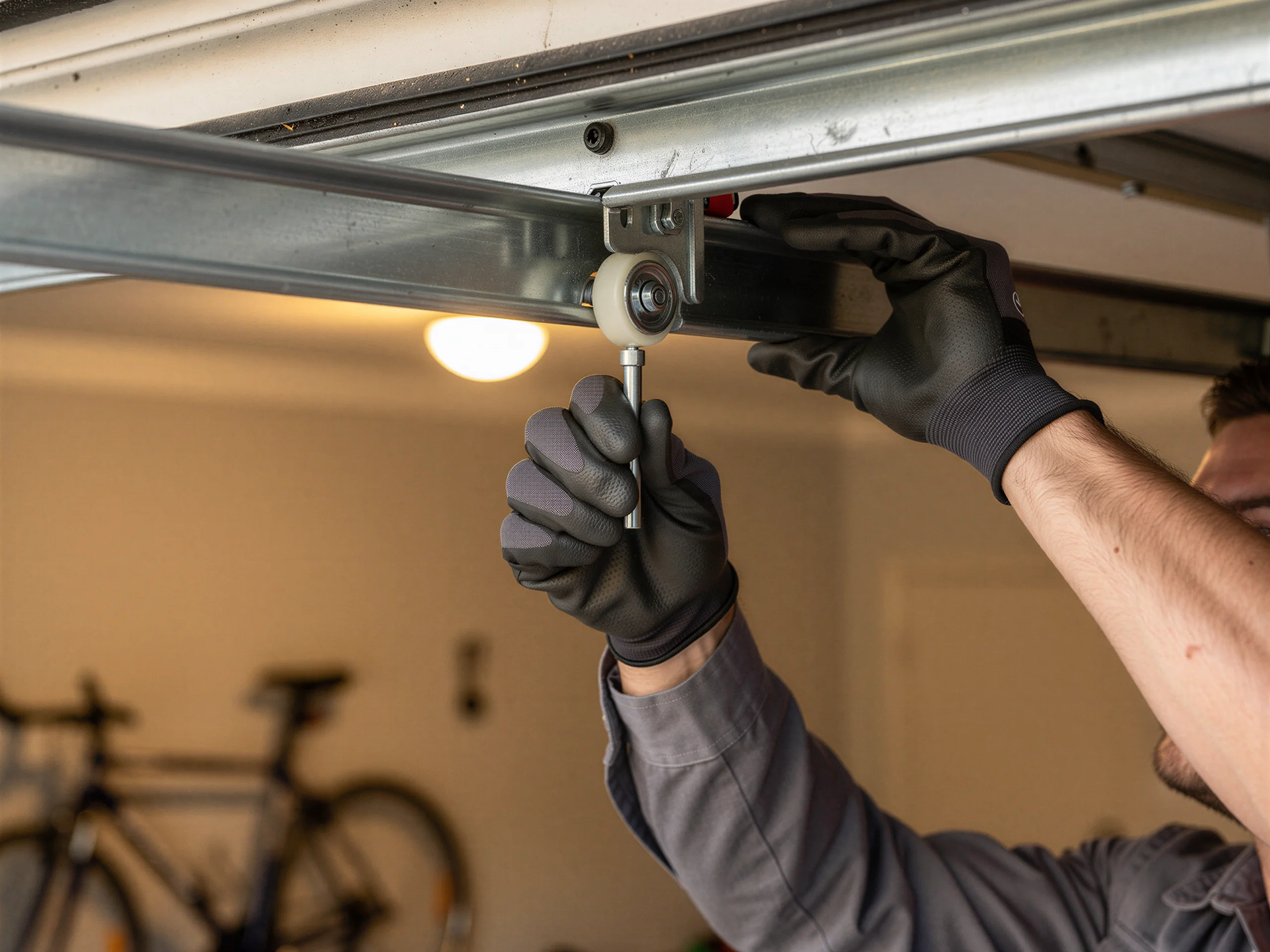
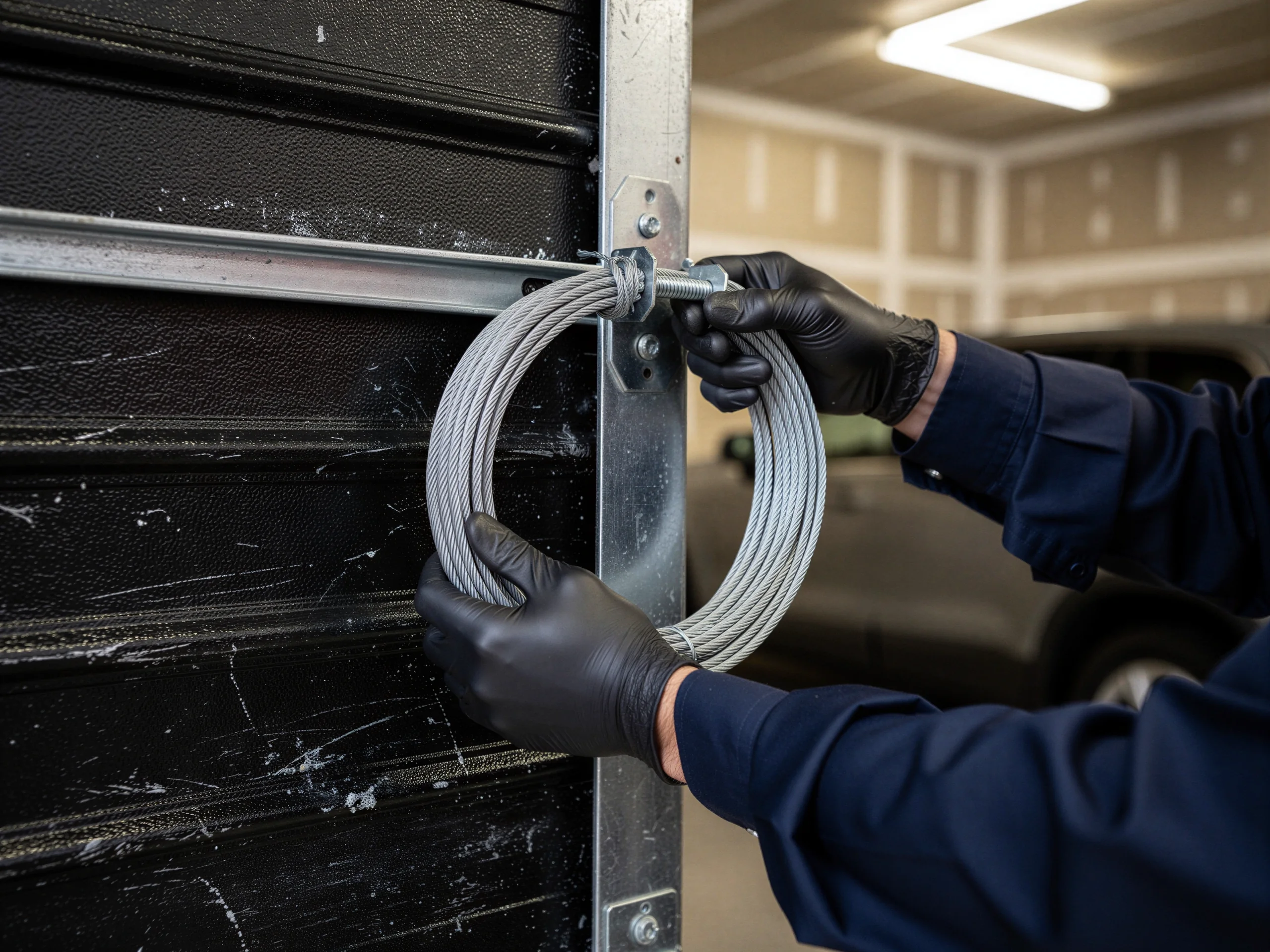
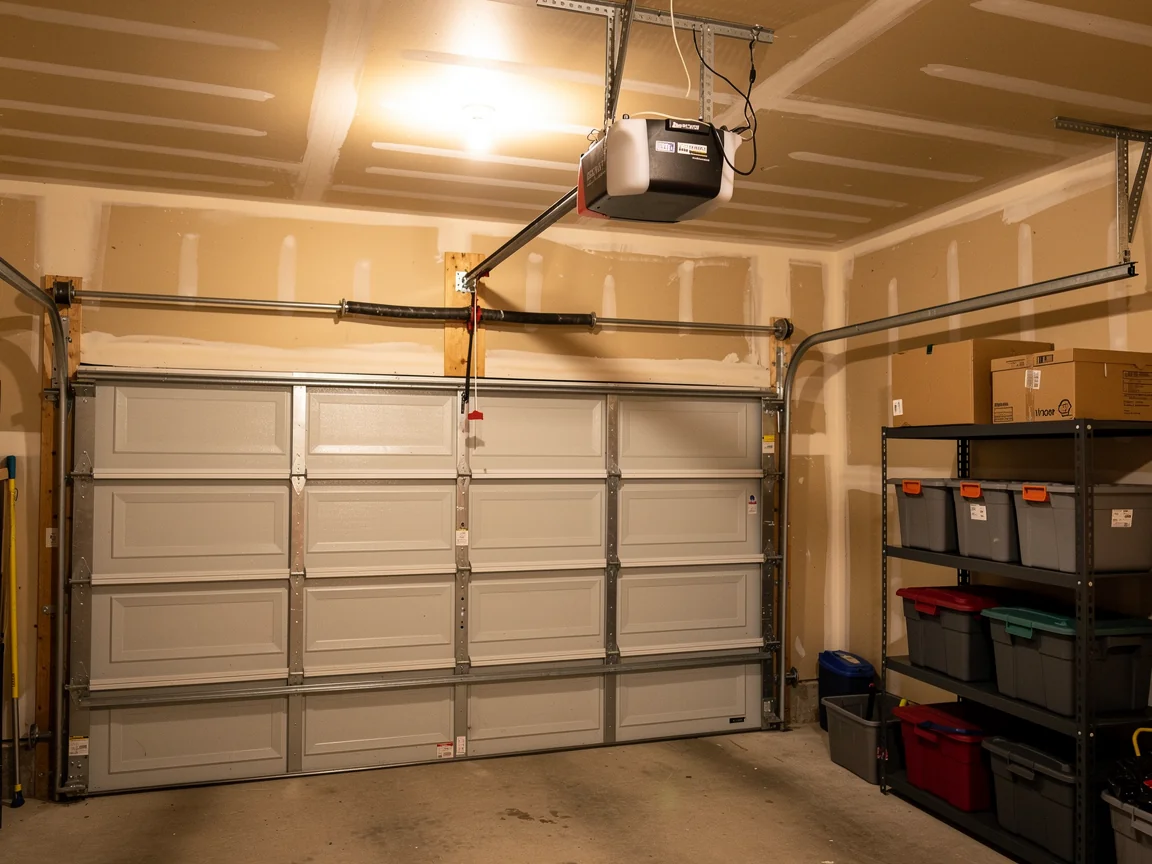
For Channelview calls we stock the cable sizes that match the housing stock out here - mostly 1/8-inch and 7x19 galvanized aircraft cable sized for standard torsion-spring double and single doors built from the mid-1980s through the 2000s. We also carry drums, end bearing plates, and the steel rollers that tend to go bad alongside a cable on a door that age.
What we don't load the truck with: parts for older wood-panel extension-spring setups, since that hardware isn't common in the Channelview stock the way it might be in an older part of the service area. If your door turns out to be one of the exceptions, that's a second trip, not a guess on the first one.
What the Fix Involves
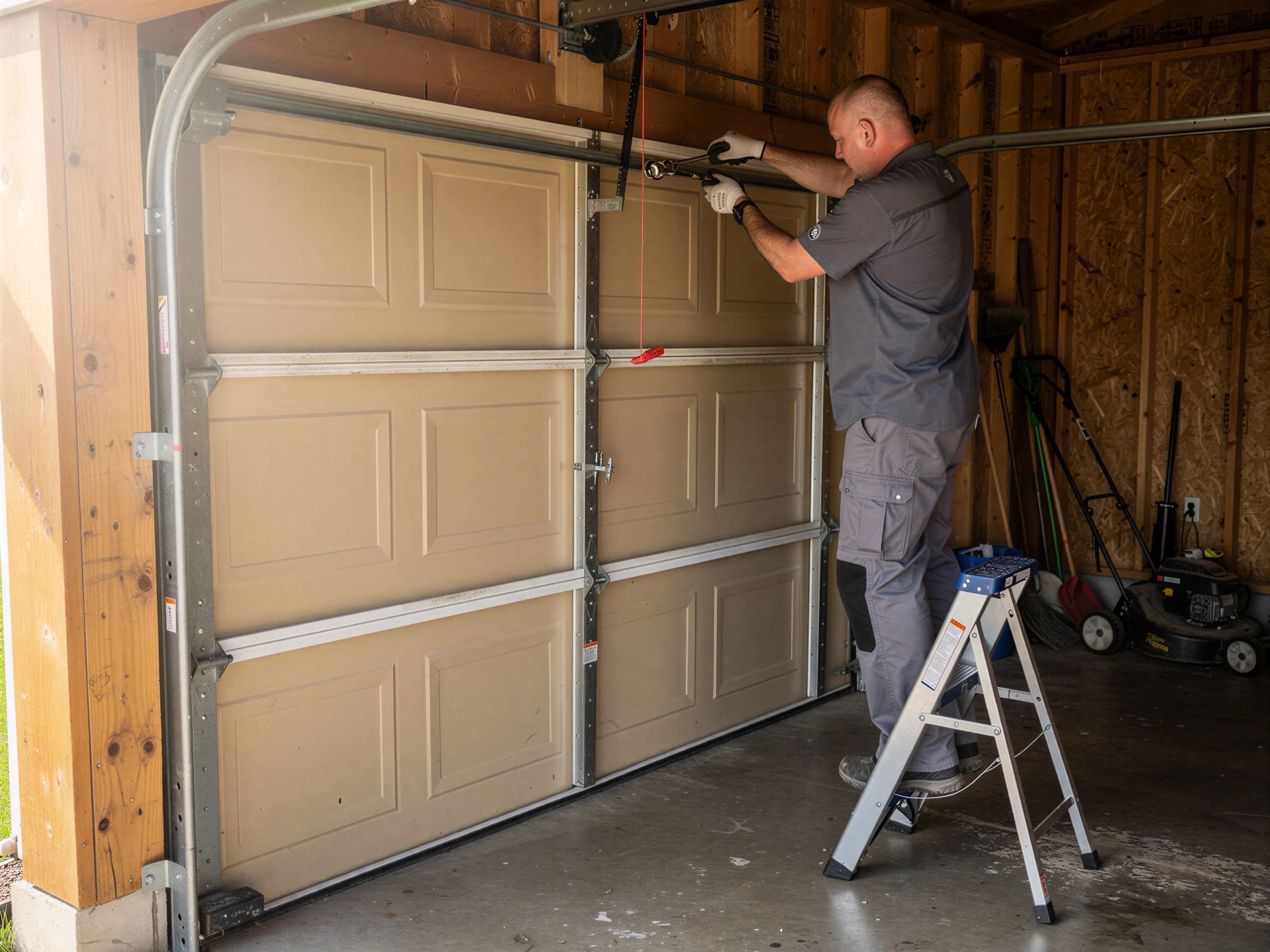
First we release the spring tension safely - that's the step that makes this a call-out job, not a DIY one.
Inspecting drum and pulley
Then we pull the broken cable off the drum, check the drum groove and the pulley or bearing it rides on for wear, and measure the door against the opening to make sure we're cutting the replacement cable to the right length rather than guessing from the old piece.
Manual cycle test first
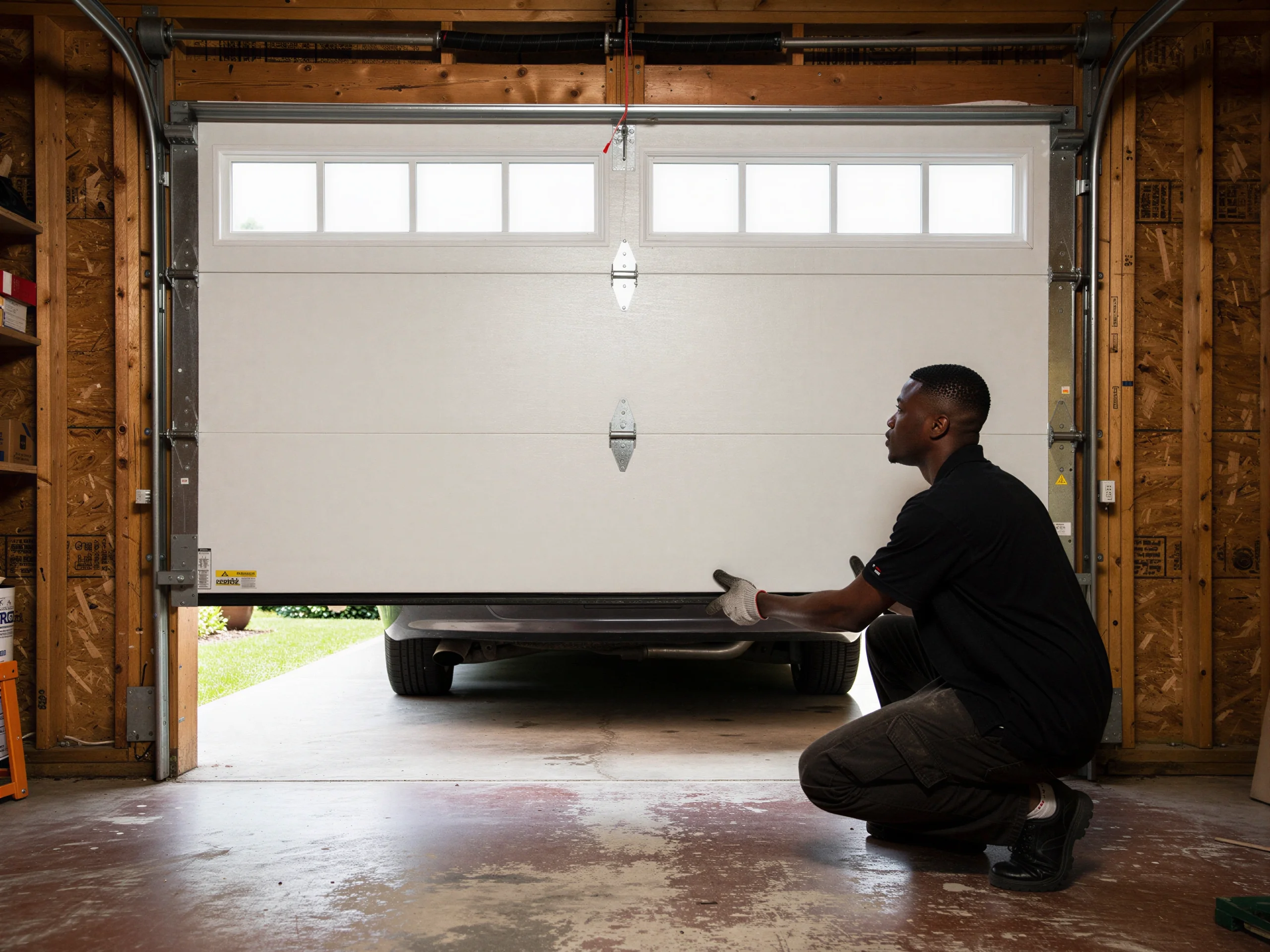
Once the new cable is seated and wound evenly on the drum, we reset spring tension, run the door through a full cycle by hand before touching the opener, and check that both sides of the door travel level. A cable repair done without rebalancing the door just moves the next failure to the other side.
What Can Go Wrong
The service area sits in a mild climate with occasional freeze days rather than hard winters, so cable failure out here is driven more by wear and moisture than by cold-snapping metal. A cable that's frayed at the drum end from years of cycling can let go suddenly, and if the drum itself is worn, a brand-new cable will just wear the same groove and fail again faster than it should.
On older torsion setups we also see bottom brackets that have loosened over time, which lets the cable walk off the drum under load - that's a jammed door, not a snapped cable, but it looks the same from the driveway until we get eyes on it.
How Long You Are Without the Door
We run this call out of Pasadena, about 10 miles from Channelview, so factor that drive into when you can expect a truck on site - we're not quoting a branch location or a guaranteed window here, just being straight that it's a real drive, not a walk down the street.
Typical swap timeframe
Once we're there, a straightforward cable swap on a double door usually keeps the door down and the opener disconnected for under an hour of actual work.
Longer when parts fail
If the drum or bearing plate needs replacing too, or the door needs a full rebalance after sitting broken for a while, it runs longer. We'd rather give you the honest range than a number that only holds up on the easy jobs.
What Causes It Around Here
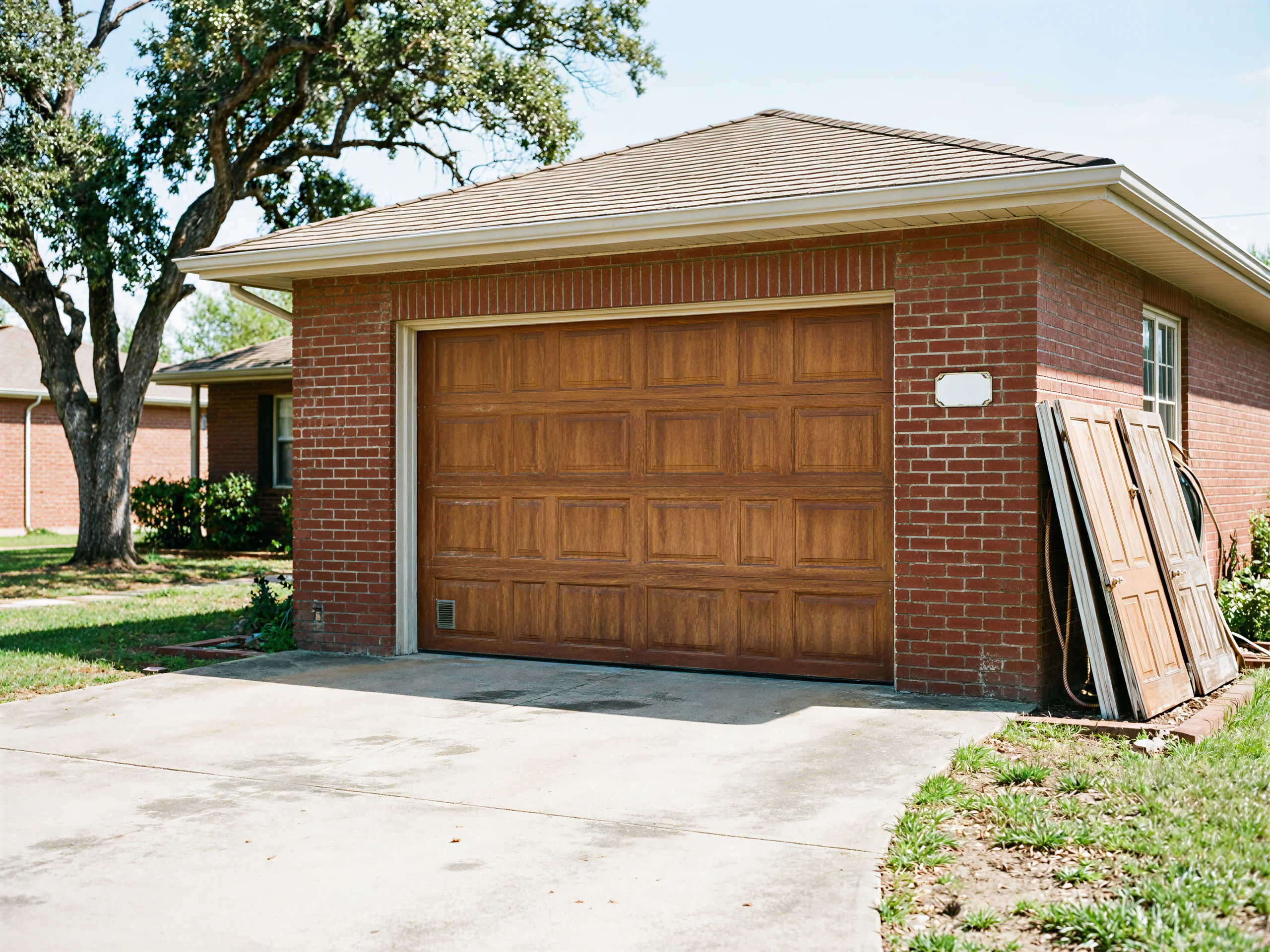
Channelview's housing stock runs mostly 1980s to early-2000s, with a lot of it going up around 1988 - right in the window where torsion-spring double doors with steel cable and drum systems became standard. That means most of the cable failures we see here are age-related wear on original hardware that's now 30-plus years old, not storm damage or anything dramatic.
Across the broader service area the housing spans 1956 through 2010 with a median build year of 1984, and this pocket sits a few years newer than that median. Newer doesn't mean newer hardware, though - a cable system installed in 1988 has had the same three decades of cycling as one installed in 1984, and it shows up the same way: fraying at the drum, uneven tension, a door that starts to sag on one side before the cable finally lets go.
Talk to a local pro
Garage door service in Pasadena?
Same-day service with honest, upfront quotes.