Doing It Yourself
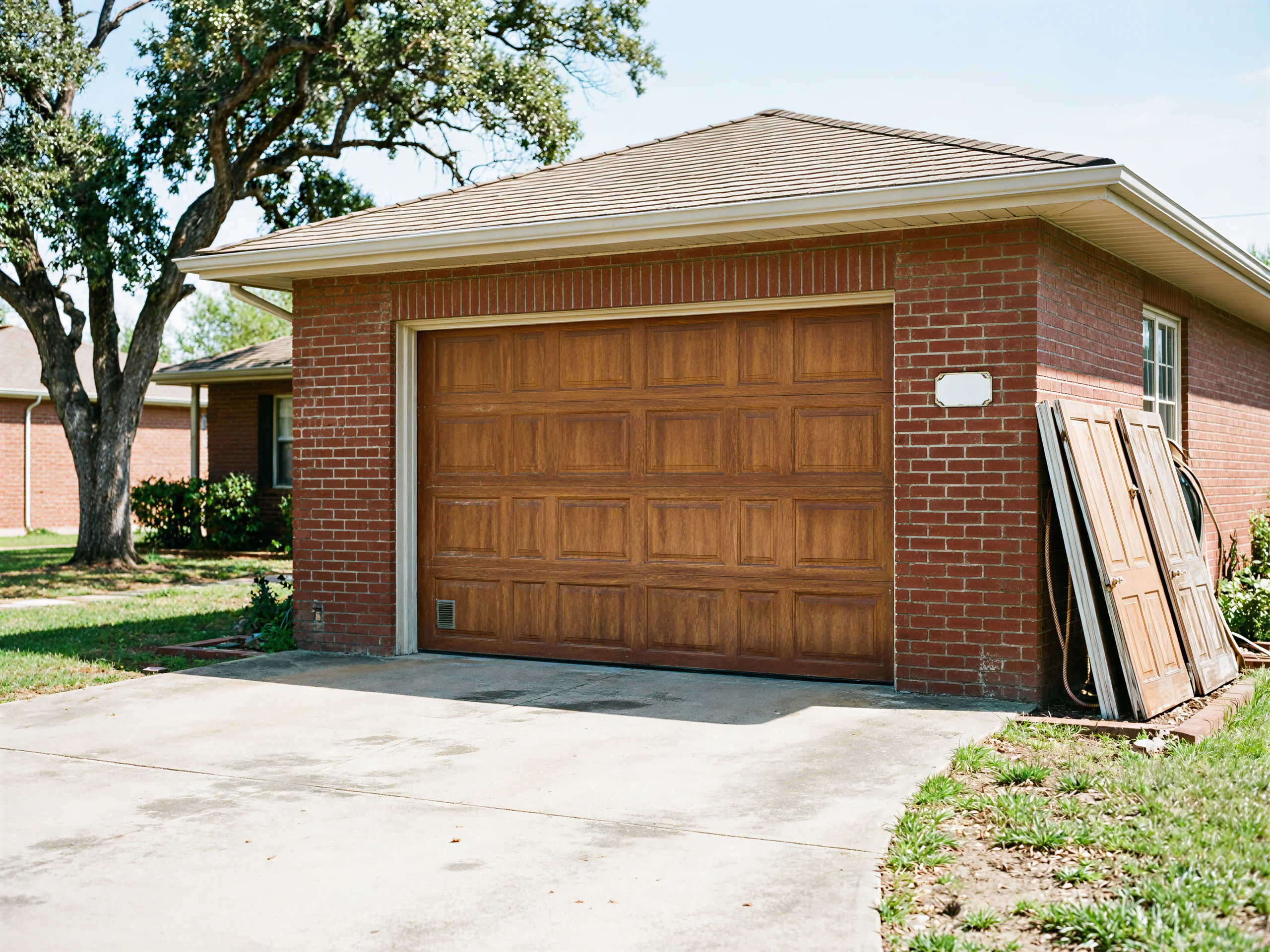
Most garages in Channelview went up when the area was filling in with steel sectional doors, the kind with raised panels stamped into 24-gauge steel, hung on a torsion or extension spring setup that's now pushing three and four decades old.
Heavy steel door wear
These are not the lightweight aluminum doors you see on newer builds farther out. They're heavier, which means the spring and cable doing the lifting work harder every single day, and after this many years the wear shows up as a loud bang, a door that won't budge, or one side sagging lower than the other.
Ladder temptation warning
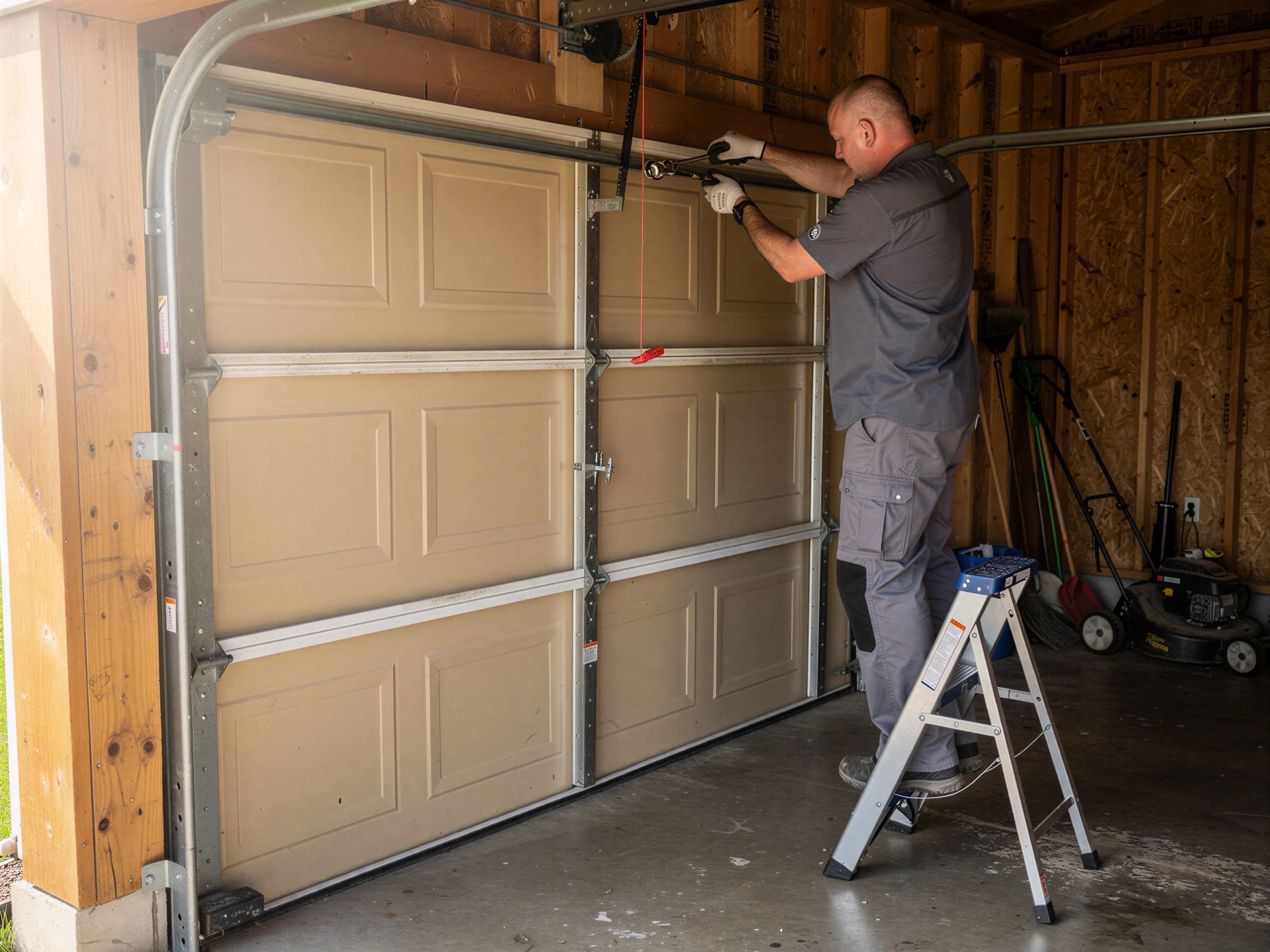
There's a real temptation to grab a ladder and sort it yourself, especially if it looks like just a loose roller or a bent hinge. A torsion spring under tension can take a finger off if it lets go while you're working on it, and on a door this age the spring is usually at or past the end of its rated cycle count anyway.
Sensor and bolt checks
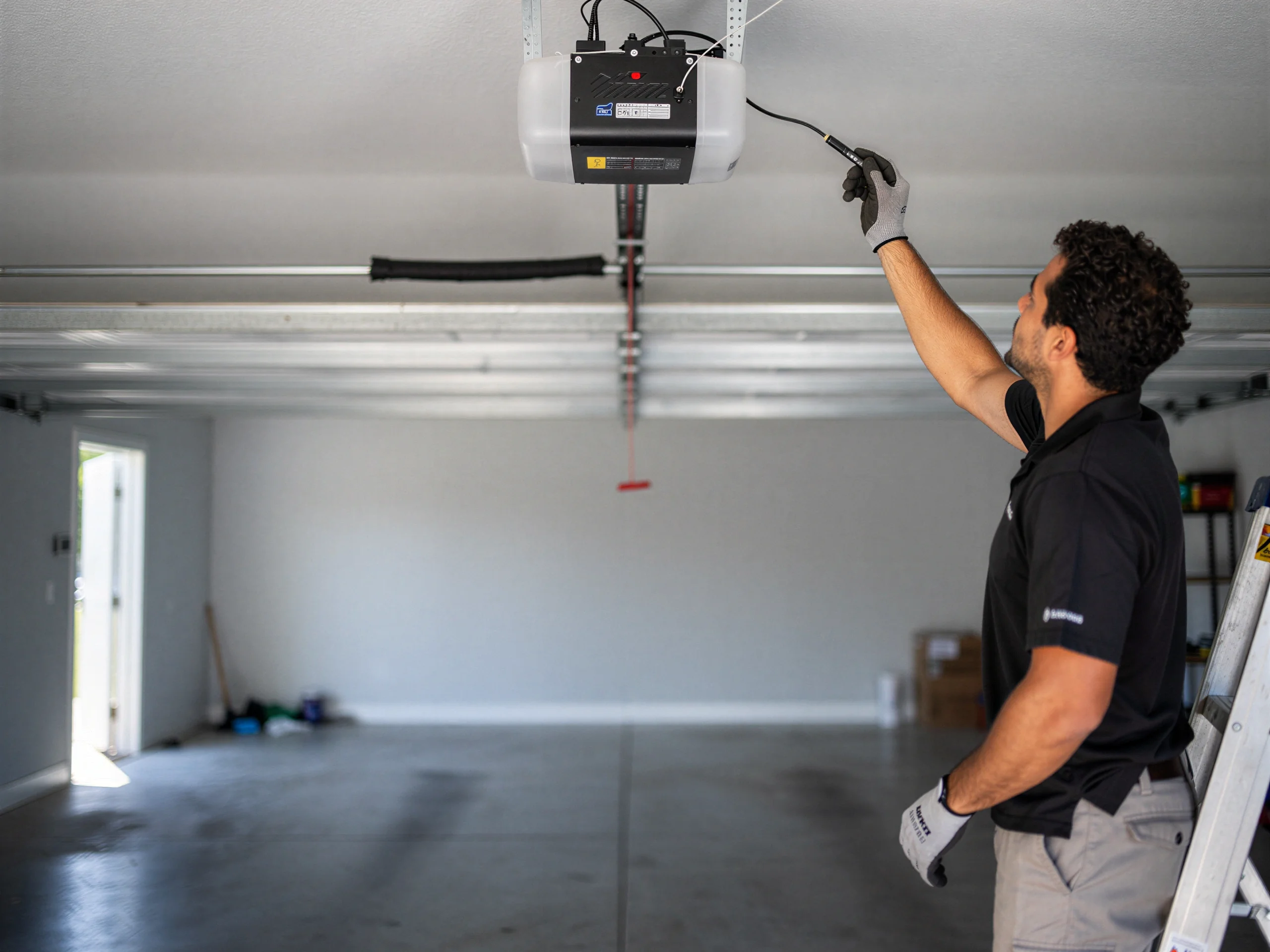
If the fix is a sensor that's knocked out of alignment or a track bolt that worked loose, that's reasonable to check yourself. Springs, cables, and anything attached to the torsion bar over the door opening is not a DIY job on a door built this heavy.
What Is on the Truck
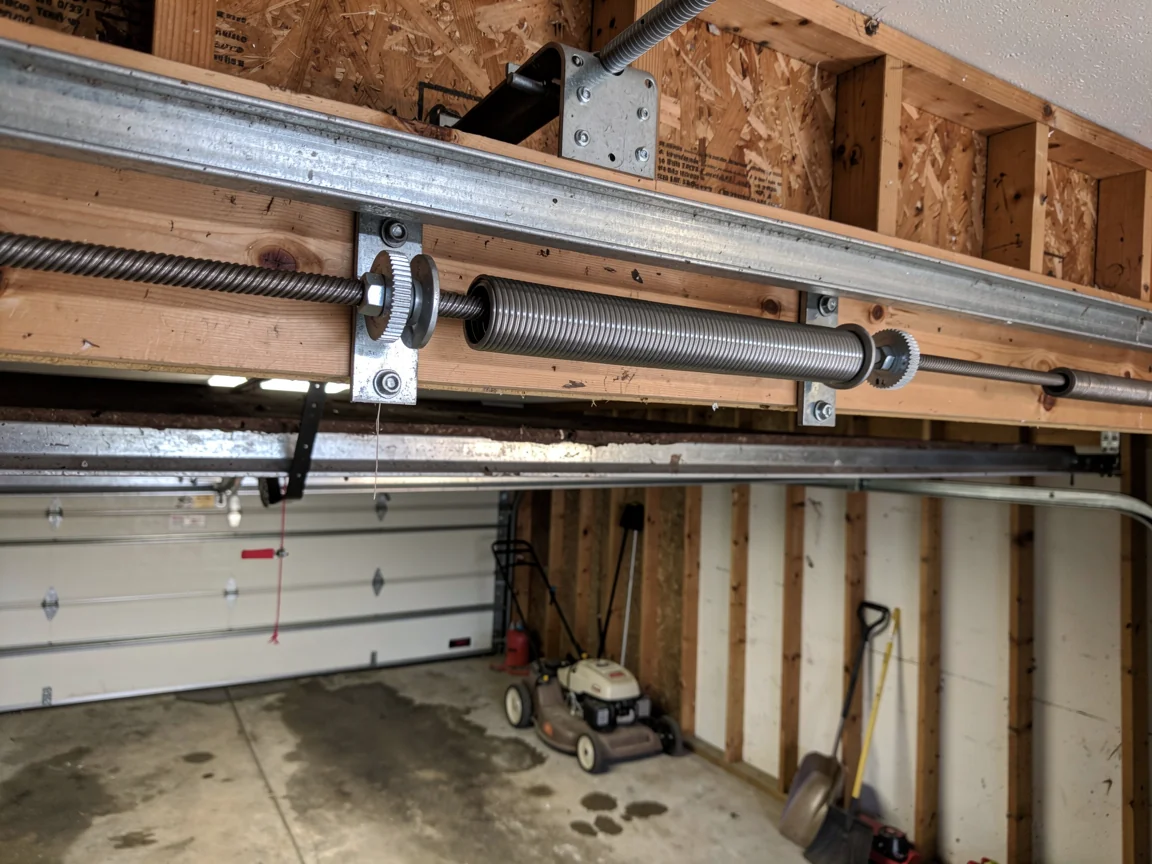
We come out of Pasadena, about 10 miles west, carrying torsion springs sized for the heavier 16x7 steel sectional doors that are common on houses built through the 1980s and 90s here.
Standard torsion spring stock
That means standard-diameter torsion springs in the wind and cycle ratings those doors actually need, not the lighter springs made for newer insulated doors, plus extension spring kits for the older setups that never got converted to torsion.
Galvanized cables and hinges
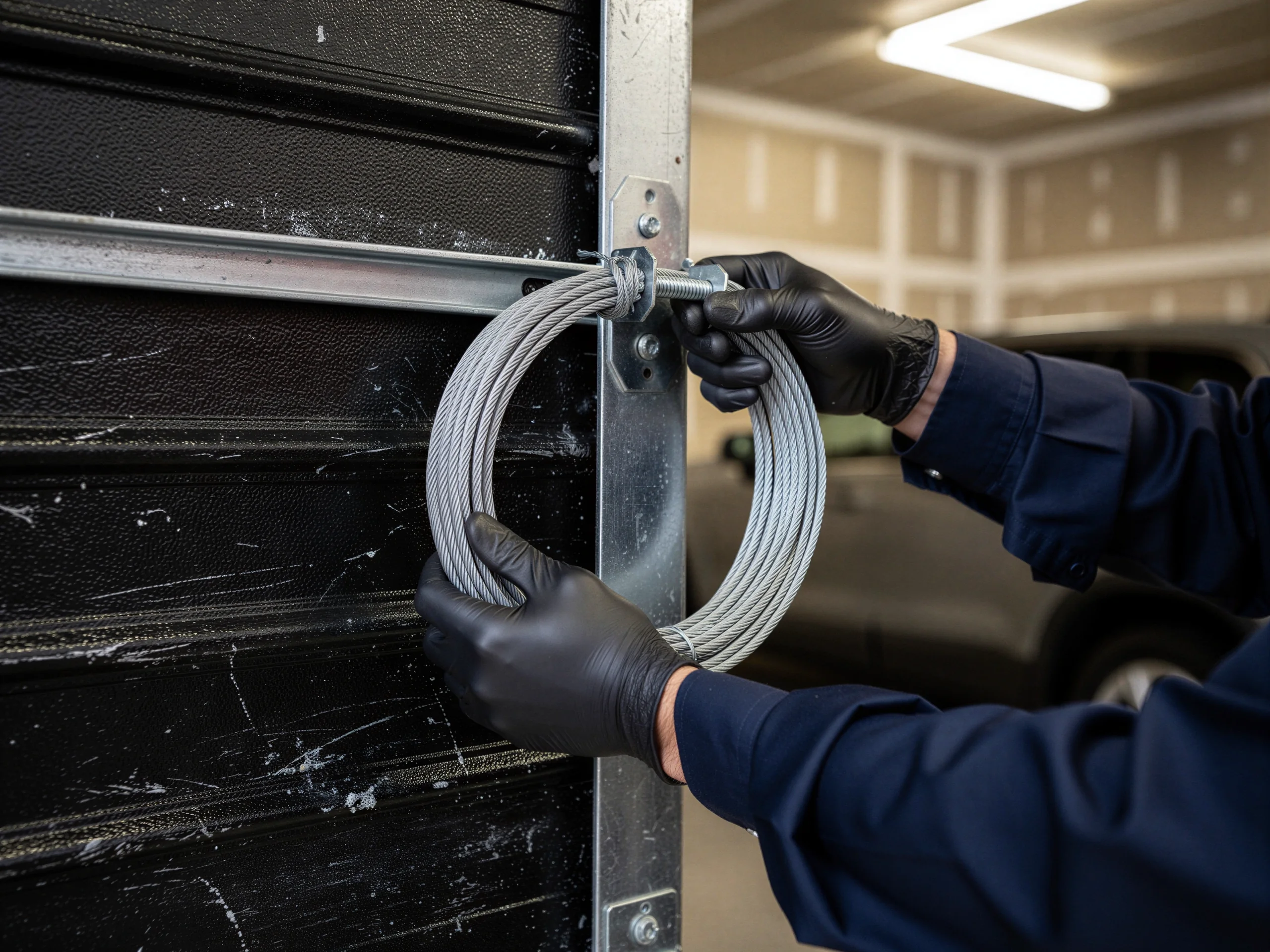
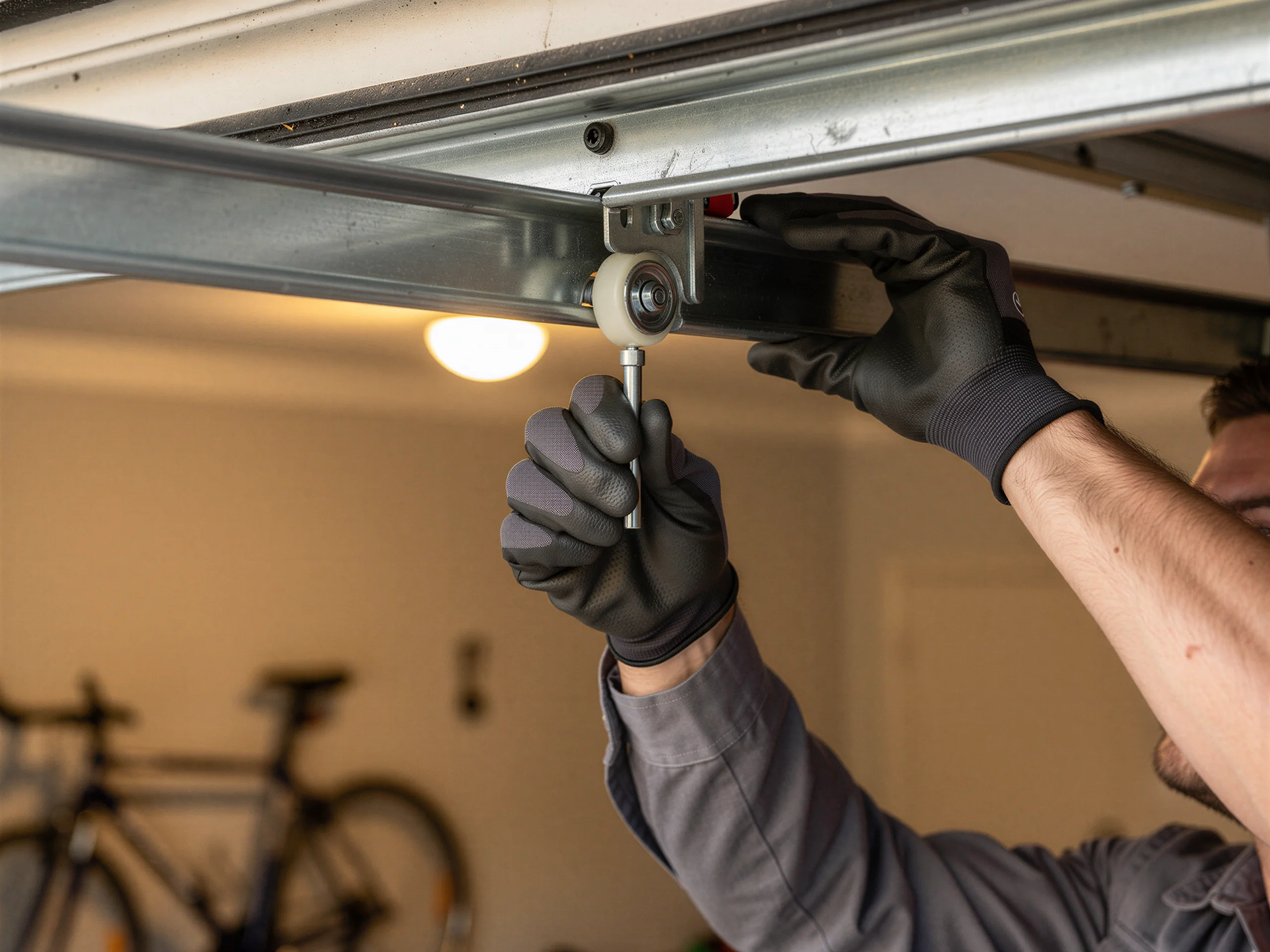
We also carry galvanized lift cables, steel rollers, hinges in the common sizes, and replacement openers with the drive types that fit garages from that build era. What we don't carry is every obsolete bracket or discontinued panel pattern.
Caved-in panel orders
If a house still has its original door from the 1980s and a panel's been caved in, we may need to order a matching panel, and that can take a few days. We'll tell you straight if that's the case instead of jury-rigging something that won't hold.
What the Fix Involves
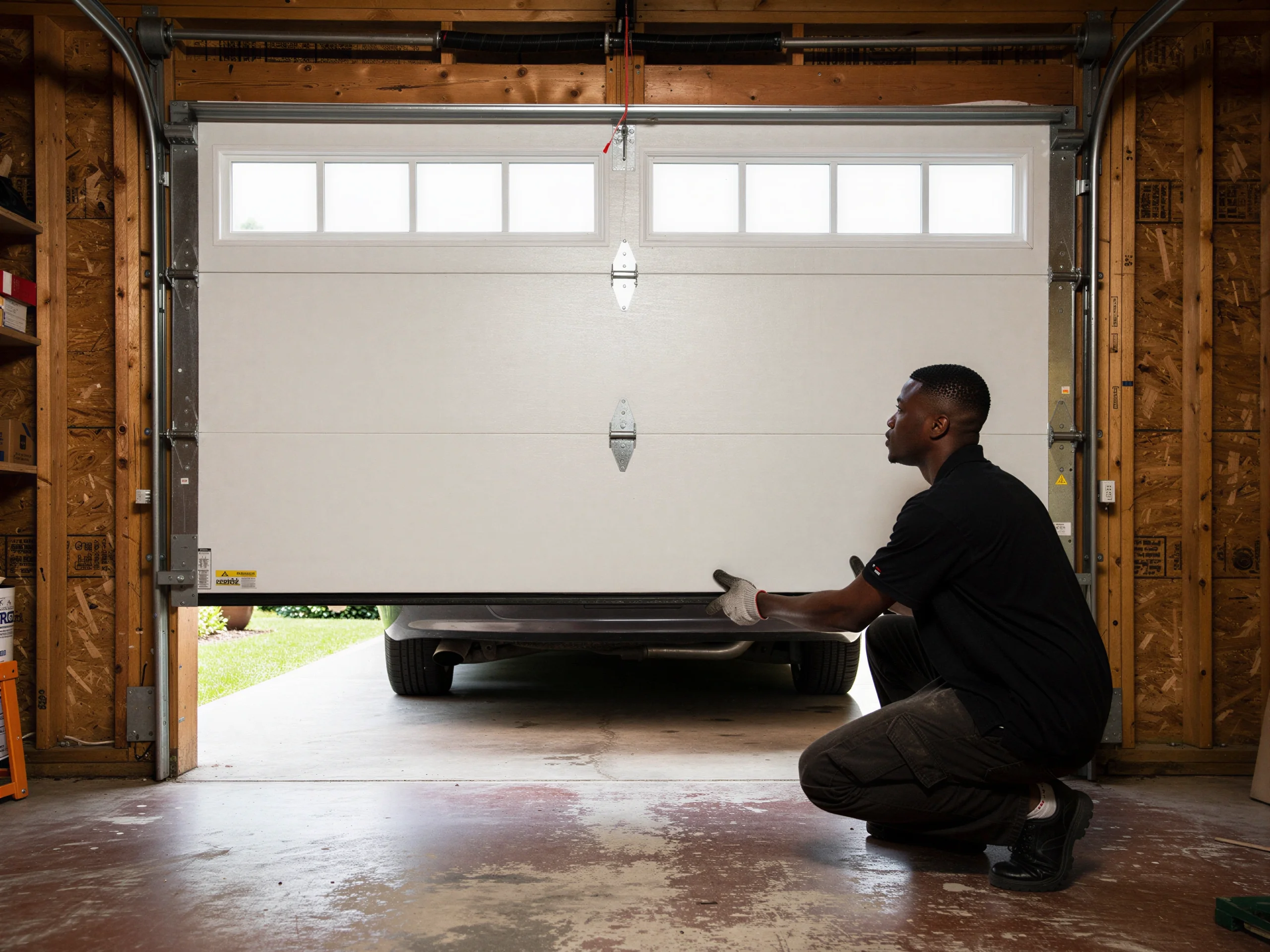
A broken torsion spring on one of these heavier steel doors starts the same way every time: we unload the tension on the old spring, pull it off the bar, and wind a new one matched to the door's actual weight, not a generic size.
Drum size matching
Get that match wrong and the door either won't lift all the way or slams down too fast, so we measure the door and check the drum size before touching a wrench to it.
Jamb shift loosens track
If it's a cable or roller problem instead, we're looking at whether one side of the track has pulled away from the frame, which happens on doors this age when the wood jamb behind the track has shifted slightly over the years.
Truing track and cycling
We true up the track, replace what's frayed or cracked, and run the door through a full open-close cycle before we call it done. For openers, we check the drive gear and the logic board before swapping the whole unit. Not every slow or noisy opener needs replacing.
What Can Go Wrong
The biggest problem we run into on doors from this era is a single garage door designed for an extension spring system that someone converted to torsion without resizing the bracket.
Header stress from mismatch
That mismatch puts stress on a header that wasn't built for it, and over enough years the wood starts to split. We catch that before we put a new spring up, because hanging new hardware on a cracked header just moves the failure a few months down the road.
Irrigation spray rots panels
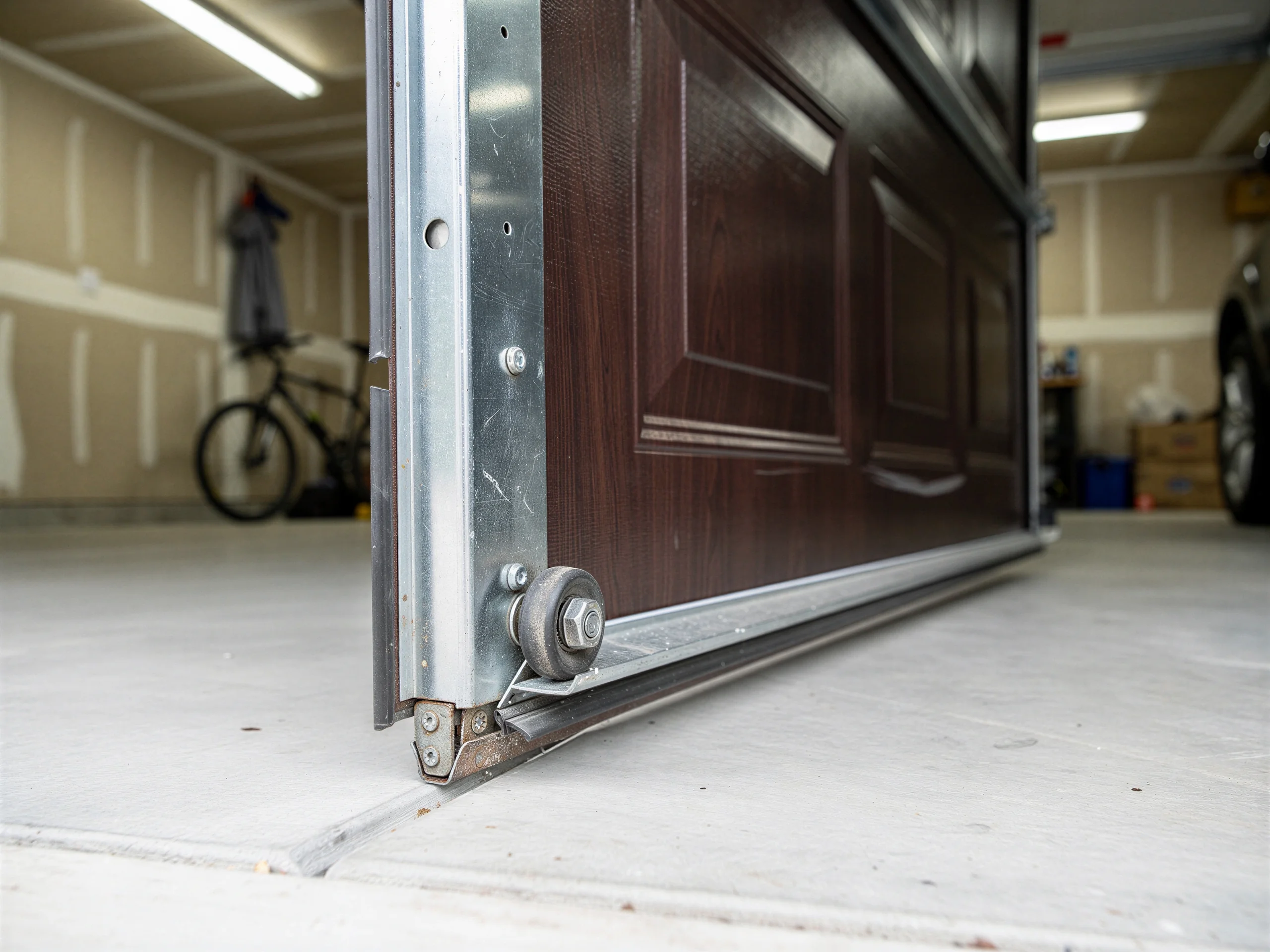
We also see a fair number of doors here where the bottom panel has rusted or rotted from years of yard irrigation spray or standing water at the slab edge, which is common with the mild, humid climate this part of Texas sits in.
Structural bottom-seal failure
A new spring doesn't fix a door that's structurally failing at the bottom seal. In that case replacing just the bottom section, or the whole door, ends up cheaper than repeated repairs.
How Long You Are Without the Door
A straightforward torsion spring swap on one of these doors is usually finished in one visit, same trip. Cable and roller work runs about the same. Where it stretches out is parts availability: if your door is original to a 1980s build and a full panel needs replacing to match the existing pattern, that panel has to be ordered, and you could be looking at several days with the door propped manually or secured in the down position while it ships.
We'd rather tell you that up front than promise a same-day fix we can't deliver on an obsolete panel. For anything else, spring, cable, roller, opener, we're not working around a depot schedule in Channelview itself, since the truck comes from Pasadena, but the drive doesn't change how long the repair itself takes once we're on site.
What Causes It Around Here
With a median household income here around $65,775 and most of the housing stock dating to the 1980s and 90s, a lot of these garage doors and their original openers have simply never been replaced. The springs on a door that old have cycled tens of thousands of times past what a spring is rated for, so the failure isn't a surprise, it's overdue.
The climate band this area sits in runs mild with occasional freeze, which isn't the extreme heat-cycling you'd get farther south or the hard freeze-thaw of colder states, but it still means decades of humidity swelling wood jambs and track brackets a few millimeters at a time. That slow movement is what knocks a track out of true on an older door long before anything looks obviously broken.
Talk to a local pro
Garage door service in Pasadena?
Same-day service with honest, upfront quotes.