Doing It Yourself
Most Channelview openers date back to a build era centered around 1988, and by now a lot of those original units are on their second or third logic board.
Humming without movement
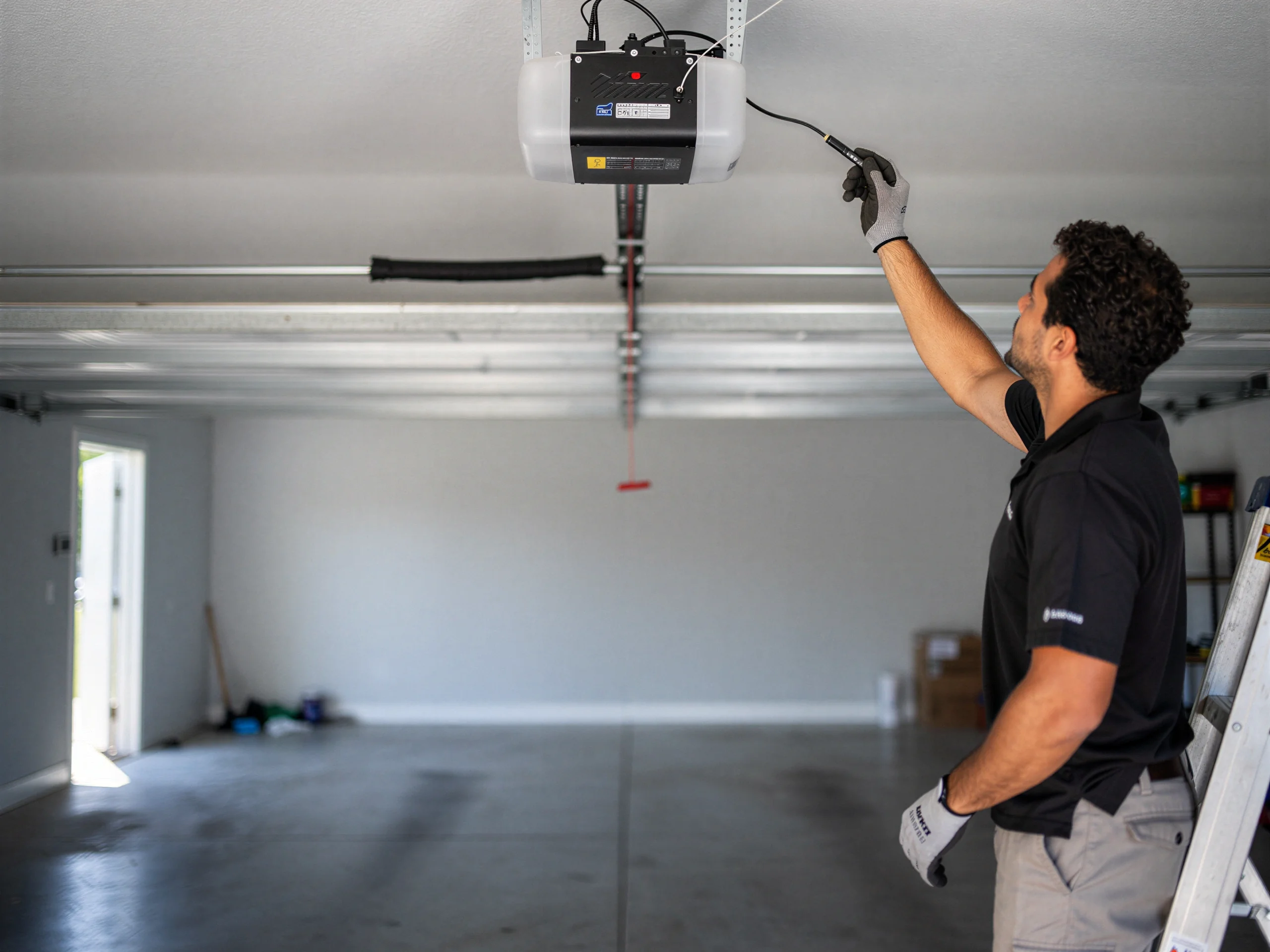
If the opener hums but the door doesn't move, that's usually the gear and sprocket assembly inside the housing, not something to chase with a screwdriver on a Saturday.
Wall button wiring check
You can safely check two things yourself before calling anyone: the wall button wiring where it enters the unit, and whether the safety sensors at the bottom of the track are aligned and lit. A lot of late-80s installs got photo-eye sensors added on later as a retrofit, and those wires get knocked loose by a broom handle or a bike.
Capacitor charge danger
If both lights are solid and the wall button clicks but nothing happens, that's the board or the motor, and that's a truck call, not a DIY fix. Don't open the motor housing yourself - the capacitor inside holds a charge even unplugged.
What Is on the Truck
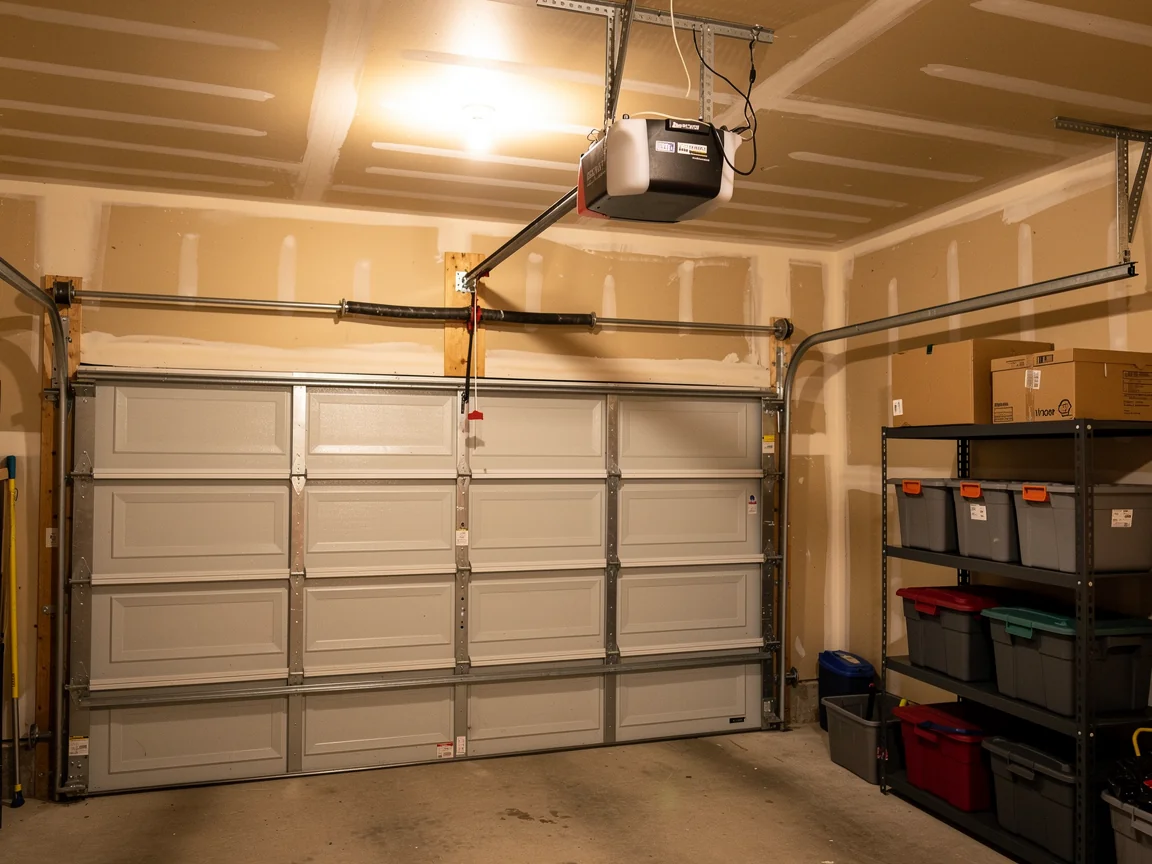
For a service area where most garage doors went in during the 1980s and 90s, the truck carries circuit boards and drive gear kits sized for that generation of opener, not just whatever's newest. Chain-drive units outnumber belt-drive on these older installs, so chain and sprocket stock gets priority over belt stock. We also carry universal wall buttons and photo-eye sensor pairs, since a good share of calls out here turn out to be a sensor that's aged past its working life rather than a dead motor. What doesn't ride along: specialty logic boards for openers no longer in production. If your unit is a less common brand from that era, we may need to order the board rather than swap it same visit - that's the one limitation worth knowing up front.
What the Fix Involves
Opener repair starts with running the unit through its cycle and watching where it hangs - at the limit switch, mid-travel, or right at the floor.
Likely failing opener parts
On a house from the late 80s stock, the usual suspects are a stripped nylon gear inside the housing (common after 30-plus years of cycles), a failed capacitor, or a logic board that's lost its memory of the travel limits.
Isolating remote from opener
We test the wall button circuit and the remote's frequency separately, because a dead remote can look exactly like a dead opener to someone standing in the driveway. If the fix is a gear and sprocket kit, that's usually a same-visit job.
Matching drive to rail
If it's a board swap, we match the horsepower and drive type to the existing rail rather than replacing the whole unit, assuming the motor housing itself is sound.
What Can Go Wrong
The biggest risk on an opener this old is the travel limit setting drifting after a repair - if the down-force isn't reset correctly, the door can reverse on an obstruction too late or too early, which is exactly what the photo-eye and sensor system exists to prevent. We test that limit with a block under the door, not by eye. Another thing that can go sideways: if the opener is original to a 1988-era build and the motor itself has burned out, parts for that specific chassis may not exist anymore, and we'll tell you straight that replacement makes more sense than chasing a repair. That's not an upsell - it's the honest math on a 35-plus year old motor.
How Long You Are Without the Door
A gear, sprocket, or sensor repair on these units is typically a single visit from the Pasadena truck, about 10 miles out. A board replacement can run longer if the specific model needs an order-in part rather than a stock swap - that's the one place where a Channelview job can stretch past a day, simply because less common late-80s opener boards aren't always sitting on the shelf. We'll tell you at diagnosis which category your repair falls into so you're not guessing whether to plan around it.
What Causes It Around Here
With most of the housing stock in this part of the service area going up through the 1980s and 90s, the common failure pattern is straightforward: original motors reaching the end of a normal duty cycle, logic boards that have outlived their rated hours, and nylon drive gears that finally strip after decades of use.
Moisture driving corrosion
Humidity and the area's mild-with-occasional-freeze climate don't do openers any favors either - condensation inside an aging motor housing speeds up corrosion on contacts and relays.
Simply aging hardware
None of this is dramatic; it's just what happens to equipment that's been running since the Reagan administration. Newer builds in other parts of the service area see different failures - this one is about hardware that's simply reached its age.
Talk to a local pro
Garage door service in Pasadena?
Same-day service with honest, upfront quotes.