What Is on the Truck
Deer Park's median household income sits at $95,233, well above the $80,037 median across the rest of our service area. That gap matters before a tech ever opens a toolbox, because it changes where the repair-or-replace line falls.
Income tilts toward replacing
At $80,037 median income, a lot of owners stretch a repair as far as it'll go. At $95,233, more Deer Park owners choose to replace a door outright once two or three parts fail together, rather than patch one spring and wait for the next.
Stocked for both paths
That's not a sales pitch, it's just what the numbers tend to do to a decision. So the truck that comes to Deer Park carries both: torsion springs sized for the heavier sectional doors common on houses from this era, and a working set of panels and openers for a straight swap when a customer decides that's the better math.
Finish and model limits
We don't stock every finish or every opener model on the truck. If you want a specific color panel or a smart opener in a less common line, that's often a one- to few-day order, not a same-visit job.
Doing It Yourself
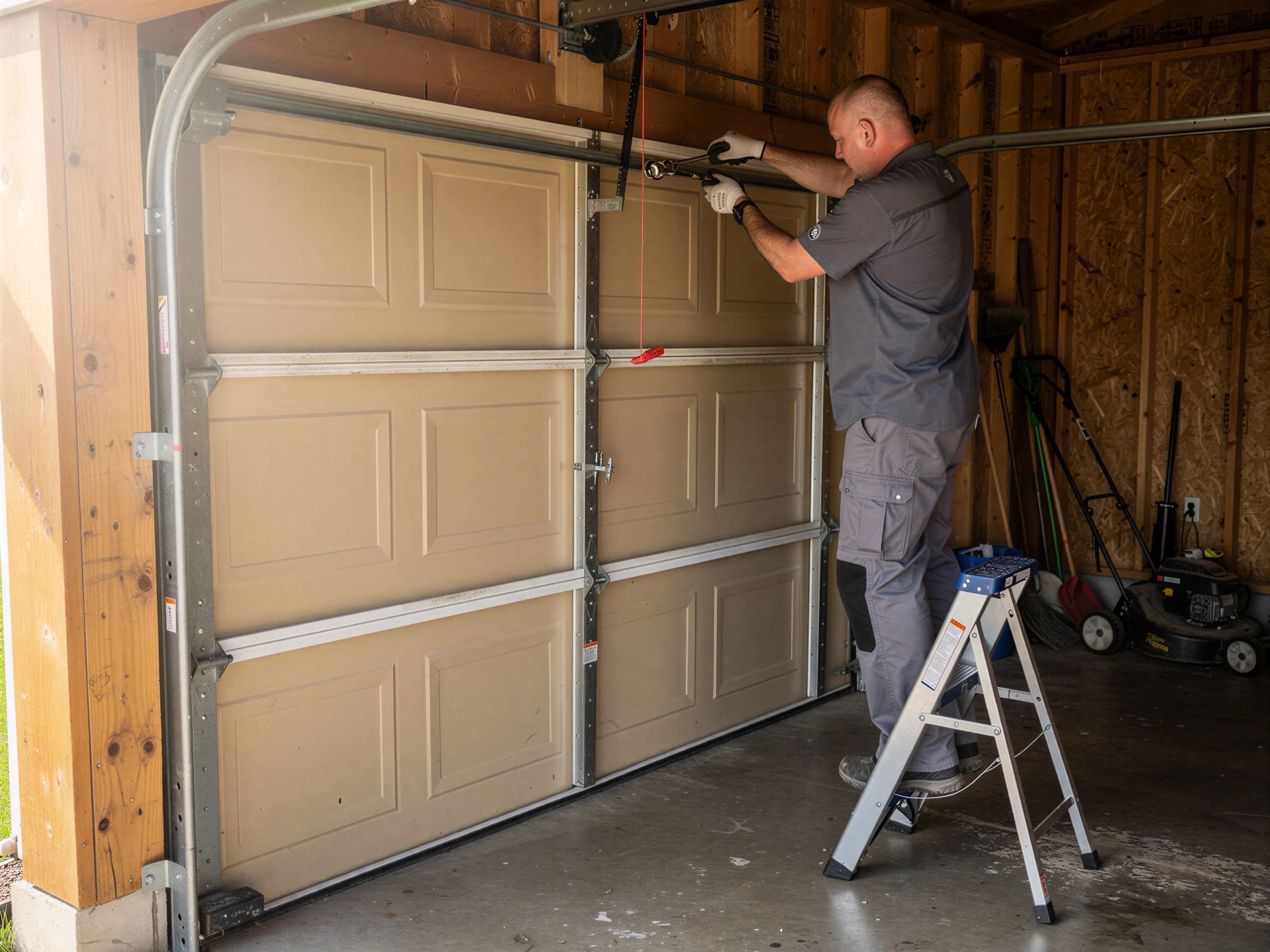
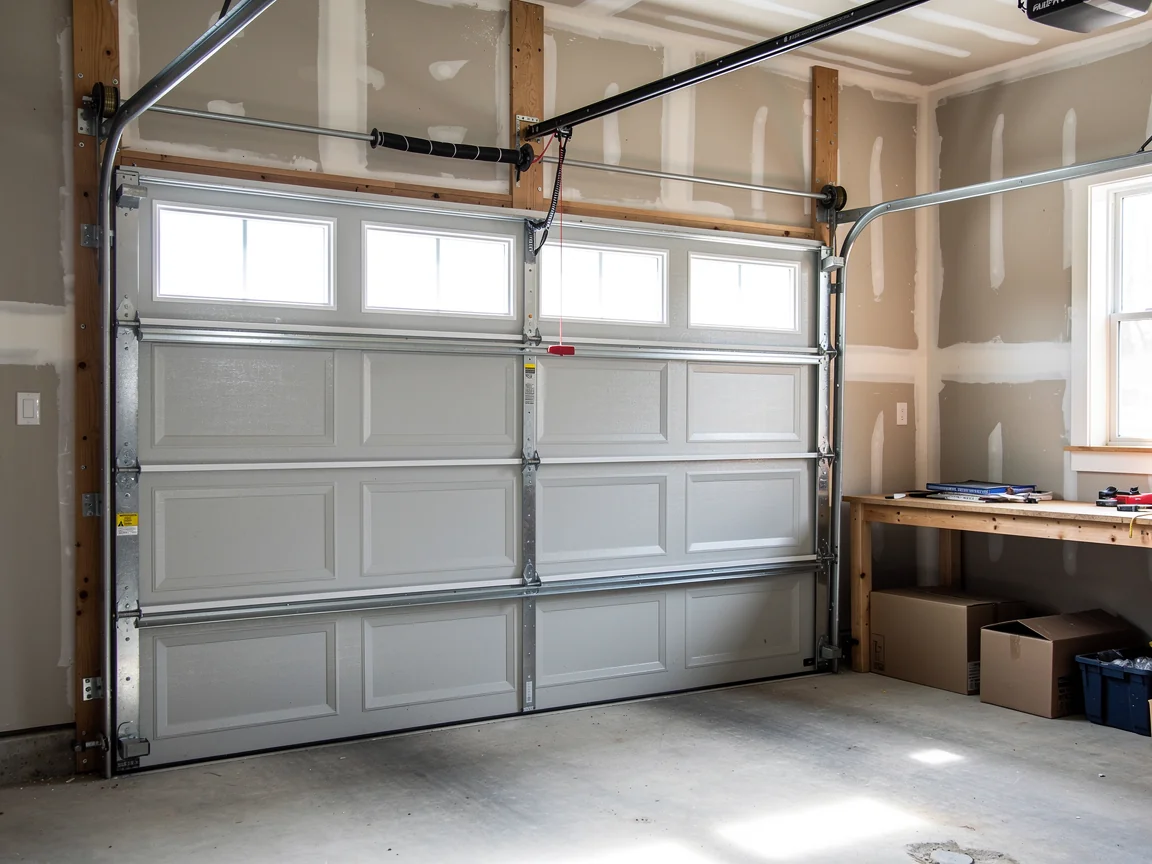
A torsion spring under tension can put a tech in the hospital, and that risk doesn't scale down because the door is older or the house is smaller.
Photo-eye first checks
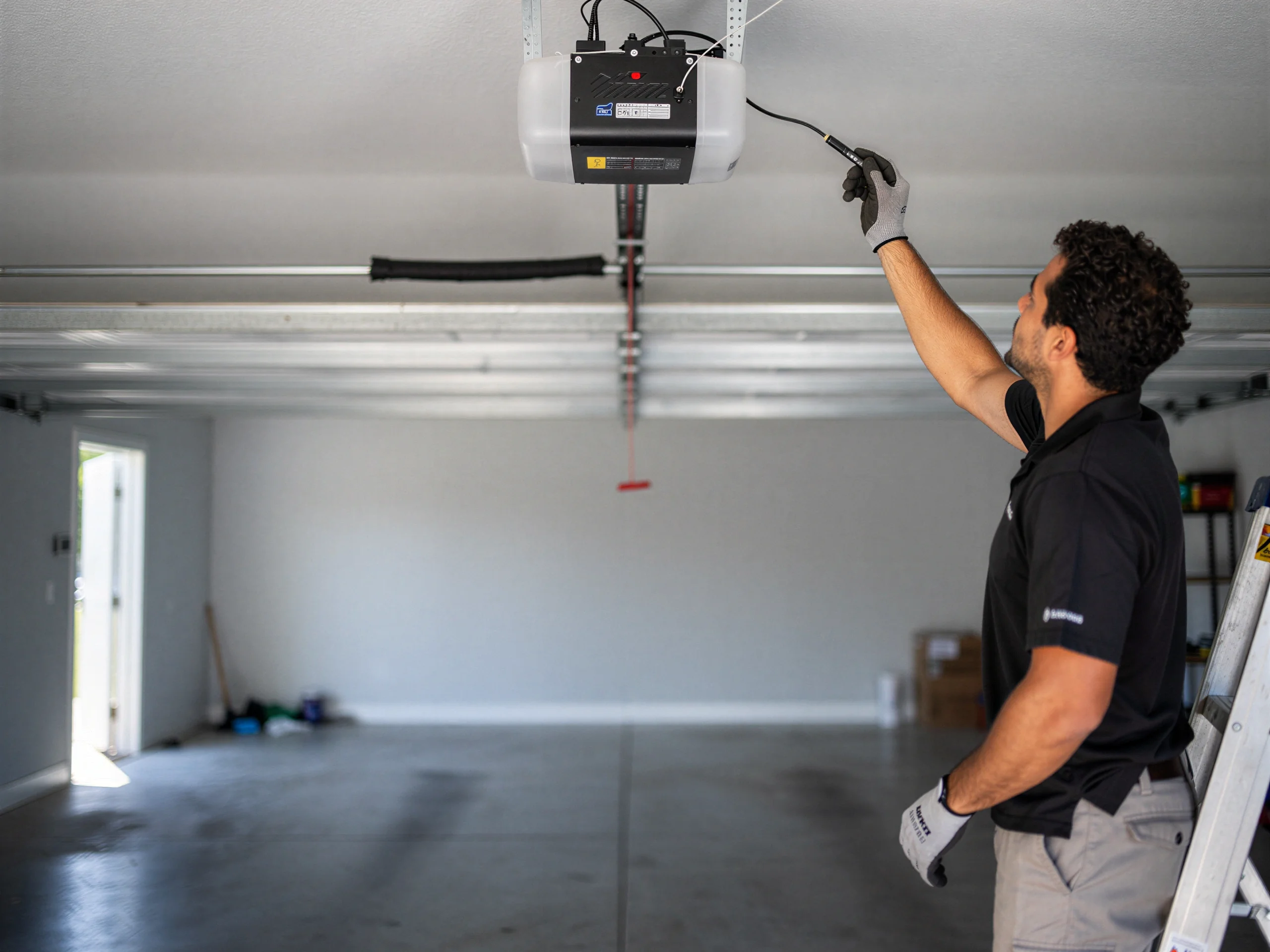
If your door won't open, the first checks that don't involve the spring system are safe: look at the photo-eye sensors near the floor for dirt or misalignment, check that the wall button and remote both fail the same way (points to the opener, not the door), and pull the manual release cord to see if the door moves freely by hand.
Uneven-by-hand warning
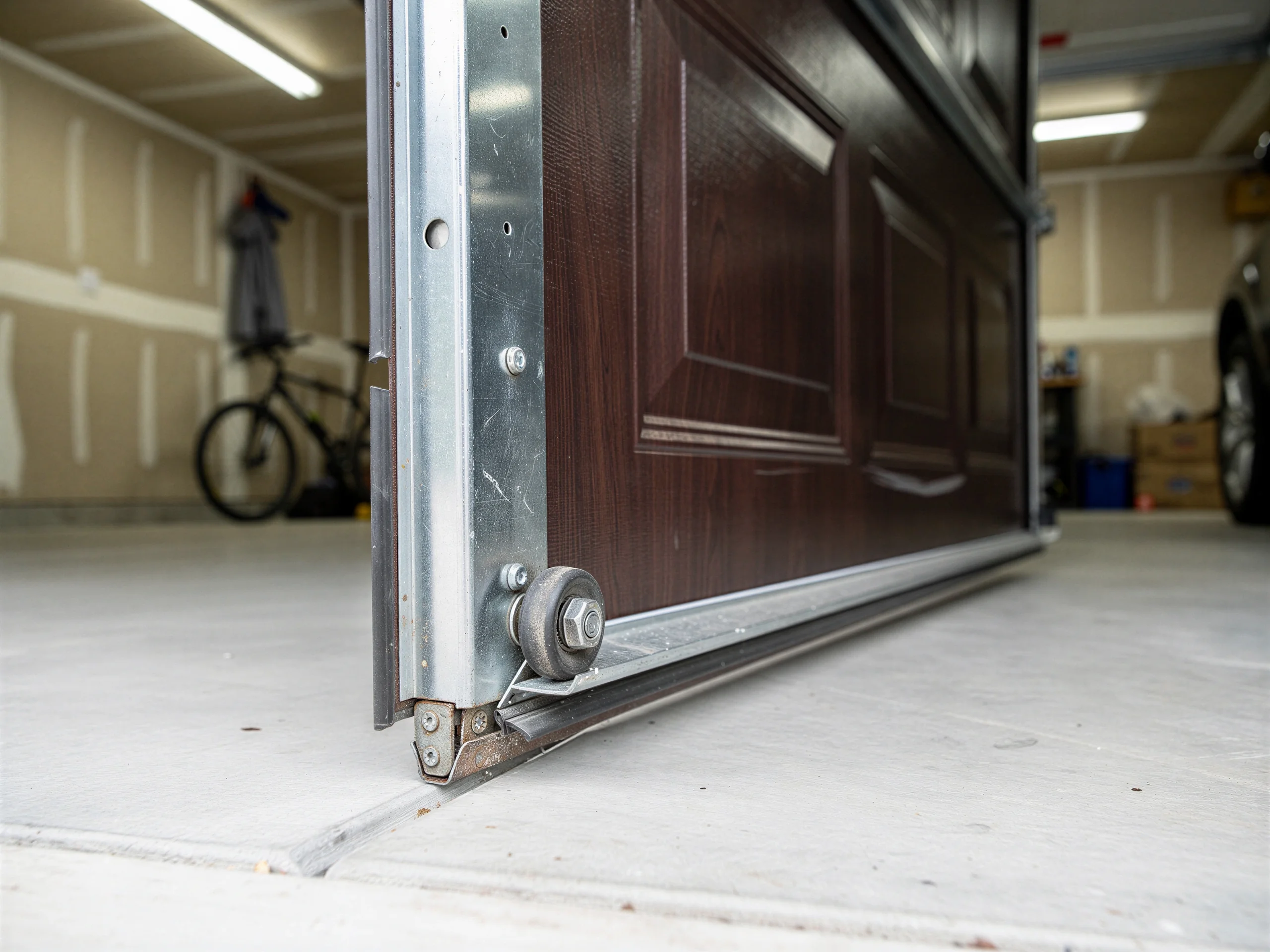
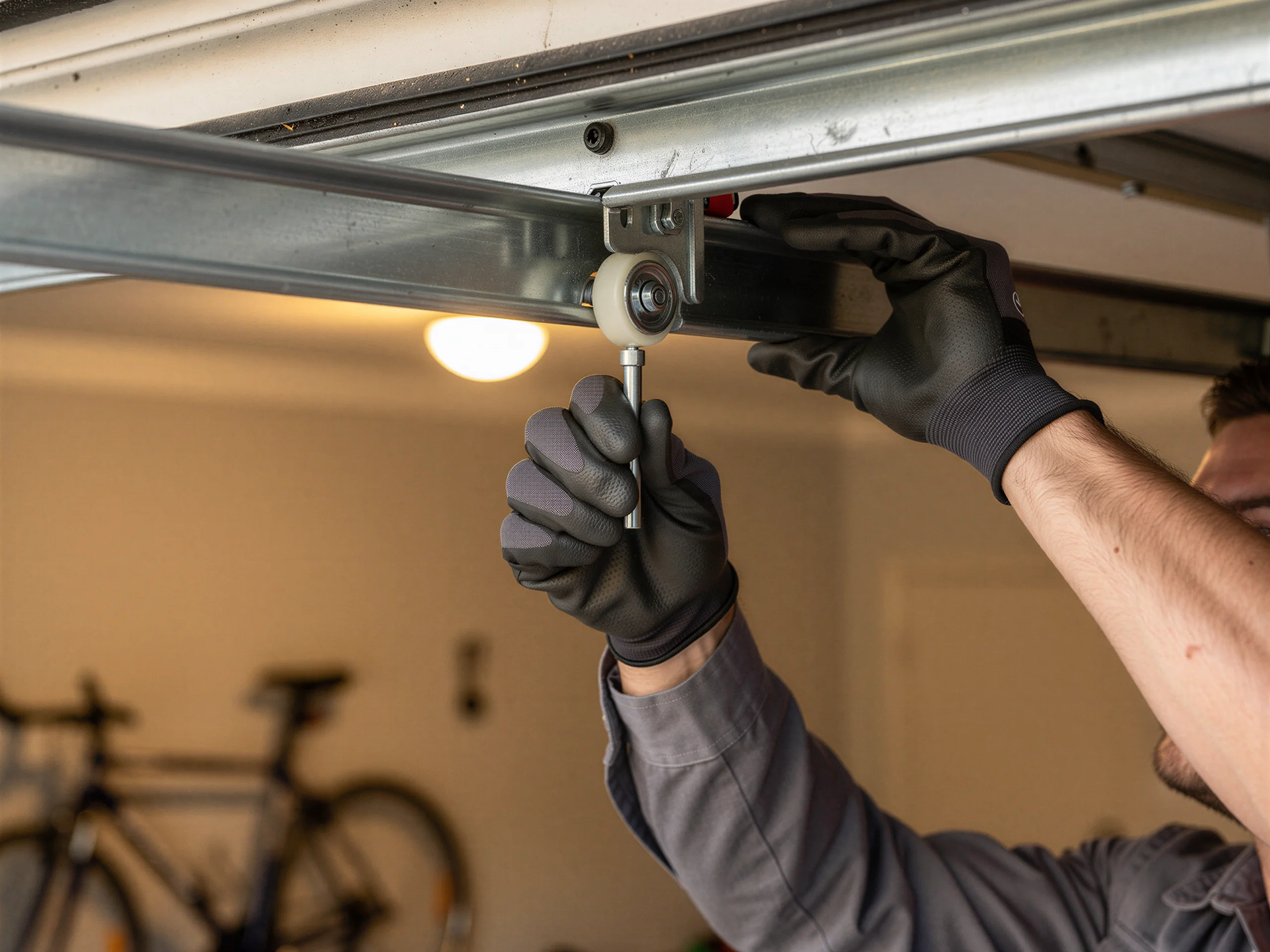
If it's heavy or uneven by hand, that's the springs or cables, and that's the point to stop and call rather than keep working on it yourself. Lubricating hinges and rollers with a garage-door-specific lubricant, not WD-40, is reasonable DIY maintenance on a door of any age.
Lag bolts are fine
Tightening visible lag bolts on the track brackets is also fine if they're loose but not stripped. Past that, especially on anything involving the torsion bar, end bearing plates, or the opener's internal gearing, the time saved by doing it yourself is small compared to what it costs if it goes wrong.
What Causes It Around Here
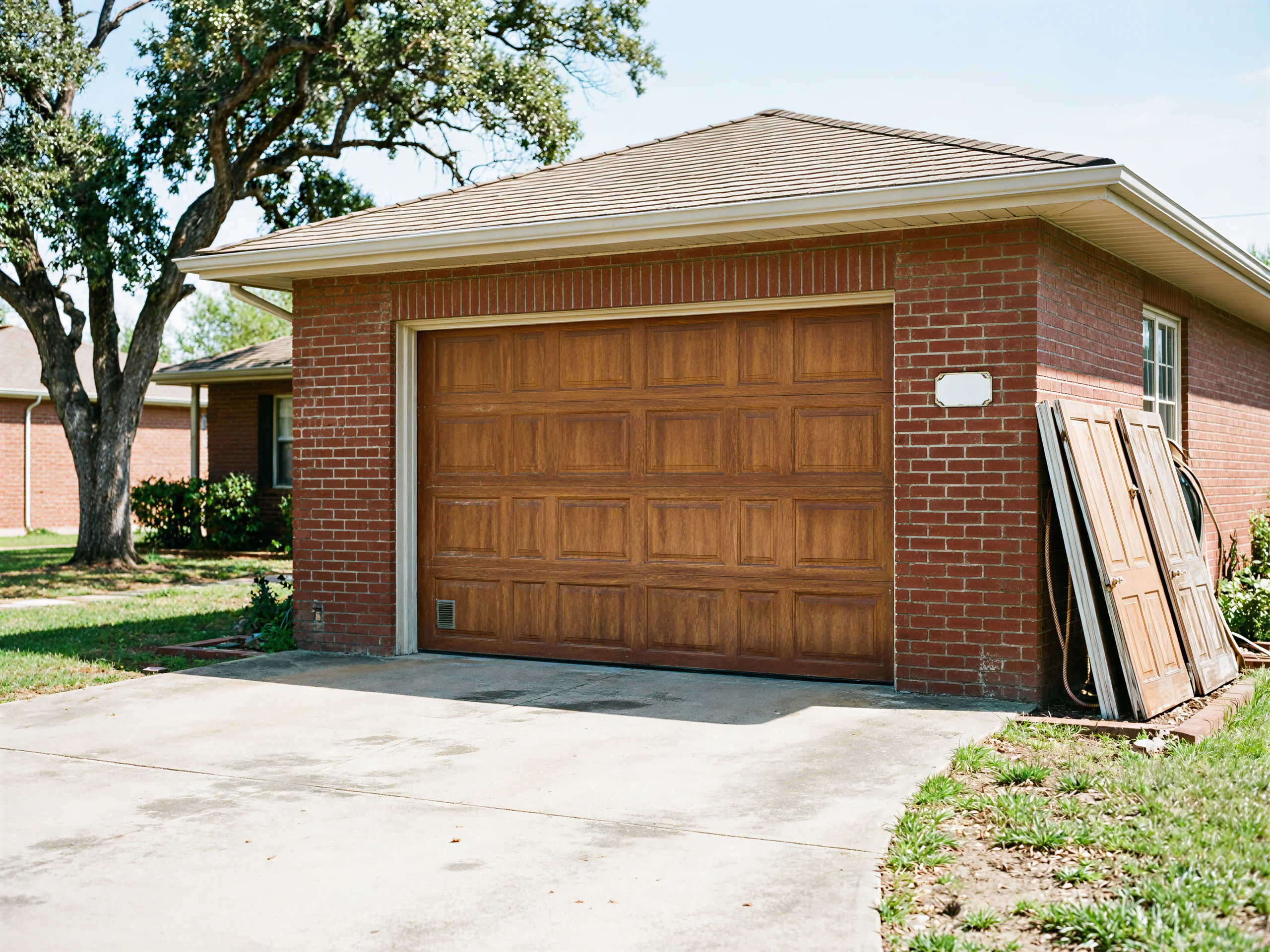
Deer Park's housing stock clusters around a median build year of 1981, a bit ahead of the 1984 median across the wider service area. Practically, that means a large share of garage doors and their hardware here are now more than 40 years old, built to the specs and spring cycle-ratings of that decade. Torsion springs are rated for a number of open-close cycles, not years, but a 40-year-old spring has usually seen enough daily cycles to be near or past that rating even if it looks fine.
The region sits in a mild climate band with occasional freeze days rather than a true winter. That keeps steel panels and tracks from the expansion-and-contraction cycling that cracks paint and loosens fasteners in colder markets. But it also means owners here rarely think about garage door maintenance the way someone in a harder climate does, so when a cold snap does hit and a stiff, under-lubricated spring finally snaps, it often catches people by surprise rather than as a known seasonal risk.
The Cost of This Job
We don't post a flat price list here because the job depends on what's actually wrong and what the door weighs, and guessing at a number for a house we haven't seen does owners a disservice.
Income shapes repair choices
What we can say is how the income figures shape the decision. With a median household income of $95,233 in Deer Park against $80,037 across the broader service area, more owners here land on the replace side of the repair-or-replace line once a door needs two major parts at once, say a spring and an opener, rather than stretching a single repair further.
Single spring often cheapest
For a door built around the 1981 median year for this area, a single spring replacement is usually the cheaper and faster call if the rest of the hardware is sound.
Stacked damage tips replacement
Once the track is bent, the panels are dented, or the opener's gear is stripped on top of the spring, the math often shifts toward full replacement, especially at this area's income level where owners are less likely to want a second visit six months later for the next failing part.
What You Are Seeing
A door that reverses halfway up, or won't close past a few inches, is almost always the photo-eye sensors, not the motor. On houses from the early 1980s build era common here, a door that's suddenly heavy to lift by hand, with the opener straining or humming without movement, points to a torsion spring that's lost tension, which at this housing stock's age is a wear failure, not a defect.
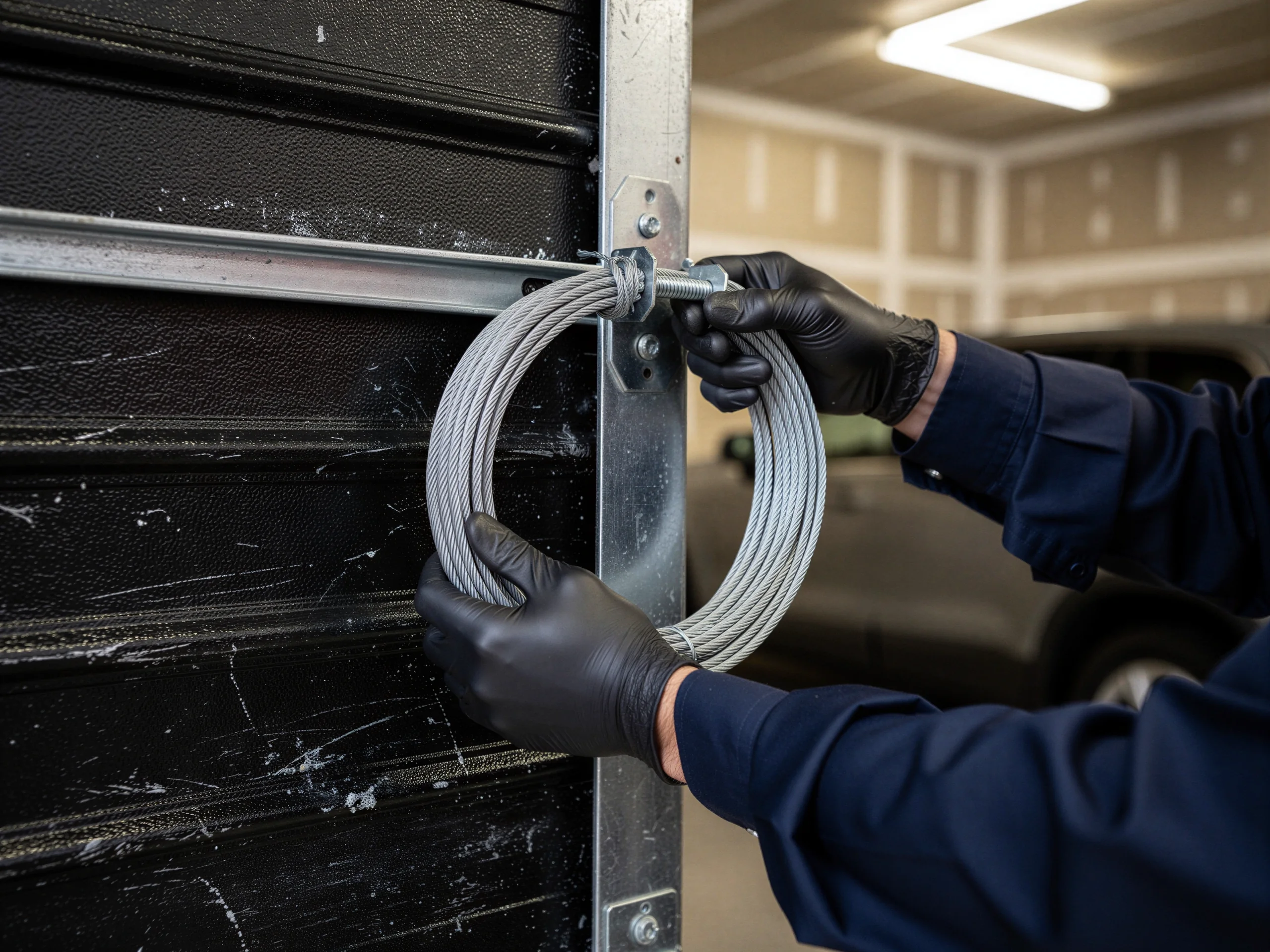
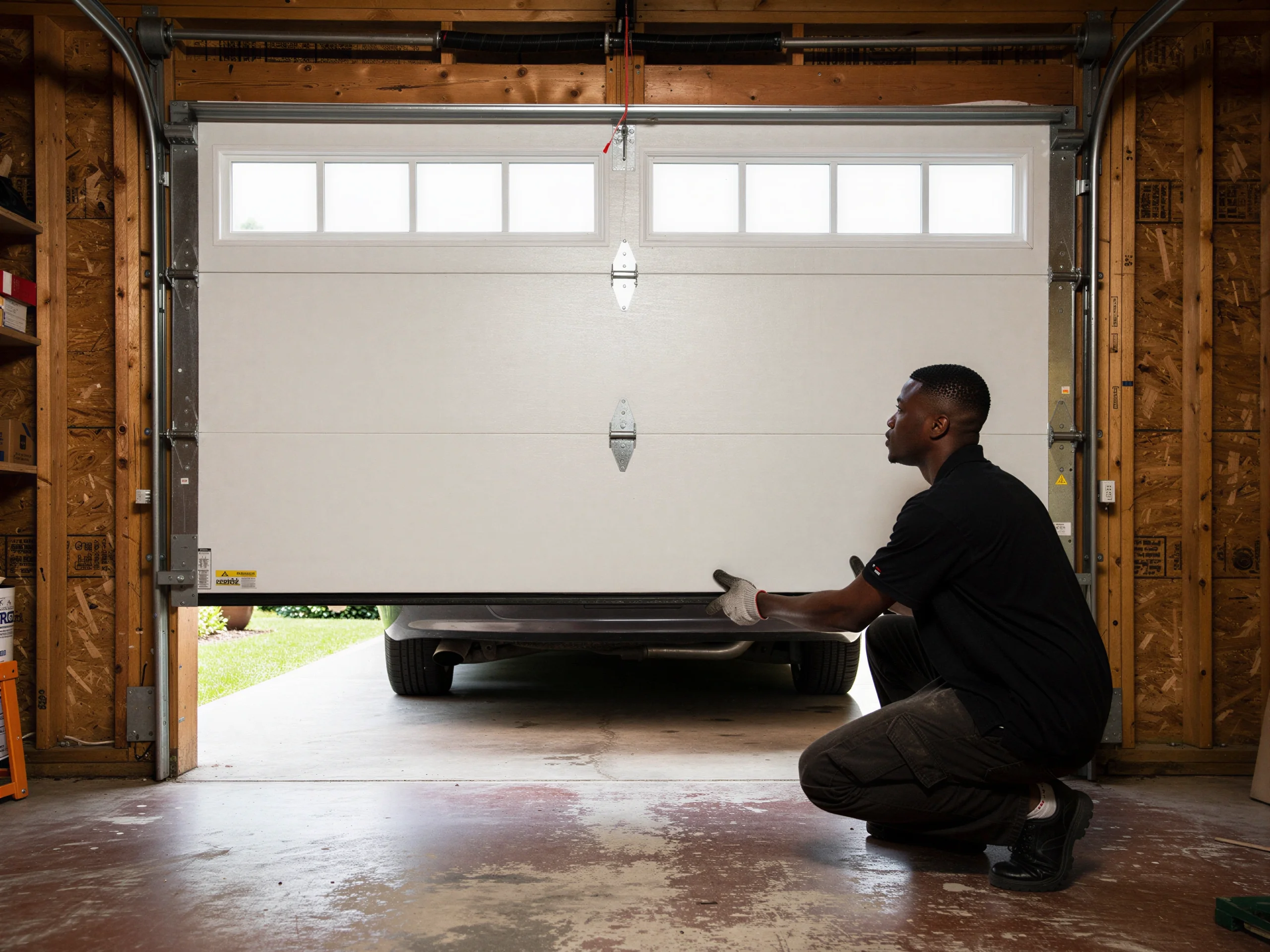
A door that closes crooked, dropping faster on one side, usually means one cable has slipped or frayed while the other is holding, and it's not safe to keep cycling the door in that state. Rust streaks on springs or hinges are less common given the mild climate here, but they do show up on doors facing prevailing moisture, and rust on a spring coil is a sign it's nearing the end regardless of cycle count. If you're seeing a loud bang followed by the door refusing to move at all, that's almost certainly a broken spring, and it's a call-it-in job, not a troubleshoot-it-yourself one.
Talk to a local pro
Garage door service in Pasadena?
Same-day service with honest, upfront quotes.