What Is on the Truck
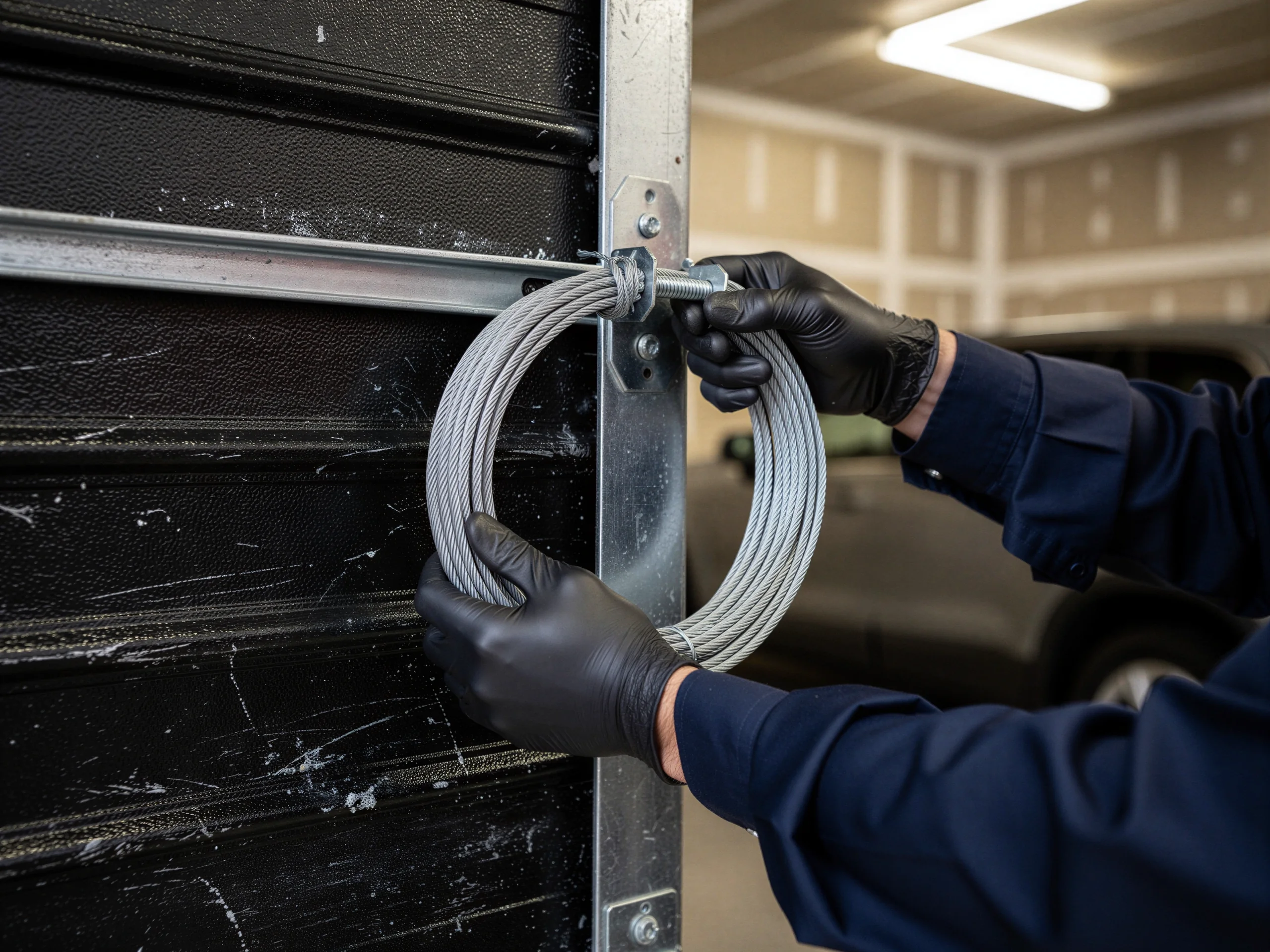
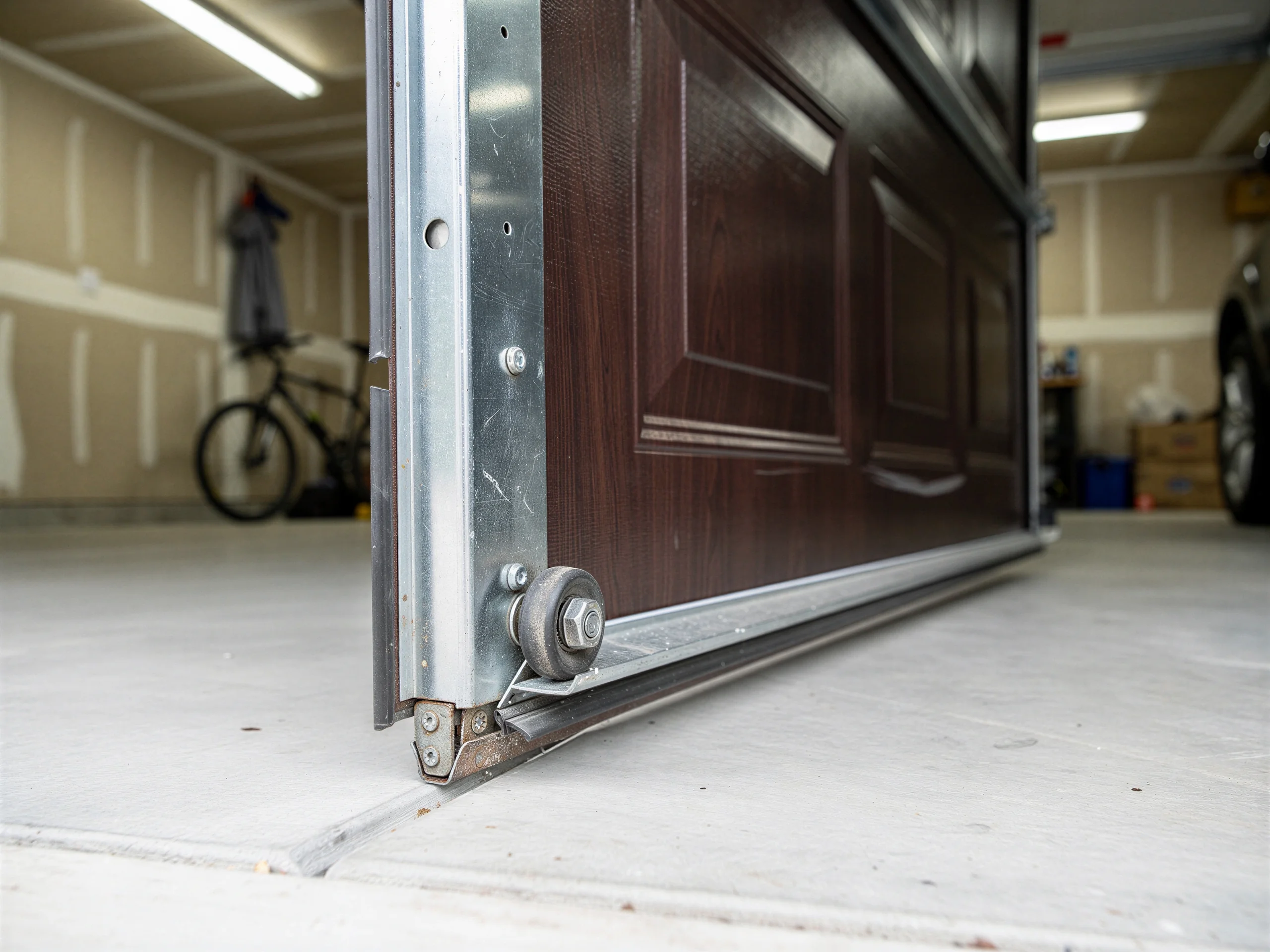
Deer Park sits about 3 miles from our Pasadena shop, which is close enough that a roller call doesn't turn into a guessing game. We stock both 7-ball steel rollers and sealed-bearing nylon rollers in the common stem lengths before we leave, because a short trip only pays off if we're not driving back for the right part. Most of what we pull off doors in this area is original builder-grade steel - the kind that was standard when these houses went up around 1981. That steel rides hard on galvanized track and it's loud by design, not by accident. We also carry track sections, since a roller that's been grinding for months usually takes the track edge with it. The short drive means we can spend the visit actually swapping hardware instead of running parts back and forth, which matters more on a double door with eight to ten rollers to pull than it does on a quick single-roller fix. We don't carry every roller length in every brand, though - if your door uses an odd aftermarket track profile, we may need to order that specific stem size rather than hand you a universal substitute that'll wear the hub fast.
Doing It Yourself
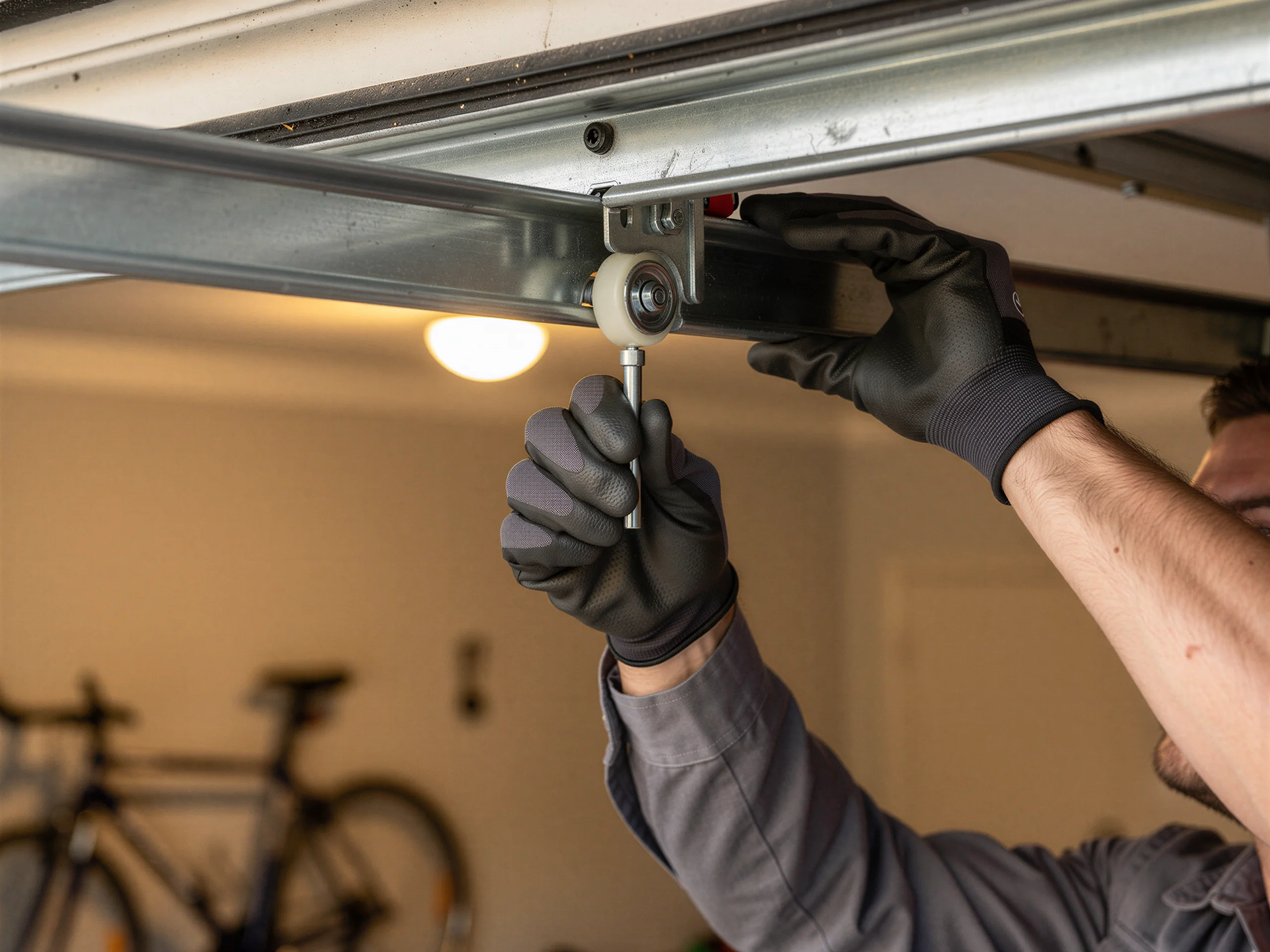
Bottom rollers, the ones with no cable or spring tension near them, are a reasonable weekend job if you've got the clamps and the patience to work one side at a time.
Top-corner roller pitfalls
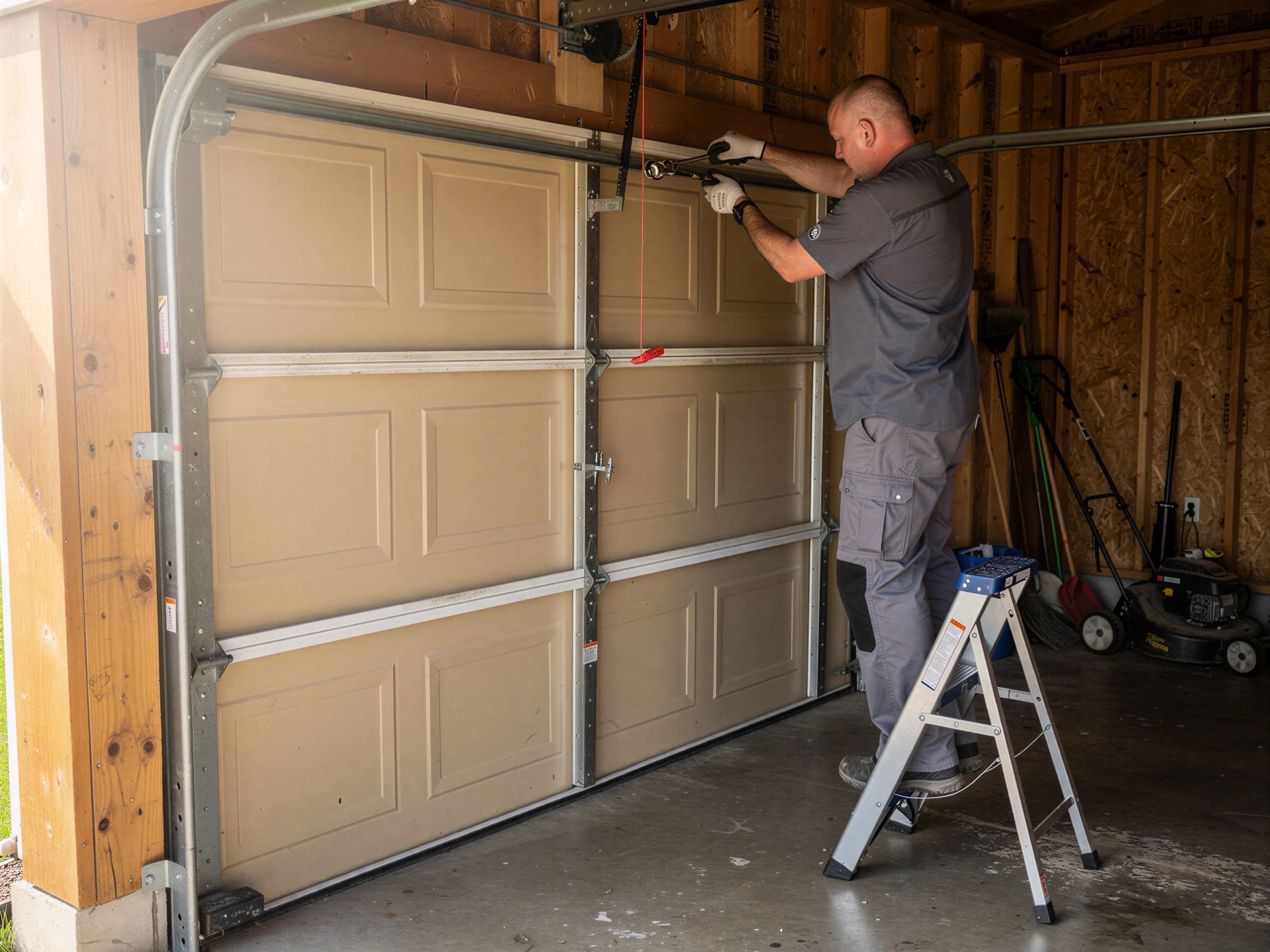
Loosen the bracket, slide the old roller stem out, slide the new one in, don't rush the alignment. The rollers that give people trouble are the top two on each side, sitting right next to the cable drums and the torsion spring.
Wrong bracket under tension
Pull the wrong bracket there with the door up and the spring still wound, and you're dealing with a cable or a spring letting go under load - not a roller job anymore. If your door is original to a house built in the early 1980s, there's a decent chance the top brackets haven't been off since the house was framed, and the fasteners can be seized or stripped.
Send photos before starting
That's the point where a DIY roller swap turns into an opener realignment or a bent track repair. If you're not sure which rollers you're looking at, a photo sent our way before you start usually settles it faster than guessing.
What Causes It Around Here
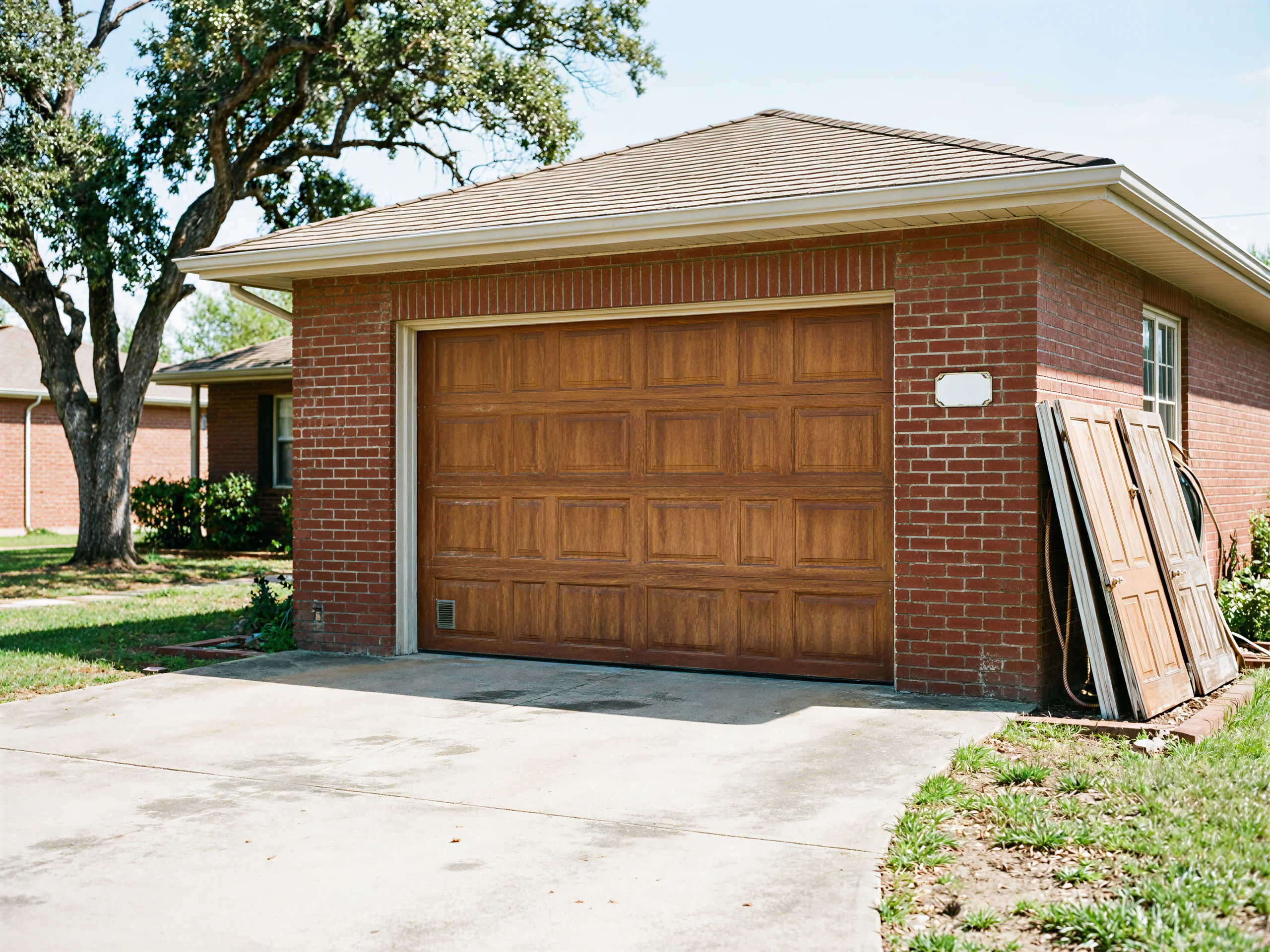
The housing stock through Deer Park runs older than a lot of the surrounding service area - median build year here is around 1981, which puts most garage doors on their second or third roller set by now if nobody's touched them. Builders in that era spec'd steel rollers without bearings almost universally, and steel-on-steel wears a groove into the track over years of daily cycles. We're in a mild climate with occasional freeze stretches, so you're not fighting the extreme summer expansion and winter contraction that cracks nylon rollers in harsher regions - but humidity and years of use still dry out whatever lubrication was on those original bearings. Add in roughly 11,829 households in Deer Park, a lot of them two-car garages running two openers through daily commutes, and the cycle count on original hardware adds up faster than people expect. By the time a roller is visibly worn, the track edge it's been riding is usually scored too.
The Cost of This Job
We don't have a fixed number to put on this page, and we'd rather tell you that than guess. What drives the cost on a roller job is how many rollers need replacing, whether you want steel or sealed nylon, and whether the track got damaged enough from a worn roller that it needs straightening or swapping along with it. A full set of nylon rollers on a double door with no track damage is a different job than a single bent-track repair that started as one worn roller nobody caught early. Deer Park's median household income runs higher than some of the surrounding area, which sometimes means owners here go straight to the quieter sealed-nylon upgrade rather than replacing steel with steel - that's a choice worth having, not a requirement. Ask for a number specific to your door and roller count before you commit to anything.
What You Are Seeing
A grinding or popping sound as the door travels, worse on one side than the other, usually means a roller is worn down to the stem or the bearing's seized.
Wobble at one point
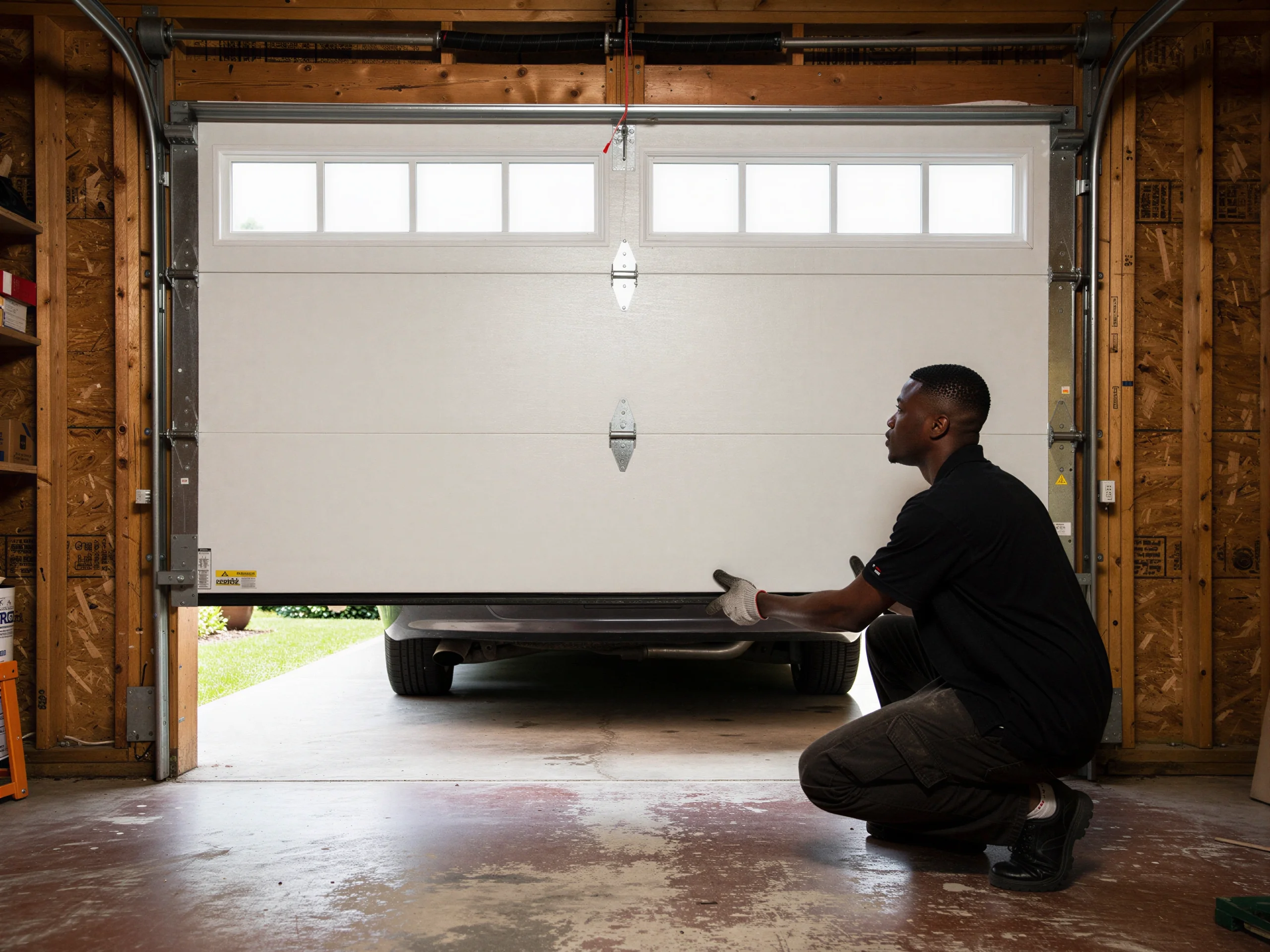
If the door jumps or shudders at the same spot every time it opens, that's often a roller that's left the track and is riding the edge of it instead. Visible wobble in the door's travel - not the whole door racking, just a jerk partway up - points to one bad roller rather than a spring problem.
Uneven side wear first
On a house built around the early 1980s with original hardware still in place, it's common to see uneven wear: the rollers that carry more of the door's weight on one side go first, so one side will sound and move worse than the other.
Stop running the opener
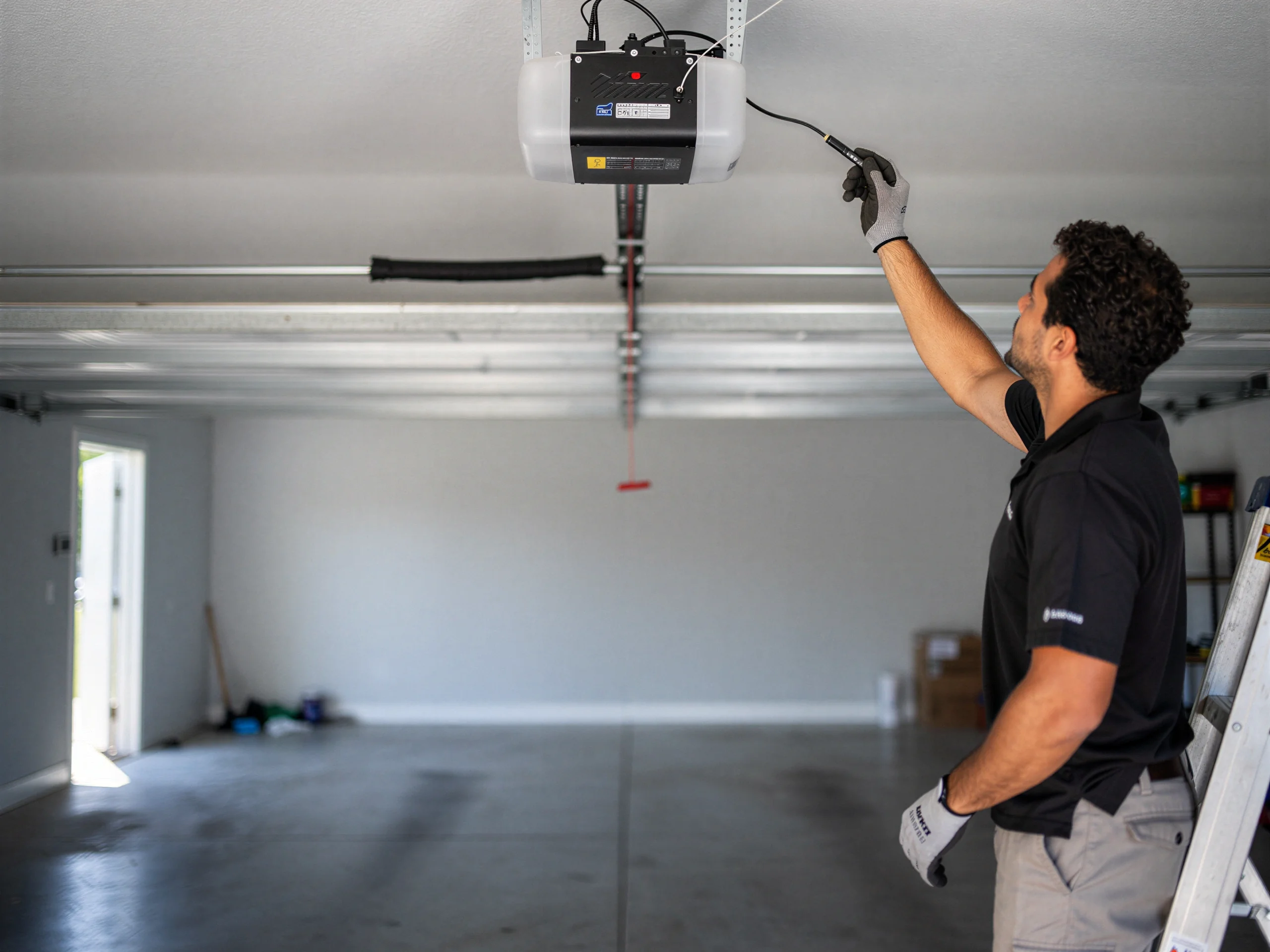
If the door is binding hard or won't move at all, stop running the opener - that's past a roller fix and into track or spring territory, and running it anyway usually turns one bad roller into a bent track.
Talk to a local pro
Garage door service in Pasadena?
Same-day service with honest, upfront quotes.